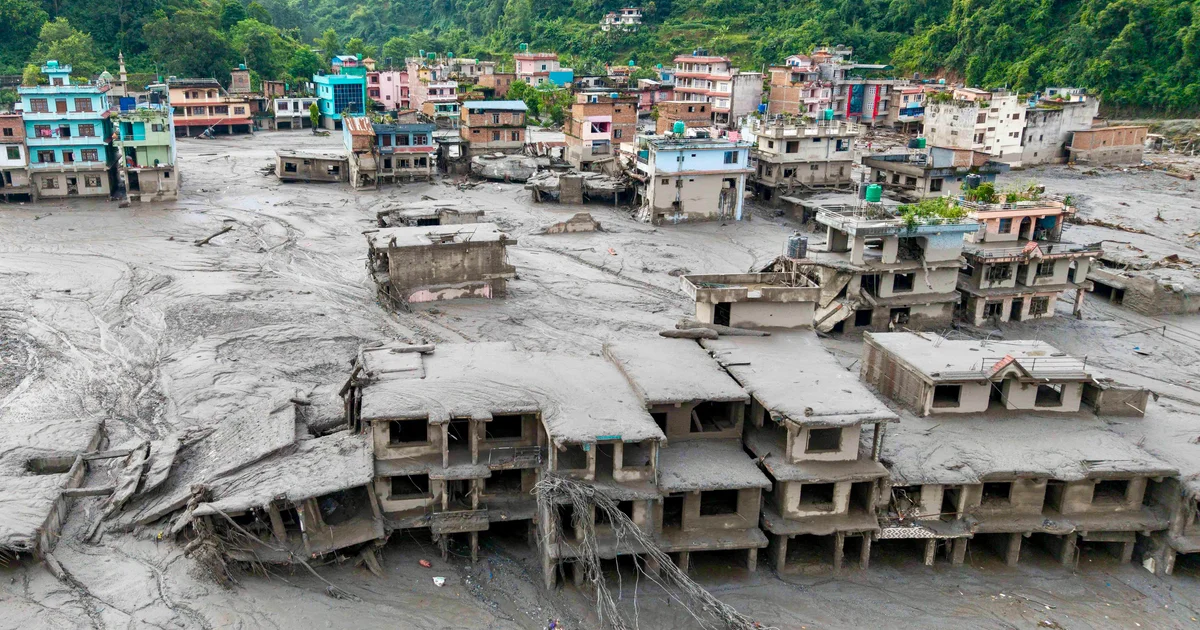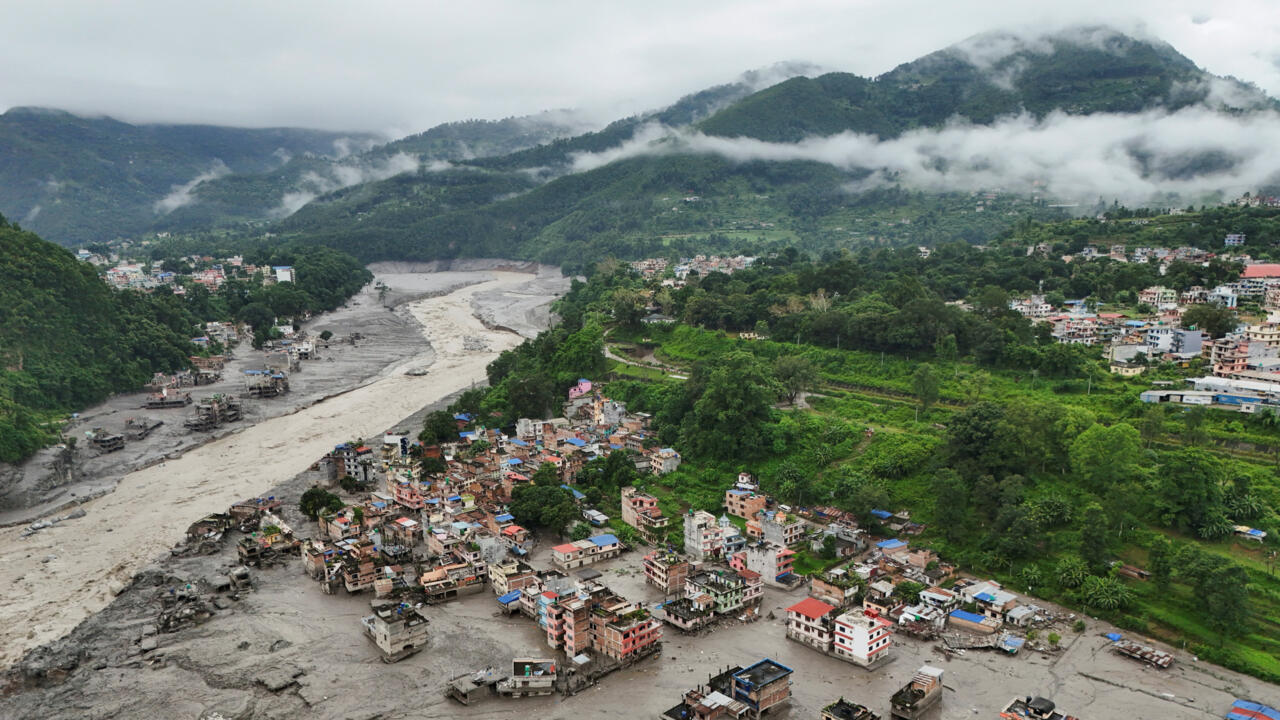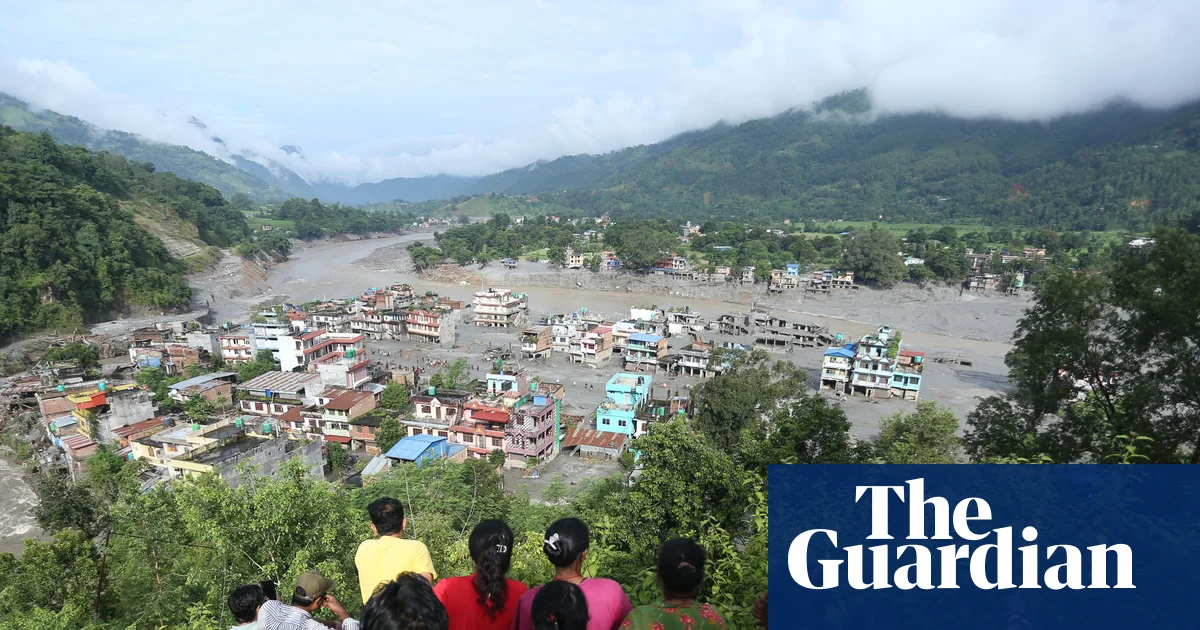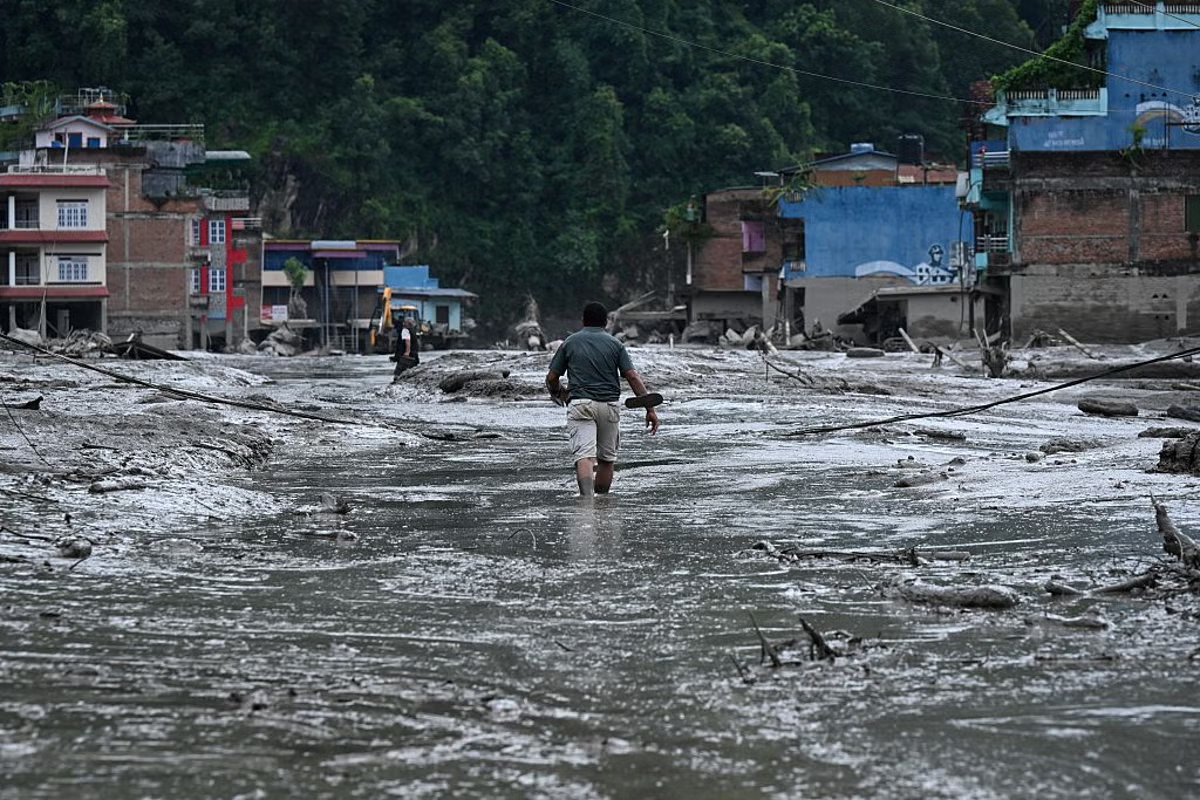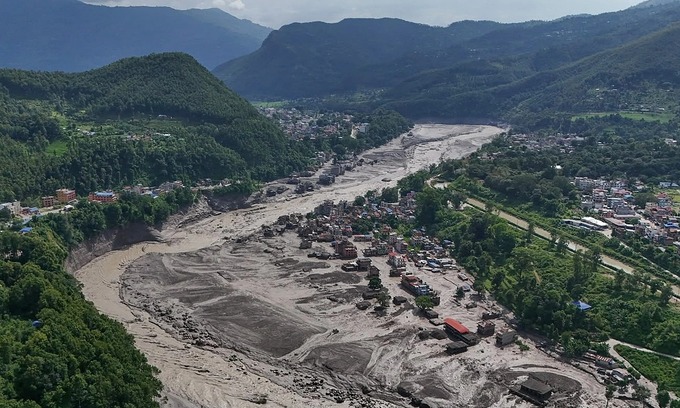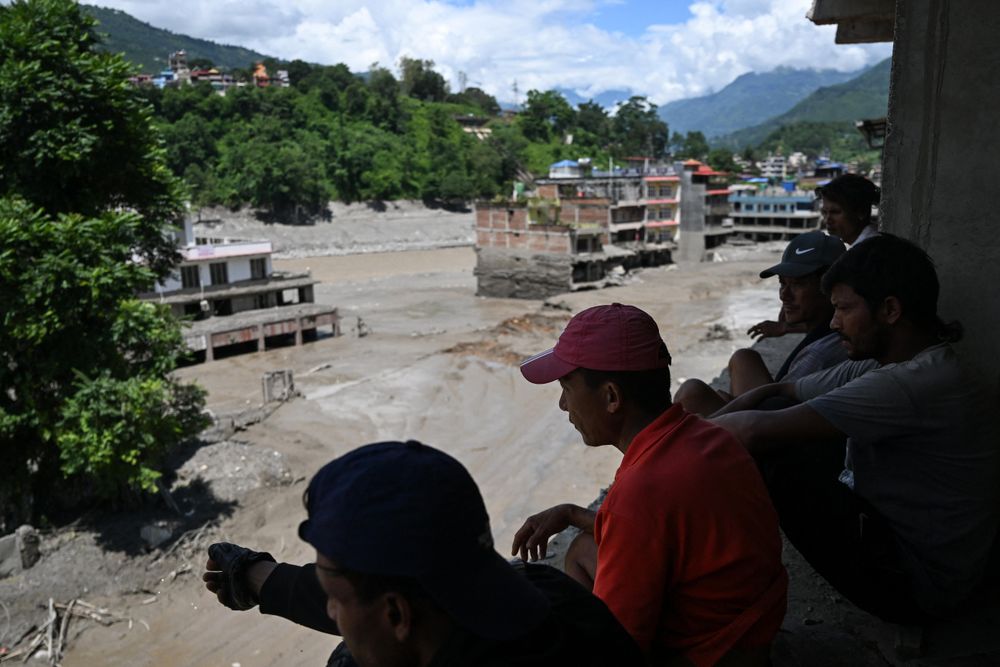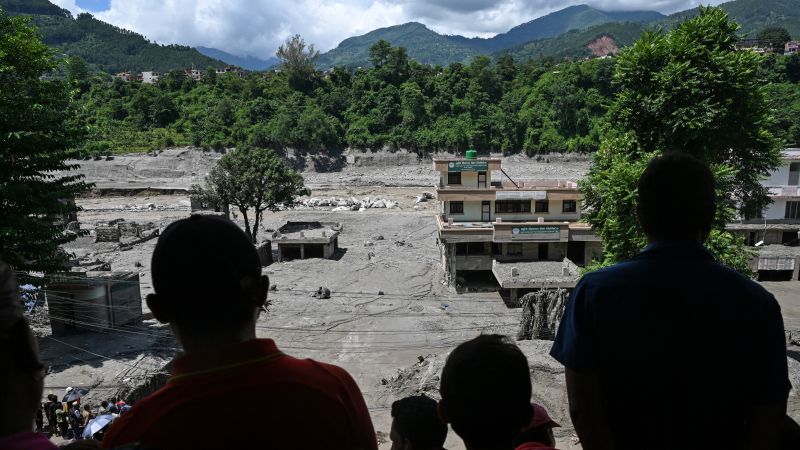
Living in the shadow of the world’s spectacular, ice-capped mountains has always carried dangers, but the devastating flood wave that carved a path of destruction on the Nepal-China border this week shows how life for the millions worldwide who live downstream of these peaks is becoming more unpredictable and more deadly.
It’s too soon to know what role climate change may have played in the catastrophic flooding, but what is clear is that mountains are changing fast as temperatures rise, melting glaciers and destabilizing slopes leading to complex, cascading disasters.
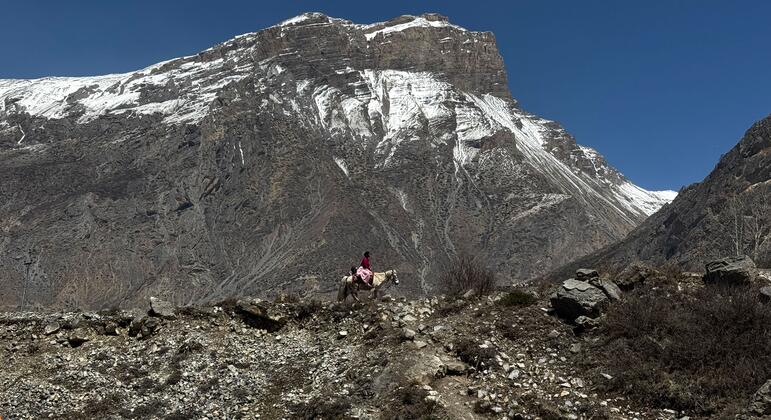
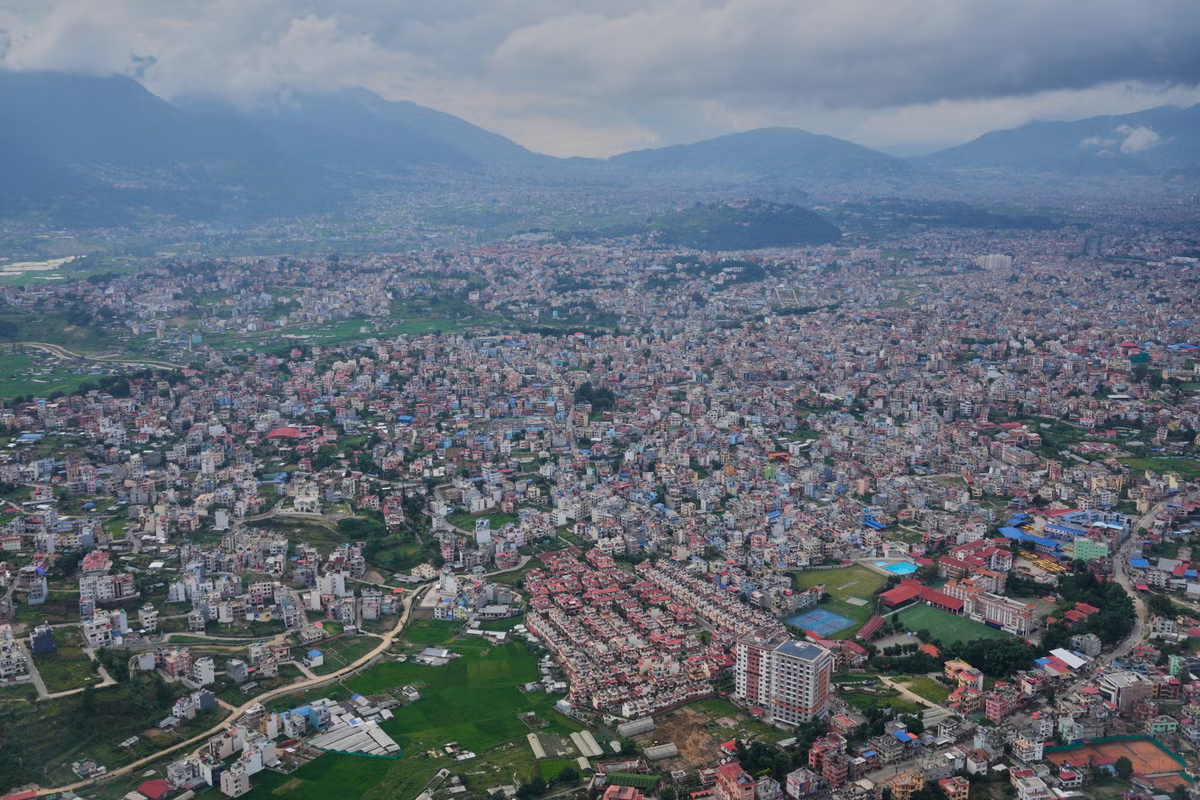
Nepal is a country of jagged, towering peaks with sheer slopes sweeping down to narrow valleys, cut through by powerful rivers. Its stunning landscape attracts hordes of tourists; it’s also treacherous.
Nestled in the rapidly warming Himalayas, the country has long been a hotspot for flooding and landslides. But what happened on Wednesday “was of significantly larger scale than what we have seen in the recent past,’ said Prashant Baral, a cryosphere analyst at ICIMOD, a Nepali climate organization.
An enormous chunk of glacier around 2,000 feet wide sheared off Langtang Lirung mountain in northern Nepal, accompanied by landslide, according to satellite analysis. It sent a deadly mix of ice, water, rock, sediment and boulders the size of cars crashing 7,000 feet downward, causing such a powerful tremor, it was initially mistaken for an earthquake.