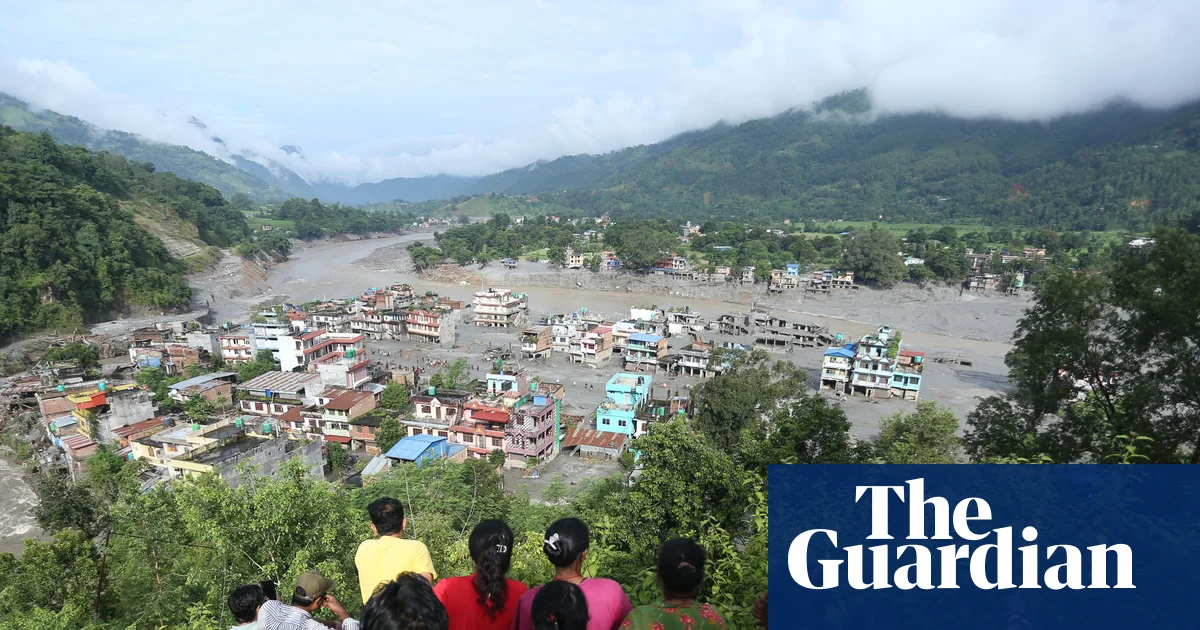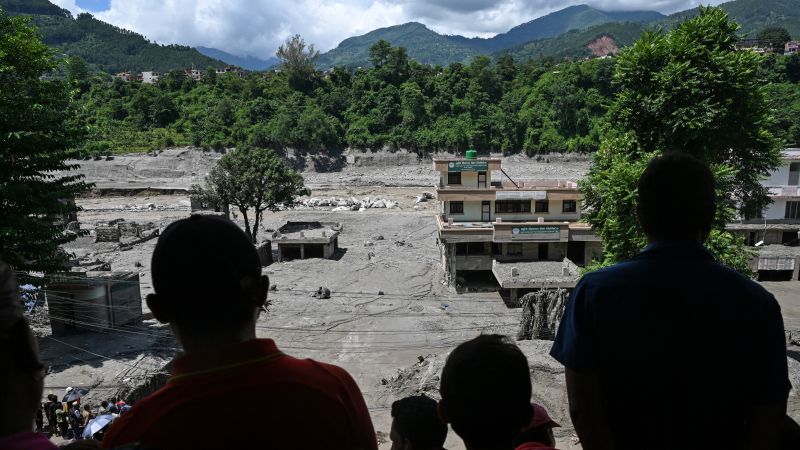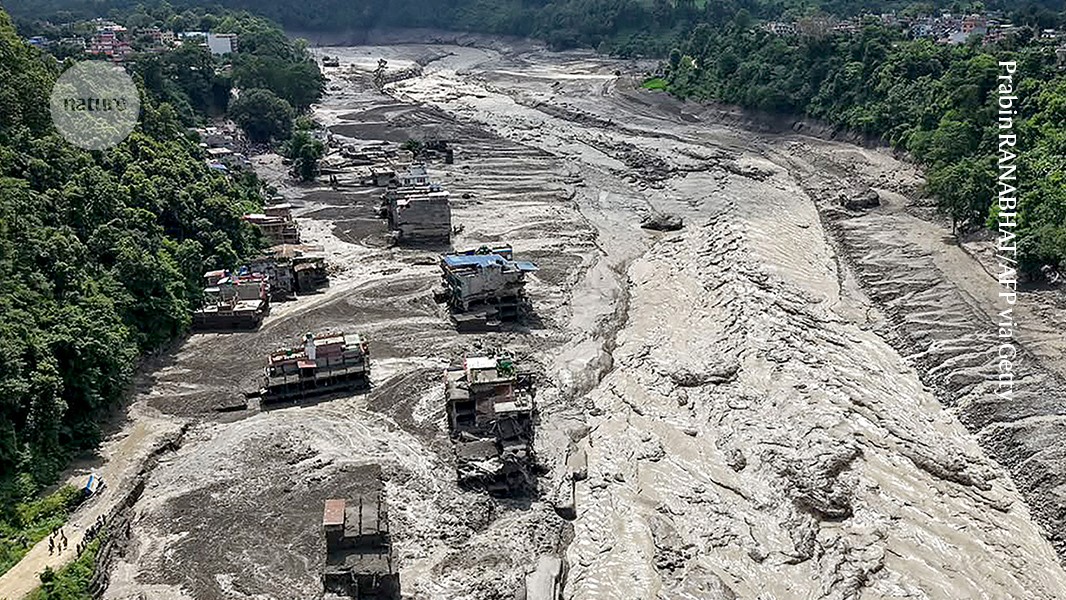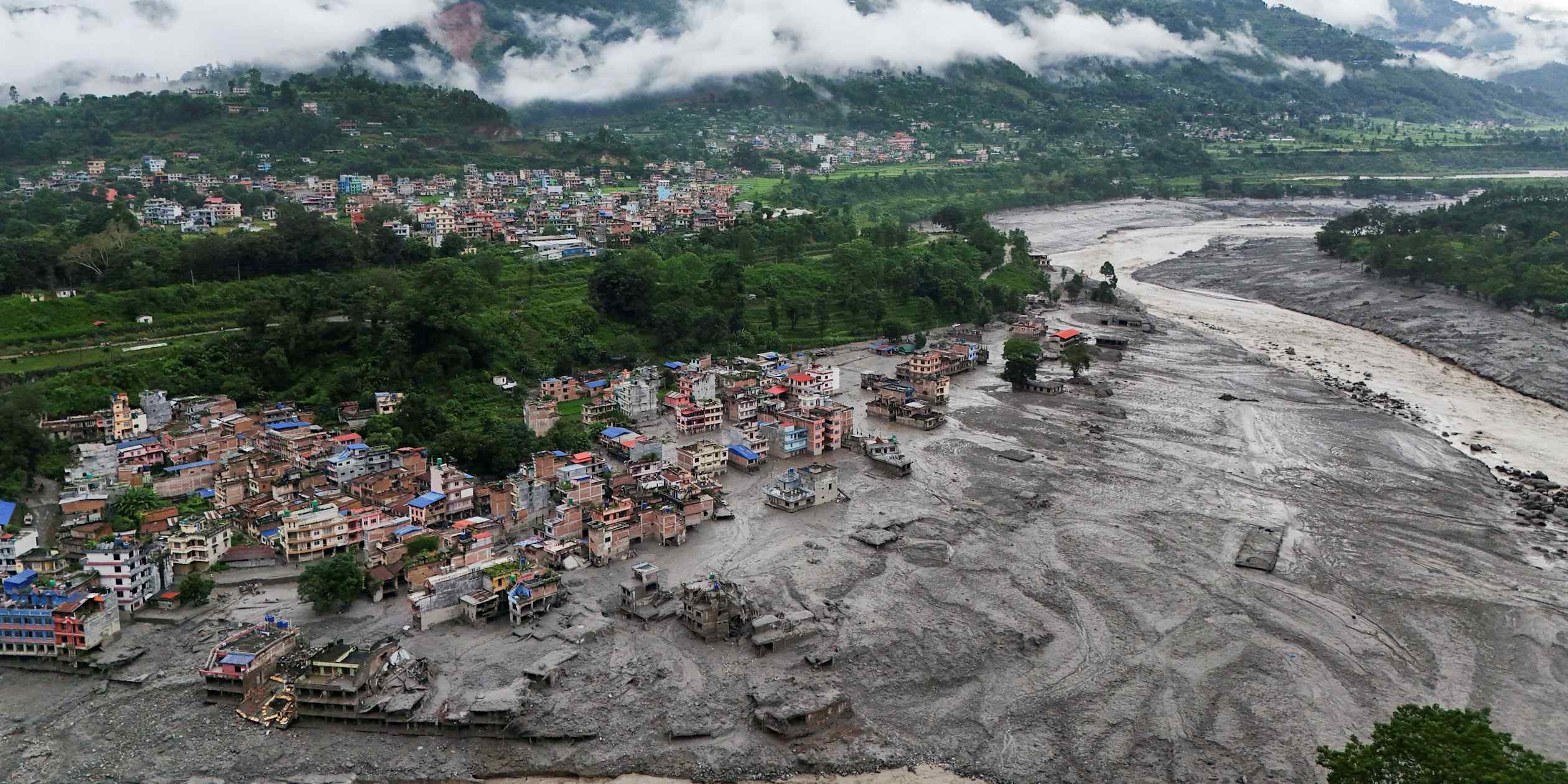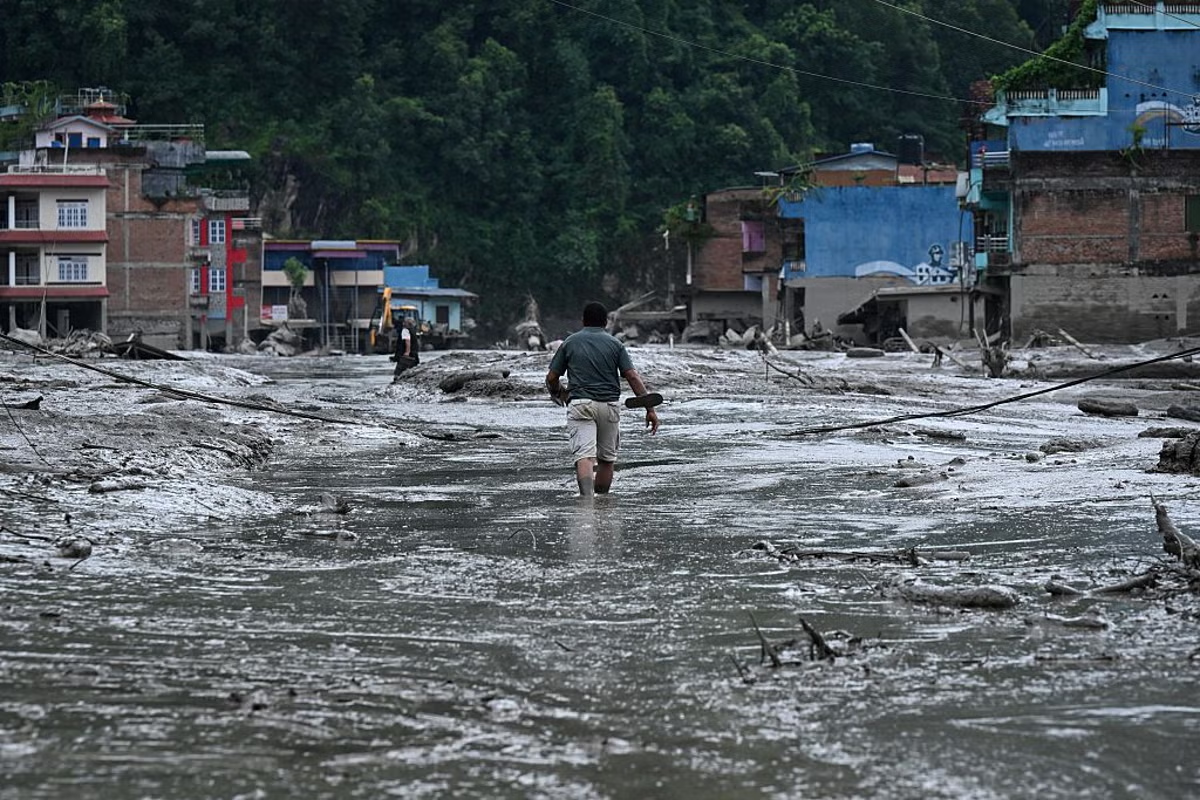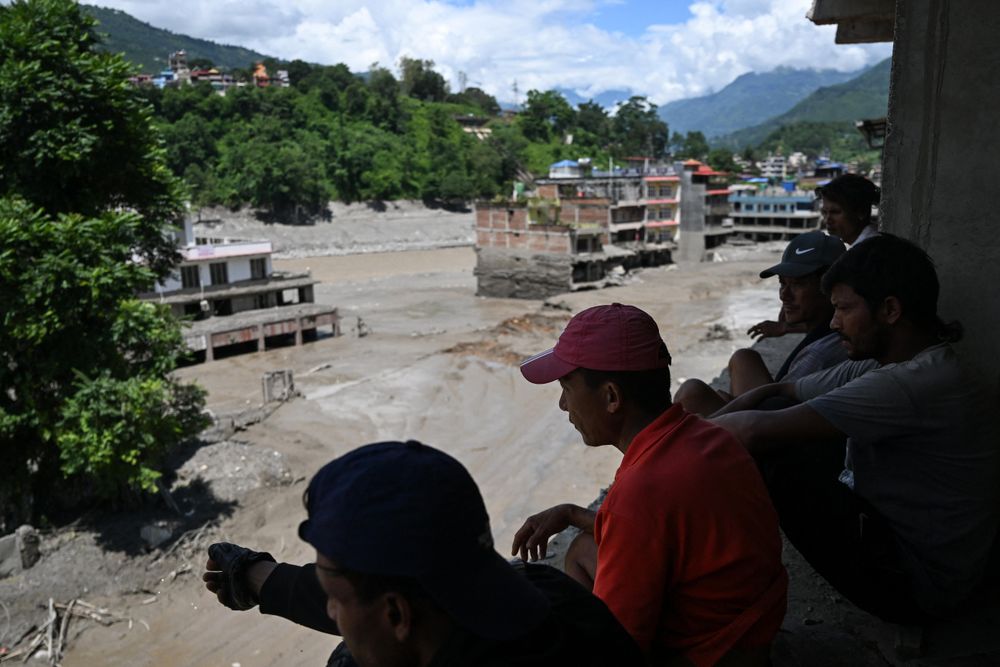
People watch from a rooftop as houses lie deluged in sludge after flash floods at Trishuli in Nepal's Nuwakot district on Thursday.
David Fickling
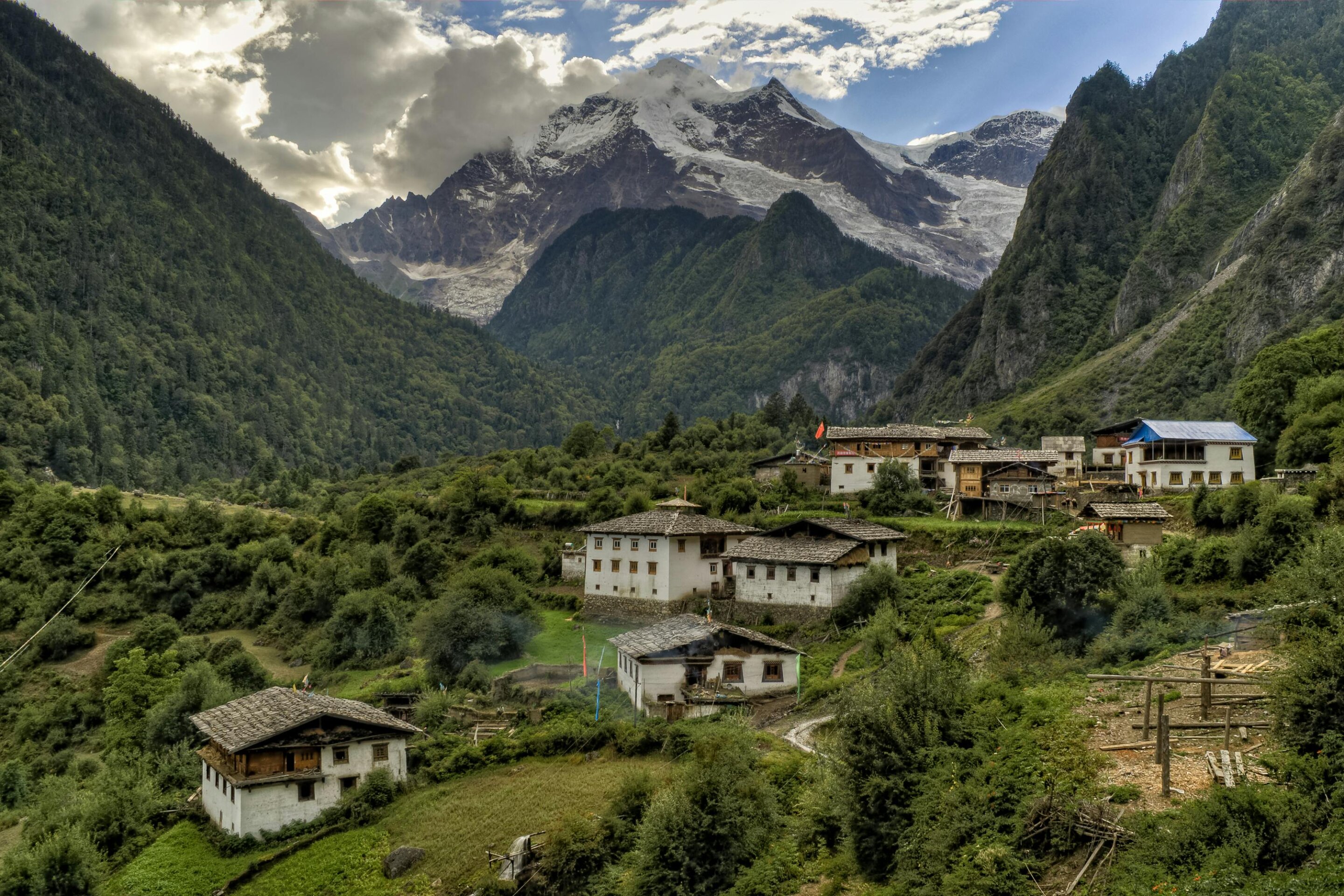
Mountains have for millennia been a symbol of immovable stability. A warming planet is undermining that, leaving landslides, floods, and avalanches in its wake.
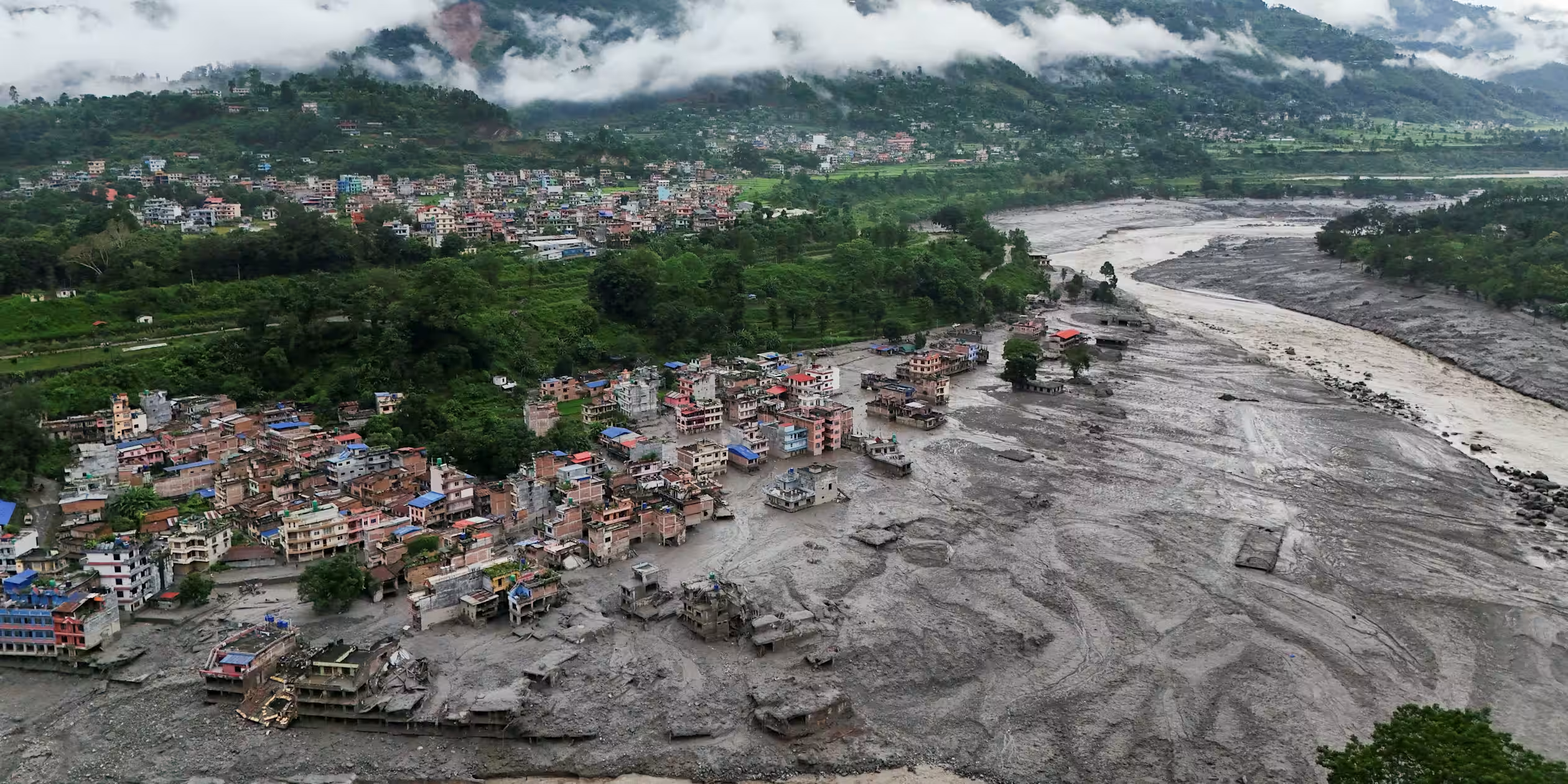
The apocalyptic scenes after Wednesday’s flash floods on the border between Nepal and China’s Tibet region are the latest example of the devastation that can result. At least 157 people have been confirmed dead and hundreds more are missing after a wall of mud and rock swept through valleys in the Himalayas, causing the Trishuli river to rise nine meters in half an hour.
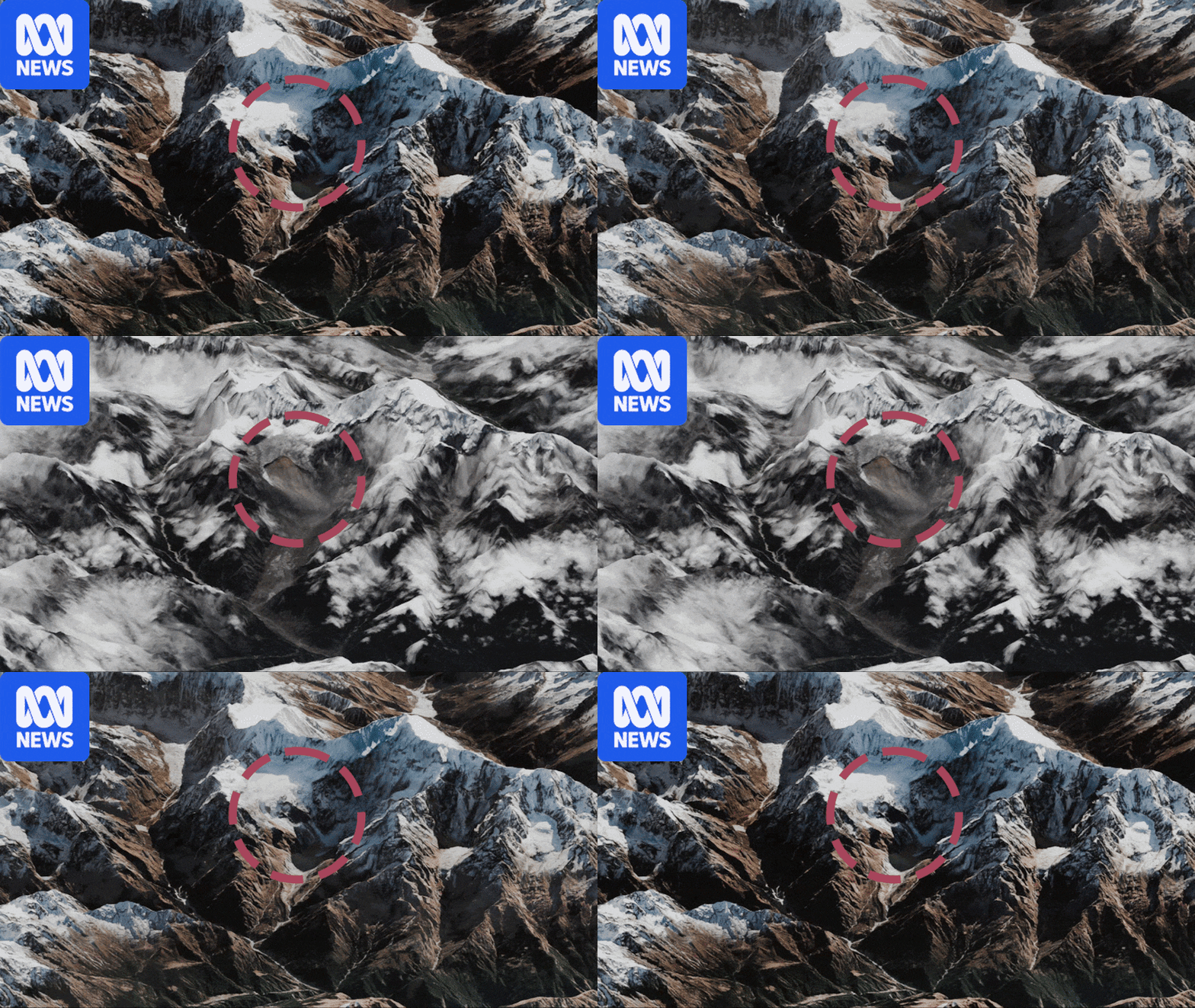
Preliminary investigations suggest that a slide of ice and rock unleashed a surge of water, debris and boulders downstream. Researchers must work fast: The initial disaster may have left behind a fresh dam of material, which could prompt further flash flooding if it crumbles.