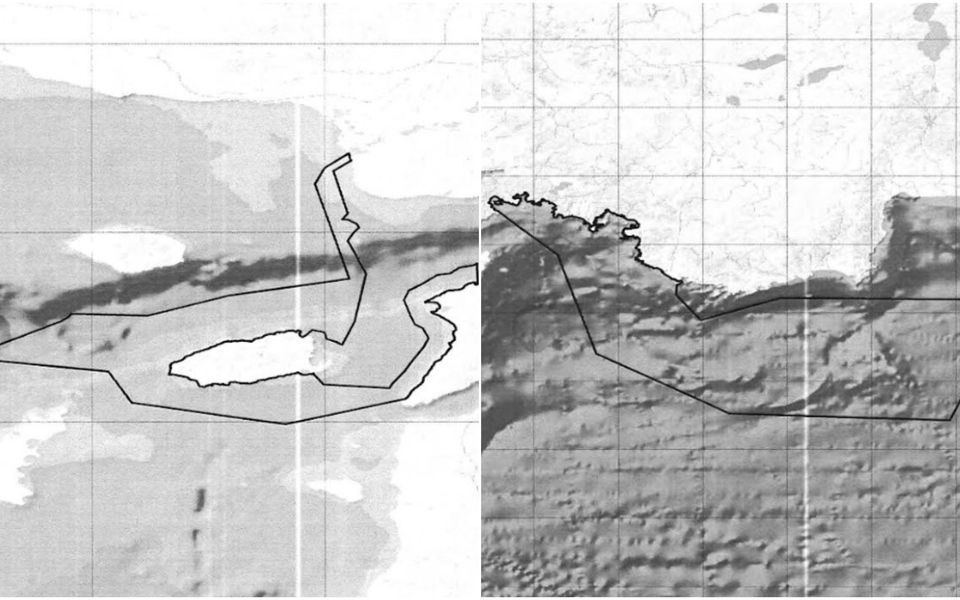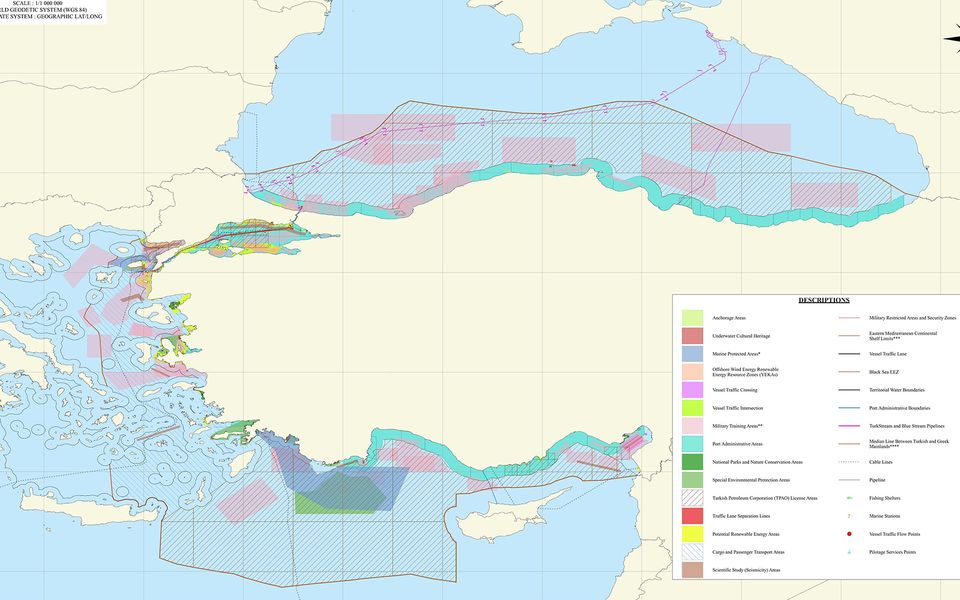
The Turkish government’s decision to declare two national marine parks was neither surprising nor random. In fact, it is part of a new strategy of “environmentalization” of Turkish claims that includes the instrumentalization of illegal fishing, harassment of cable-laying vessels, and the rejection of Greek spatial plans for tourism and renewable energy. For the Turkish government, the Aegean Sea is not neutral or friendly; it is a space for confrontation and ideological imposition.
It is worth noting that Ankara’s pseudo-environmental policy in the Aegean is not developed by the associated ministries (like the Ministry of Environment for protected areas and the Ministry of Rural Development for fisheries), but by the Ministry of Foreign Affairs and sometimes the Ministry of Defense. The ultimate goal is not a negotiation for the delimitation of exclusive economic zones (EEZ) in the region, as is often advocated in academic, journalistic and political circles in Athens, but the radical change of the existing status quo in the Aegean to the detriment of Greece. The goal is to cut off, even if gradually, a part of insular Greece from the rest of its territory. In an era when all the constants of the post-Cold War world are being tested, it is dangerously naive to question the obvious.