Image by Sergei Starostin via Pexels
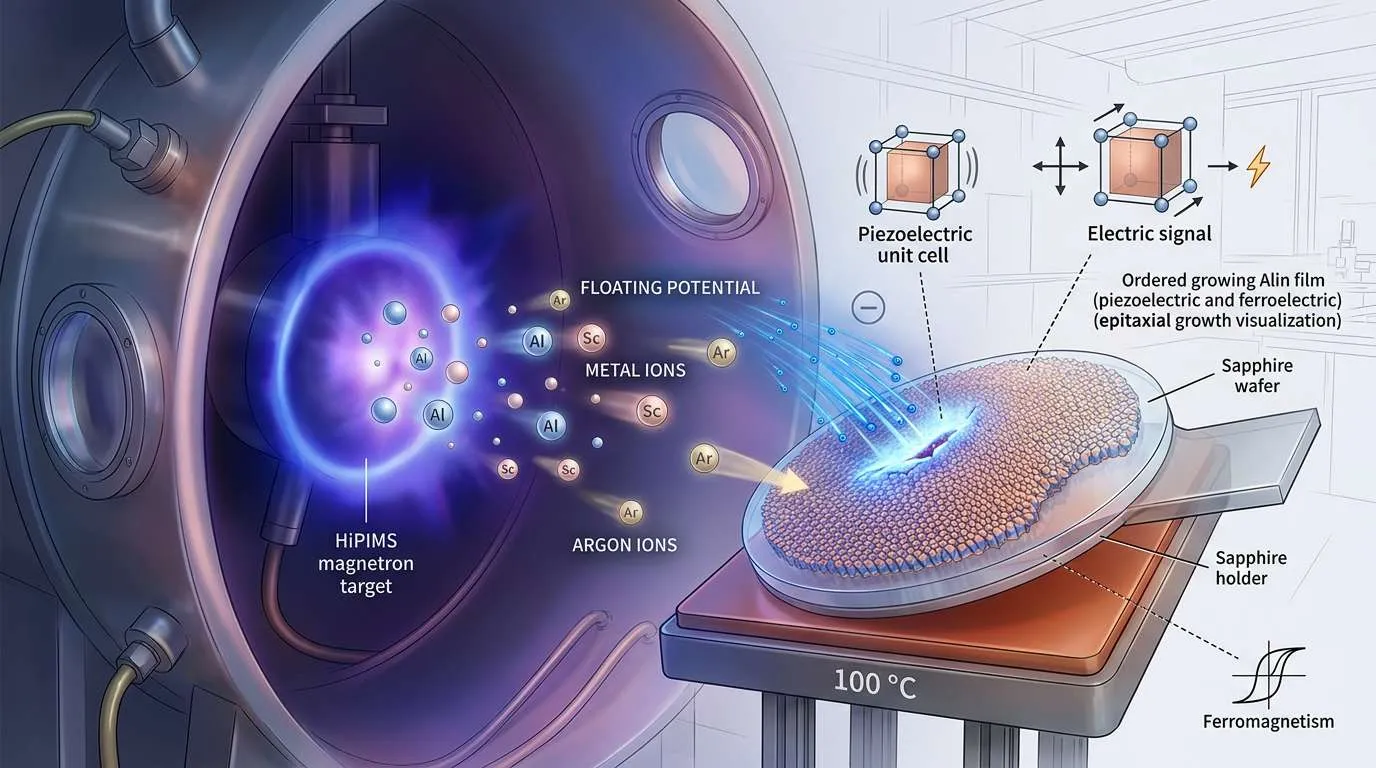
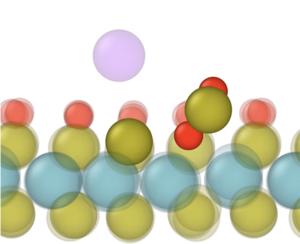
Researchers at Swiss Federal Laboratories for Materials Science and Technology or Empa (Eidgenössische Materialprüfungs- und Forschungsanstalt) have developed a new way to produce high-quality piezoelectric thin films on insulating materials at relatively low temperatures. The method, called Synchronized Floating Potential HiPIMS, or SFP-HiPIMS, solves a long-standing problem in thin-film production: how to give useful ions enough energy to improve a film while limiting unwanted argon ions that can damage it.
Piezoelectric thin films are used in electronic components such as radio frequency (RF) filters, sensors, actuators and small energy converters. Piezoelectric materials have a special property. They produce an electrical charge when they are deformed and change shape when an electrical voltage is applied.
The researchers from Empa’s Surface Science & Coating Technologies laboratory based their work on high-power impulse magnetron sputtering, known as HiPIMS. It is a form of physical vapor deposition, a process used to make thin coatings by moving material from a solid source, called a target, onto another surface, called a substrate.
In magnetron sputtering, a plasma is created near the target. Plasma is a gas containing electrically charged particles, including electrons and ions. The ions strike the target and knock atoms out of it. These atoms then travel toward the substrate and form a thin film.