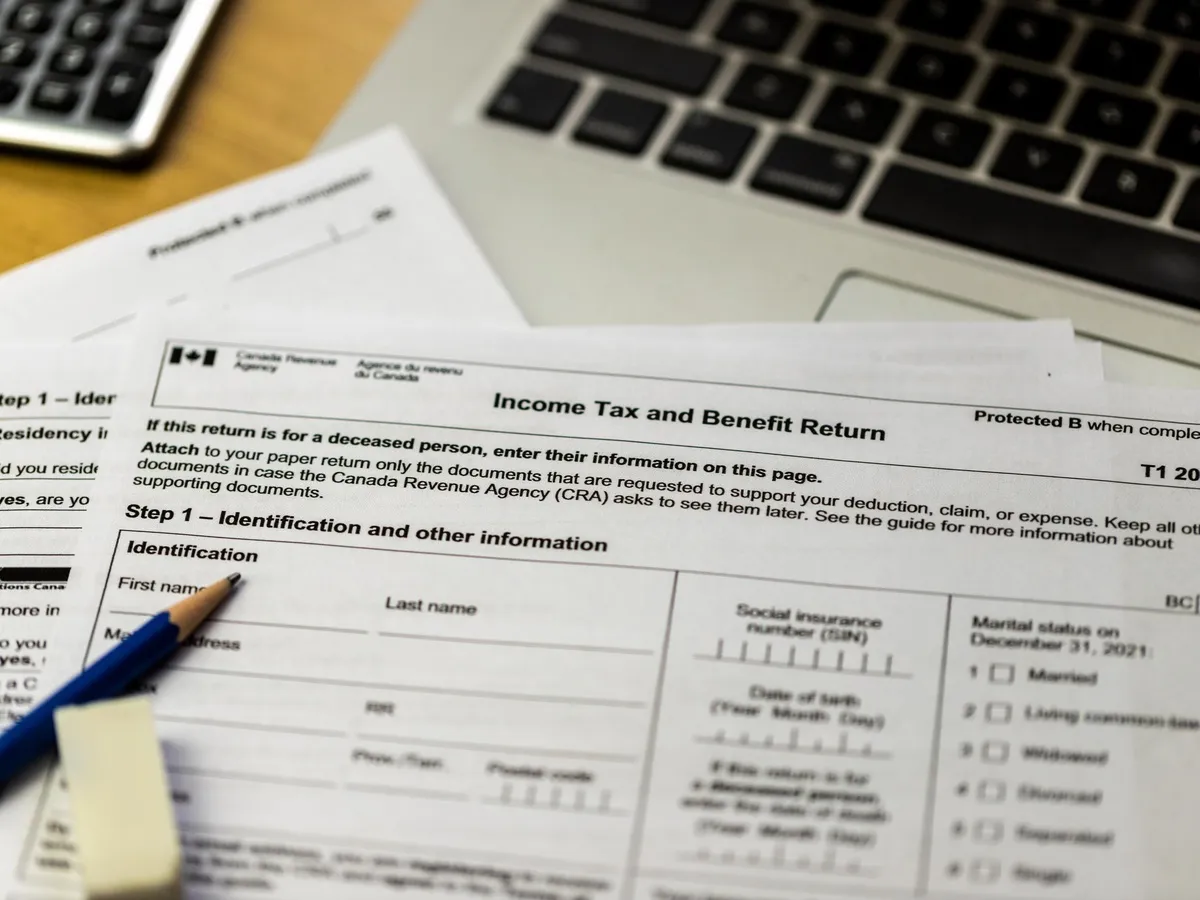
Skip to Content News Archives Economy Energy Oil & Gas Renewables Electric Vehicles Mining Commodities Agriculture Real Estate Mortgages Mortgage Rates Finance Banking Insurance Fintech Cryptocurrency Work Wealth Smart Money Wealth Management Investor Personal Finance Family Finance Retirement Taxes High Net Worth FP Comment Executive Women Puzzmo Newsletters Financial Times Business Essentials More Innovation Information Technology FP500 Podcasts Small Business Lives Told Tails Told Shopping Financial Post Store Obituaries Place a Notice Advertising Advertising With Us Advertising Solutions Postmedia Ad Manager Sponsorship Requests Classifieds Place a Classifieds ad Working Profile Settings My Subscriptions My Offers Newsletters Customer Service FAQ News Economy Energy Mining Real Estate Finance Work Wealth Investor FP Comment Executive Women Puzzmo Newsletters Financial Times Business Essentials HomePersonal FinanceTaxesA taxpayer hit by CRA with late-filing penalties illustrates how multiple slip-ups can add upMultiple late tax returns can trigger steep CRA penalties and daily compounded interestLast updated 1 hour ago While the judge was sympathetic to the taxpayer’s financial and personal challenges over the many years they had missed tax deadlines, the court upheld the late-filing penalties and arrears interest. Photo by DouceFleur/Getty ImagesWe independently select everything we recommend. Buying through us may earn us a commission, which supports our work.If you don’t file your tax return on time, you can be hit with late-filing penalties equal to five per cent of any balance owing, plus one per cent of the balance owing for each month your return is late, to a maximum of 12 months. But, if it’s not the first time you’ve filed late, and you’ve been assessed a late-filing penalty in any of the prior three years, the penalties can double to ten per cent of the unpaid amount, plus a two per cent penalty for each late month, to a maximum of 20 months.Subscribe now to read the latest news in your city and across Canada.Exclusive articles from Barbara Shecter, Joe O'Connor, Gabriel Friedman, and others.Daily content from Financial Times, the world's leading global business publication.Unlimited online access to read articles from Financial Post, National Post and 15 news sites across Canada with one account.National Post ePaper, an electronic replica of the print edition to view on any device, share and comment on.Daily puzzles, including the New York Times Crossword.Subscribe now to read the latest news in your city and across Canada.Exclusive articles from Barbara Shecter, Joe O'Connor, Gabriel Friedman and others.Daily content from Financial Times, the world's leading global business publication.Unlimited online access to read articles from Financial Post, National Post and 15 news sites across Canada with one account.National Post ePaper, an electronic replica of the print edition to view on any device, share and comment on.Daily puzzles, including the New York Times Crossword.Create an account or sign in to continue with your reading experience.Access articles from across Canada with one account.Share your thoughts and join the conversation in the comments.Enjoy additional articles per month.Get email updates from your favourite authors.Create an account or sign in to continue with your reading experience.Access articles from across Canada with one accountShare your thoughts and join the conversation in the commentsEnjoy additional articles per monthGet email updates from your favourite authorsSign In or Create an AccountorTo make things worse, the Canada Revenue Agency will add non-deductible arrears interest, compounded daily, charged at the current prescribed interest rate of seven per cent, to any tax owing and late-filing penalties.Get the latest headlines, breaking news and columns.By signing up you consent to receive the above newsletter from Postmedia Network Inc.A welcome email is on its way. If you don't see it, please check your junk folder.The next issue of Top Stories will soon be in your inbox.We encountered an issue signing you up. Please try againShould you be hit with penalties and interest, you can ask the CRA to waive or cancel them under the taxpayer relief provisions. Should the CRA refuse your request for relief, you can have the CRA’s decision reviewed by a Federal Court judge to determine whether the CRA officer’s decision was “reasonable.” And that’s exactly what a 71-year old Saskatchewan English-language instructor did when she was hit with penalties and interest for late-filing numerous personal tax returns.In 2018, the CRA issued notices of assessment that included arrears interest and filing penalties for not filing her returns on time. It seems that the taxpayer also filed her 2017, 2018 and 2019 tax returns late, and the CRA again issued notices of assessment that included arrears interest and late filing penalties for those years.In April 2022, the taxpayer wrote to the CRA requesting relief from penalties and interest owing in respect of her late-filed returns from the 2006 through 2021 tax years. The request for relief was based on her “financial hardship, medical problems and COVID-19.”The CRA denied the request. The CRA official noted that the agency could only consider relief of penalties and interest accrued in the ten years before the request was made, thus excluding tax years from 2006 through 2010, although, as it turns out, there were no penalties or interest related to the 2007 through 2009 tax years.As for the 2011 through 2021 tax years, the CRA found that the taxpayer “had not been prevented from meeting her filing and remitting obligations and relief was therefore not warranted.”The taxpayer proceeded to request a second review of her relief request related to the 2011-2021 tax years. She based her request on her “financial hardship, illness and emotional and mental distress,” and she supported her request with a letter, written representations and medical documentation regarding a leg fracture that occurred in 2019.This information was then reviewed by a different CRA officer who again refused her relief request. The CRA officer observed that, by the taxpayer’s own admission, she had not spoken with a doctor about her mental health issues, and therefore had no documentation to support her claim. The officer further noted that, according to the evidence, her leg fracture occurred on June 1, 2019, and was healed by October 2, 2019. As a result, the officer concluded that the taxpayer’s 2019 leg injury “had no bearing on (the taxpayer’s) ability to comply with her tax obligations for the eight preceding tax years.”As to the taxpayer’s assertion of financial difficulties, the CRA officer noted that, in the relief context, financial hardship involves a “prolonged inability to provide necessities,” and requires an “extraordinary circumstance” preventing a taxpayer from filing and/or paying taxes on time.This was not the case with this taxpayer, as the evidence showed that during the period of non-filing, she had funded renovations for two houses, sold a house, paid off a line of credit, bought a car, and contributed more than $70,000 to her registered retirement savings plans (RRSPs) between 2019-2022. Based on this evidence, the CRA officer concluded that the taxpayer was not experiencing financial hardship and was therefore not prevented from meeting her filing obligations due to circumstances beyond her own control.The taxpayer went to federal court seeking a judicial review of the CRA officer’s decision to deny her relief from penalties and interest. In such cases, the judge’s role is to determine whether the CRA second reviewer’s decision was “reasonable,” meaning it was “justified, intelligible and transparent.”While the judge was sympathetic to the taxpayer’s financial, physical and emotional challenges over the years, the taxpayer was unable to persuade the judge that the CRA officer’s second review decision was unreasonable. The judge found that the CRA officer engaged with the taxpayer’s submissions, reviewed the evidence and came to a clearly articulated, rational conclusion that reflected the scope of discretion available to the CRA officer under the law.As a result, the judge concluded that there was no valid basis upon which to disturb the CRA’s decision, effectively upholding the late-filing penalties and arrears interest. The judge did, however, suggest that the taxpayer “put her full circumstances, properly supported by evidence, before the CRA,” in the hopes of negotiating a “workable payment plan that reflects her present financial situation.”Jamie Golombek, FCPA, FCA, CFP, CLU, TEP, is the managing director, Tax & Estate Planning with CIBC Private Wealth in Toronto. Jamie.Golombek@cibc.com.If you liked this story, sign up for more in the FP Investor newsletter. Join the Conversation This website uses cookies to personalize your content (including ads), and allows us to analyze our traffic. Read more about cookies here. By continuing to use our site, you agree to our Terms of Use and Privacy Policy.
A taxpayer hit by CRA with late-filing penalties illustrates how multiple slip-ups can add up
Jamie Golombek: Multiple late tax returns can trigger steep CRA penalties and daily compounded interest. Read on
1,403 words~6 min read