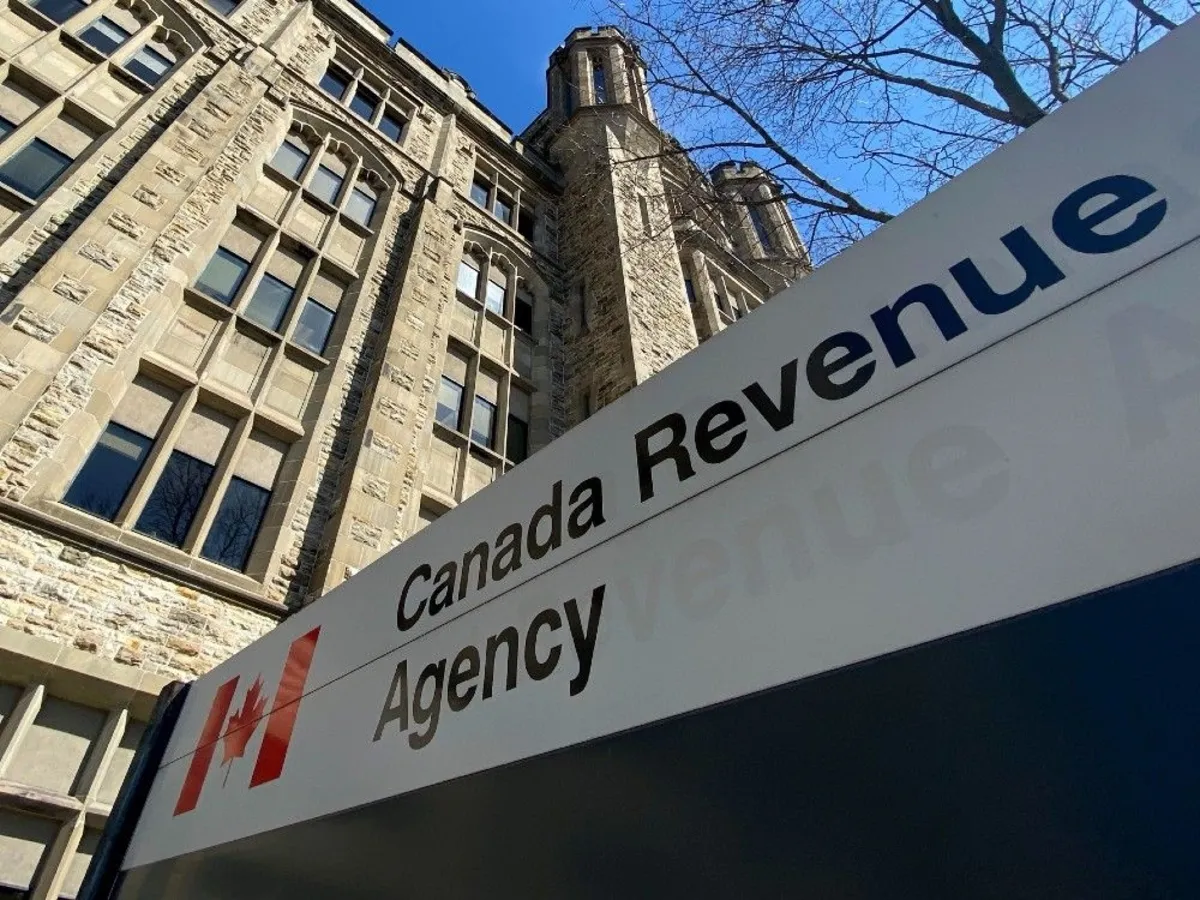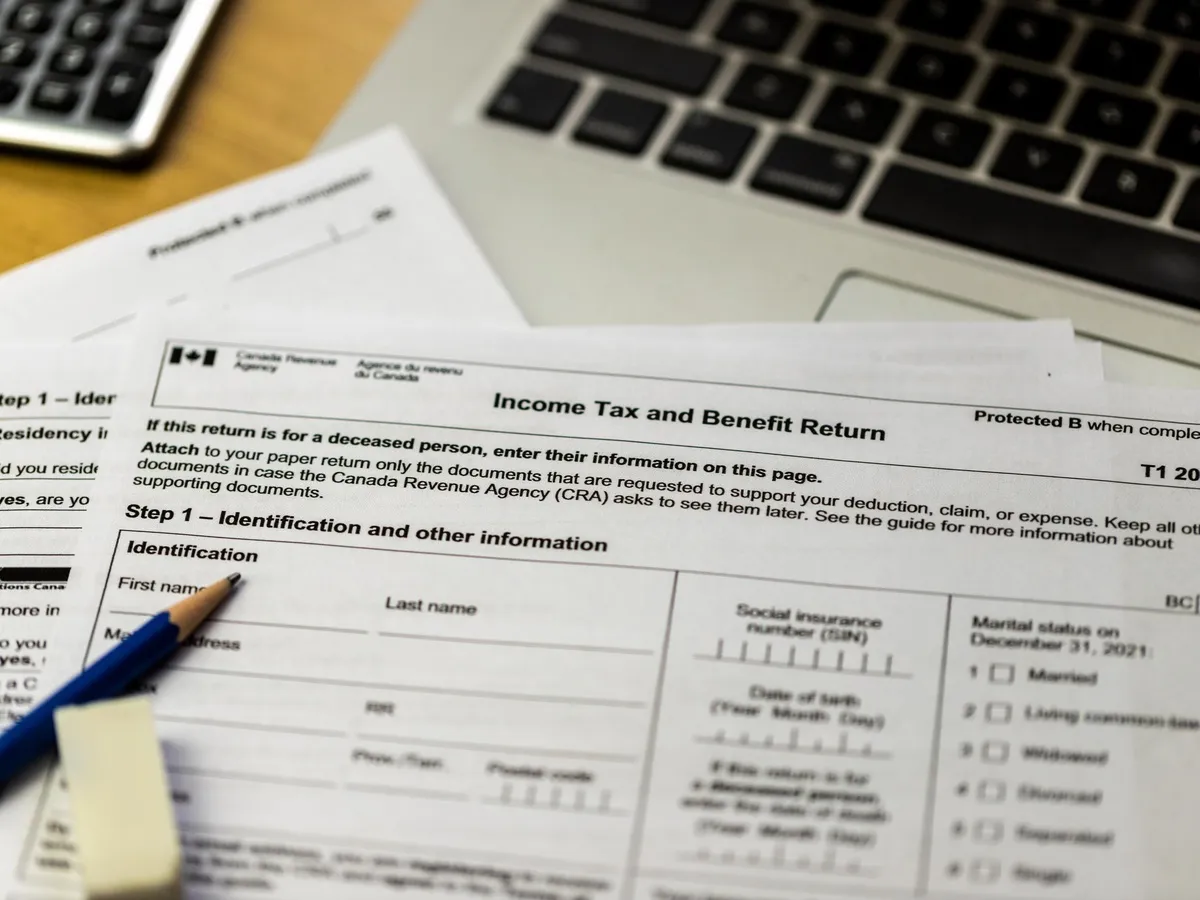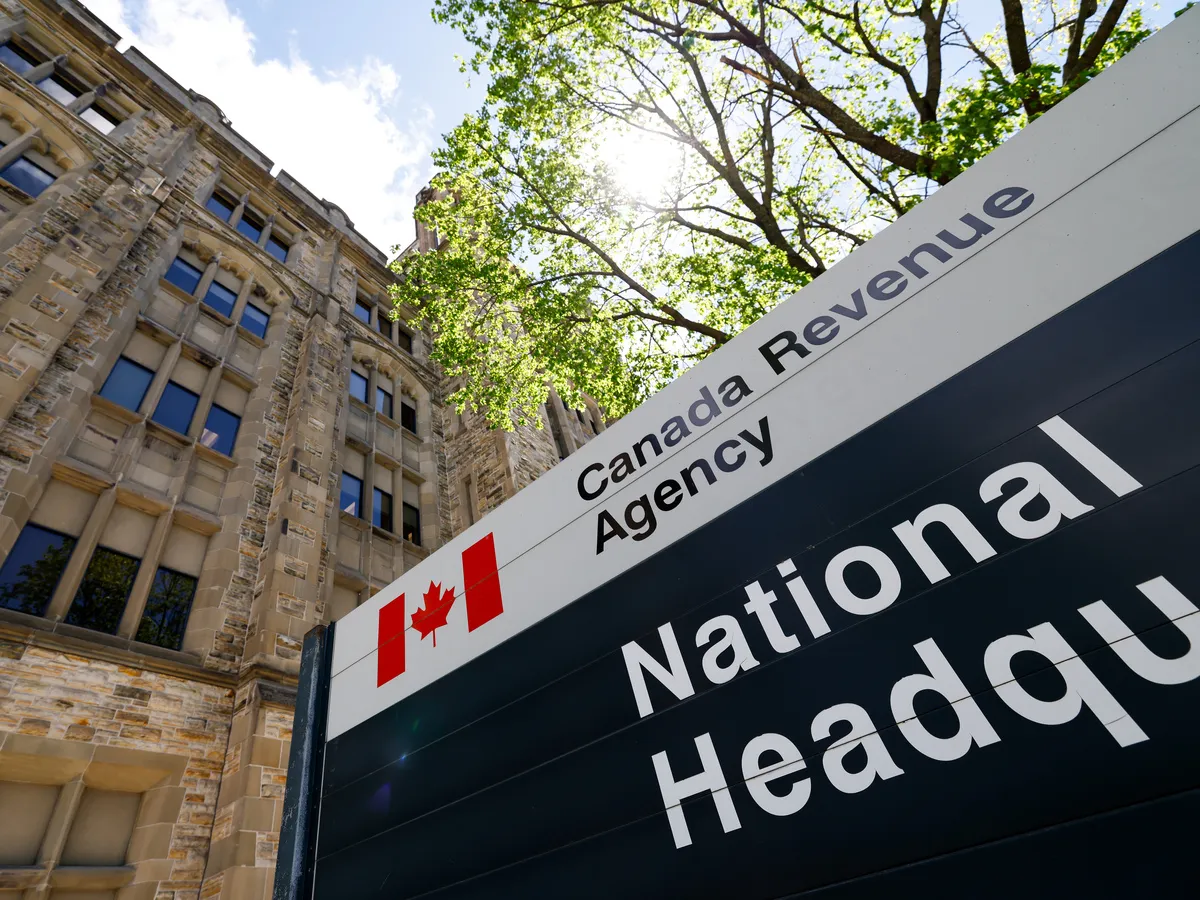
Skip to Content News Archives Economy Energy Oil & Gas Renewables Electric Vehicles Mining Commodities Agriculture Real Estate Mortgages Mortgage Rates Finance Banking Insurance Fintech Cryptocurrency Work Wealth Smart Money Wealth Management Investor Personal Finance Family Finance Retirement Taxes High Net Worth FP Comment Executive Women Puzzmo Newsletters Financial Times Business Essentials More Innovation Information Technology FP500 Podcasts Small Business Lives Told Tails Told Shopping Financial Post Store Obituaries Place a Notice Advertising Advertising With Us Advertising Solutions Postmedia Ad Manager Sponsorship Requests Classifieds Place a Classifieds ad Working Profile Settings My Subscriptions Saved Articles My Offers Newsletters Customer Service FAQ News Economy Energy Mining Real Estate Finance Work Wealth Investor FP Comment Executive Women Puzzmo Newsletters Financial Times Business Essentials HomePersonal FinanceTaxesCRA penalizes new immigrants who were late reporting foreign propertyJamie Golombek: Failure to file the form can lead to a late-filing penalty of $25 per day to a maximum of $2,500, plus arrears interest You can save this article by registering for free here. Or sign-in if you have an account.Canada Revenue Agency headquarters in Ottawa. Photo by HYUNGCHEOL PARK/Postmedia filesWe independently select everything we recommend. Buying through us may earn us a commission, which supports our work.Canadian taxpayers who own, but fail to report, certain foreign property continue to get hit with harsh penalties from the Canada Revenue Agency for either non-filing, or late-filing, of the dreaded Form T1135, Foreign Income Verification Statement.Subscribe now to read the latest news in your city and across Canada.Exclusive articles from Barbara Shecter, Joe O'Connor, Gabriel Friedman, and others.Daily content from Financial Times, the world's leading global business publication.Unlimited online access to read articles from Financial Post, National Post and 15 news sites across Canada with one account.National Post ePaper, an electronic replica of the print edition to view on any device, share and comment on.Daily puzzles, including the New York Times Crossword.Subscribe now to read the latest news in your city and across Canada.Exclusive articles from Barbara Shecter, Joe O'Connor, Gabriel Friedman and others.Daily content from Financial Times, the world's leading global business publication.Unlimited online access to read articles from Financial Post, National Post and 15 news sites across Canada with one account.National Post ePaper, an electronic replica of the print edition to view on any device, share and comment on.Daily puzzles, including the New York Times Crossword.Create an account or sign in to continue with your reading experience.Access articles from across Canada with one account.Share your thoughts and join the conversation in the comments.Enjoy additional articles per month.Get email updates from your favourite authors.Create an account or sign in to continue with your reading experience.Access articles from across Canada with one accountShare your thoughts and join the conversation in the commentsEnjoy additional articles per monthGet email updates from your favourite authorsSign In or Create an AccountorWhile some taxpayers simply pay the penalty and move on, others may choose to challenge the penalty, first by writing to the CRA begging for relief, and, if unsuccessful, taking the matter to federal court where a judge will decide whether the CRA officer’s decision to deny relief was reasonable. A June 2026 federal court decision dealt with a couple who immigrated to Canada, and were hit with penalties for failing to file their T1135s on time.Before reviewing the details of the case, here’s a brief overview of the foreign reporting rules, including the penalties for late-filing.Get the latest headlines, breaking news and columns.By signing up you consent to receive the above newsletter from Postmedia Network Inc.A welcome email is on its way. If you don't see it, please check your junk folder.The next issue of Top Stories will soon be in your inbox.We encountered an issue signing you up. Please try againIf you own “specified foreign property” where the total cost amount of all such property, at any time in the year, was more than $100,000 in the prior year, you must complete form T1135. Foreign property includes such assets as a Florida bank account, as well as shares of widely-held U.S. corporations such as Apple Inc. or Nvidia Corp. if held in a non-registered account. Personal use property, such as an Arizona condo, is excluded, as are any assets held in registered accounts such as a registered retirement savings plan (RRSP) or a tax-free savings account (TFSA).Failure to file the form can lead to a late-filing penalty of $25 per day to a maximum of $2,500, plus arrears interest. For taxpayers who fail to file the T1135 “knowingly or under circumstances amounting to gross negligence,” the penalty jumps to $500 per month for each month that the return is late, to a maximum of $12,000. After 24 months, the penalty becomes five per cent of the cost of the foreign property, less any penalties already assessed.The most recent T1135 case involved a couple who immigrated to Canada in October 2018 and returned to India the following month, where they remained until May 2019. Upon their return to Canada, the taxpayers filed Canadian tax returns, but neglected to file the T1135 forms for 2018 and 2019.It later occurred to them that they should have been filing T1135s to report foreign property from the year they immigrated. (While there’s generally an exemption to file for the year you immigrate, it seems that this couple was previously resident in Canada a decade earlier and therefore this exemption didn’t apply to them.) As soon as they realized they ought to be reporting their foreign assets, they voluntarily filed the missing T1135s, along with their regular tax filings, in April 2022.Rather than thanking the taxpayers for their honesty and for coming forward about their foreign assets, on June 1, 2022, the CRA issued Notices of Reassessment to the taxpayers for the 2018 and 2019 taxation years, indicating that they were each being charged a $2,500 penalty for each late filing ($5,000 in total for each year), plus arrears interest, for the late-filed T1135s.The taxpayers wrote to the CRA requesting relief from the penalties and arrears interest, arguing that they had acted diligently and in good faith to correct their error; that the error itself had minimal impact on their tax liability; and that paying the penalties and arrears would cause financial hardship because they did not have income and relied financially on their son.The taxpayers explained that they failed to file T1135 forms because they misunderstood their reporting requirements. They believed that the form was only for foreign income over $100,000, not for foreign property whose cost was at least $100,000. This is understandable, as the name of the form itself is Foreign Income Verification, yet the form is required even if your foreign income in a year is zero, if the cost amount of your foreign assets was more than $100,000.The first CRA reviewing officer concluded that because the T1135s had not been filed until April 2022, the taxpayers had not acted “in a timely manner to rectify the noncompliance.” But the reviewer did grant partial relief by treating the two late filings as a single late filing, and cancelled the penalty and arrears interest for 2018.The taxpayers sought a second-level review, noting that they had been confused about their reporting requirements, as they were very recent newcomers to Canada, having only been residents since late 2018, which was the first of the two missing years from their reporting.The CRA’s second-level reviewer denied their request for further relief, finding that the taxpayers were responsible for ensuring that the forms were filed on time, and noting that the CRA provides various publications to assist newcomers with filing their taxes.Oddly, the CRA reviewer further noted that each taxpayer “has a history of not filing by the due dates, has knowingly allowed a balance to exist, did not exercise reasonable care and did not act quickly to remedy the omission.” Finally, the CRA officer found that there was no basis to the taxpayers’ claim that these penalties would cause financial hardship, which the CRA interprets as an inability to afford basic necessities.The couple then appealed to the federal court, seeking a judicial review of the second-level CRA officer’s decision not to grant them relief. As in prior such cases, the federal court’s role is to determine whether the CRA’s decision to deny relief was reasonable.The judge reviewed the facts and circumstances of the case, and found it “problematic” that the CRA reviewer appeared to rely on the fact the couple late-filed their 2018 and 2019 T1135s as evidence of the couple’s history of not filing on time. As the judge wrote: “the (CRA agent) found that the (taxpayers’) failure to file their 2018 and 2019 T1135 forms was a relevant factor in denying their request for relief for failing to file their 2018 and 2019 T1135 forms. This circular form of logic often leads to unreasonable outcomes because it turns the premise of a request for relief into a reason for denying it.”As a result, the judge ordered the matter back to the CRA for reconsideration by a different officer.Jamie Golombek, FCPA, FCA, CFP, CLU, TEP, is the managing director, Tax & Estate Planning with CIBC Private Wealth in Toronto. Jamie.Golombek@cibc.com.If you liked this story, sign up for more in the FP Investor newsletter. Join the Conversation This website uses cookies to personalize your content (including ads), and allows us to analyze our traffic. Read more about cookies here. By continuing to use our site, you agree to our Terms of Use and Privacy Policy.
CRA penalizes new immigrants who were late reporting foreign property
Canadian taxpayers who own, but fail to report, certain foreign property continue to get hit with harsh penalties from the CRA. Read more.
1,576 words~7 min read