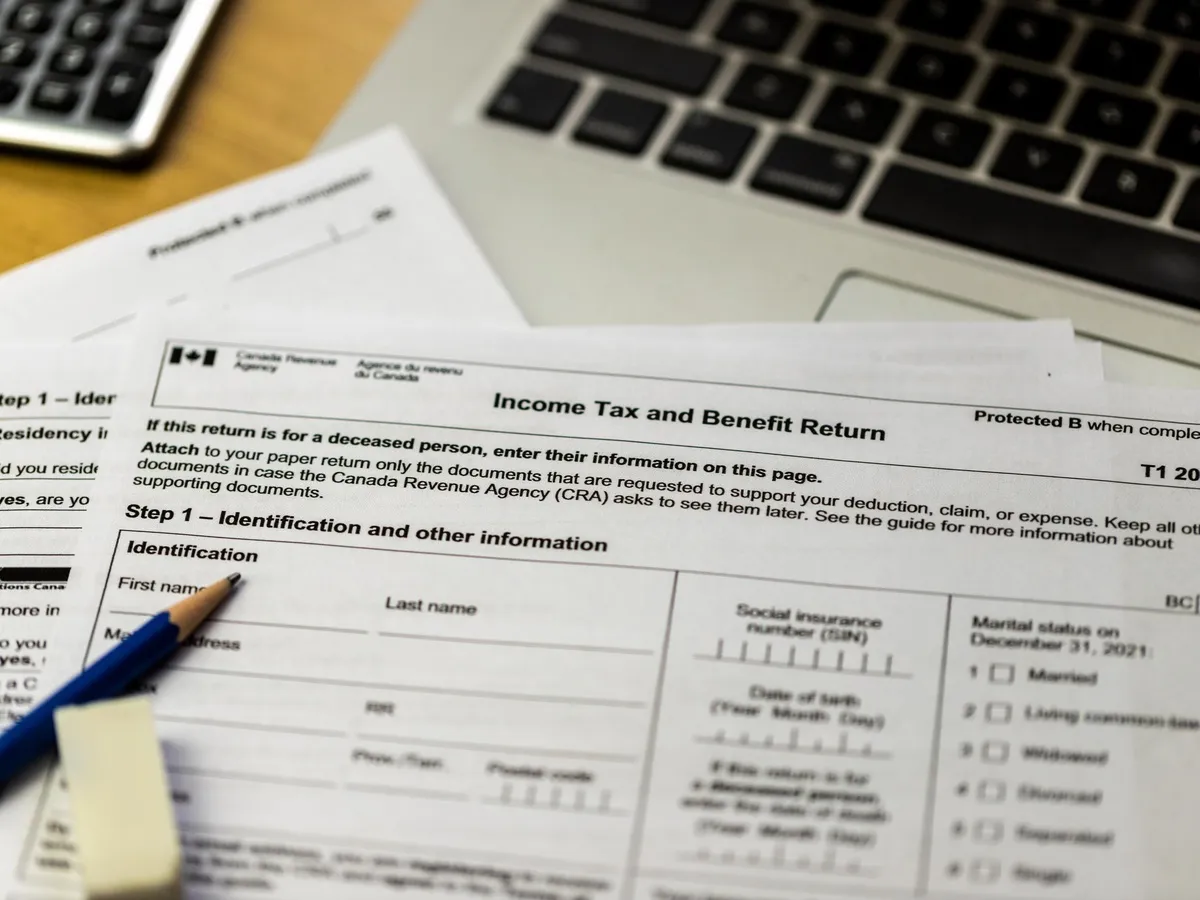
Skip to Content News Archives Economy Energy Oil & Gas Renewables Electric Vehicles Mining Commodities Agriculture Real Estate Mortgages Mortgage Rates Finance Banking Insurance Fintech Cryptocurrency Work Wealth Smart Money Wealth Management Investor Personal Finance Family Finance Retirement Taxes High Net Worth FP Comment Executive Women Puzzmo Newsletters Financial Times Business Essentials More Innovation Information Technology FP500 Podcasts Small Business Lives Told Tails Told Shopping Financial Post Store Obituaries Place a Notice Advertising Advertising With Us Advertising Solutions Postmedia Ad Manager Sponsorship Requests Classifieds Place a Classifieds ad Working Profile Settings My Subscriptions Saved Articles My Offers Newsletters Customer Service FAQ News Economy Energy Mining Real Estate Finance Work Wealth Investor FP Comment Executive Women Puzzmo Newsletters Financial Times Business Essentials HomePersonal FinanceTaxesCRA denied late filing taxpayer relief on penalties and interestBeware late filers — a recent court case illustrates what can happen, even if you have valid reasons You can save this article by registering for free here. Or sign-in if you have an account.The taxpayer disagreed with the CRA officer’s decision, and was asking the court to reweigh the evidence and come to a different conclusion. But this is not the court’s role. Photo by Maha Heang/Getty ImagesReviews and recommendations are unbiased and products are independently selected. Postmedia may earn an affiliate commission from purchases made through links on this page.If you filed your 2025 tax return late, or you have yet to file, you could face a late-filing penalty of five per cent of any balance owing, plus one per cent of the balance owing for each month your return is late, to a maximum of 12 months. (Self-employed taxpayers and their spouse or partner still have until June 15 to file on time for 2025.)Subscribe now to read the latest news in your city and across Canada.Exclusive articles from Barbara Shecter, Joe O'Connor, Gabriel Friedman, and others.Daily content from Financial Times, the world's leading global business publication.Unlimited online access to read articles from Financial Post, National Post and 15 news sites across Canada with one account.National Post ePaper, an electronic replica of the print edition to view on any device, share and comment on.Daily puzzles, including the New York Times Crossword.Subscribe now to read the latest news in your city and across Canada.Exclusive articles from Barbara Shecter, Joe O'Connor, Gabriel Friedman and others.Daily content from Financial Times, the world's leading global business publication.Unlimited online access to read articles from Financial Post, National Post and 15 news sites across Canada with one account.National Post ePaper, an electronic replica of the print edition to view on any device, share and comment on.Daily puzzles, including the New York Times Crossword.Create an account or sign in to continue with your reading experience.Access articles from across Canada with one account.Share your thoughts and join the conversation in the comments.Enjoy additional articles per month.Get email updates from your favourite authors.Create an account or sign in to continue with your reading experience.Access articles from across Canada with one accountShare your thoughts and join the conversation in the commentsEnjoy additional articles per monthGet email updates from your favourite authorsSign In or Create an AccountorIf it’s not the first time you’ve filed late, and you’ve been assessed a late-filing penalty in any of the prior three years, the penalties can double to 10 per cent of the unpaid amount, plus a two per cent penalty for each late month, to a maximum of 20 months.When you add to this the non-deductible arrears interest, compounded daily, charged at the current prescribed interest rate of seven per cent, the penalties and interest charges can really add up.Get the latest headlines, breaking news and columns.By signing up you consent to receive the above newsletter from Postmedia Network Inc.A welcome email is on its way. If you don't see it, please check your junk folder.The next issue of Top Stories will soon be in your inbox.We encountered an issue signing you up. Please try againShould you be hit with penalties and interest this tax season, you can ask the Canada Revenue Agency to waive or cancel them under the taxpayer relief provisions. Should the CRA refuse your request for relief, you can have the CRA’s decision reviewed by a Federal Court judge to determine whether the CRA officer’s decision was “reasonable.” That’s ultimately what happened in a recent case that was heard in court last month, involving two late-filed personal tax returns.The taxpayer, who works in the Canadian film and television industry as a specialized technician, appeared in a Halifax courtroom last month seeking relief from late-filing penalties and arrears interest for his tax debt arising from the 2020 and 2021 taxation years.In his request for relief, the taxpayer testified that he suffered “financial, familial and medical issues” during the COVID-19 pandemic that affected his ability to meet his tax filing and payment obligations. These issues included an inability to reach his long-time accountant, despite numerous calls that went unanswered, after the taxpayer and his spouse relocated from Western Canada with an infant and into a home that needed significant repairs. While the taxpayer eventually found a new accountant in Nova Scotia, it took that new accountant time to get up to speed on the taxpayer’s financial situation. In addition, the taxpayer’s health situation meant he suffered from periodic debilitating pain. To make matters worse, the film and television industry experienced significant declines in activity during the pandemic, and again in 2023.The initial CRA officer who reviewed his submission expressed sympathy for his situation, but nonetheless denied his request for relief. The taxpayer then requested a second review by a different CRA officer, which also resulted in a denial of his request for relief. The second CRA review officer determined that the taxpayer’s household income and tax-free savings account (TFSA) were sufficient to pay his tax balance owing without a prolonged inability to afford basic necessities of life. The CRA officer noted that the taxpayer continued to make annual contributions to his TFSA while the interest on his tax debt was accruing. The officer was also unable to find a connection between the taxpayer’s non-compliance and the circumstances he presented in his relief request.The taxpayer thus turned to federal court seeking a judicial review of the CRA’s second review decision. He challenged the reasonableness of the decision, arguing that the CRA failed to consider his evidence in its totality, relied on irrelevant considerations, and failed to apply its own policy.At trial, the taxpayer submitted that the CRA officer “did not engage meaningfully with key facts he presented,” which included his medical documentation, the breakdown in his relationship with his accountant, his cross-country move in 2019, pandemic disruptions and the cumulative strain of these factors. He felt that, in his view, the CRA “assessed his circumstances too narrowly and individually rather than considering their cumulative and prolonged impact over time.” According to the taxpayer, this lack of engagement demonstrated “a failure in justification.”The CRA countered that, under the Income Tax Act, the agency has broad discretion to accept or reject a taxpayer’s request for a waiver or cancellation of penalties and interest otherwise payable to the CRA.The taxpayer essentially disagreed with the CRA officer’s decision, and was essentially asking the court to reweigh the evidence and come to a different conclusion. But this is not the court’s role on a judicial review. Rather, the federal court’s role is to consider whether, based on the arguments and evidence presented to the CRA officer, the reasons given and conclusion drawn were “intelligible, transparent and justified when read holistically.”As the judge wrote, “The fact that a different decision-maker might have made different inferences or drawn different conclusions from the facts, in itself, does not make a decision unreasonable. The Court generally will intervene only where it is satisfied that the evidence overwhelmingly is against the decision-maker’s findings.”The taxpayer then argued that the CRA’s decision was unfair because his company did not receive any grants from the government during the pandemic and that, because of this, he had to drain his company’s bank account to pay his taxes owed for the tax years 2020 and 2021. As he put it, “A fair approach would have prevented this endangerment of the survival of his company.” The judge dismissed this argument, finding it irrelevant.The taxpayer also tried to argue that his income, TFSAs, and registered retirement savings plan (RRSP) were “irrelevant considerations.” The judge disagreed, referring to the CRA’s own Information Circular on the Taxpayer Relief Provisions, which explicitly mentions that the “CRA will review in detail a taxpayer’s financial situation to determine their ability to pay amounts owing and the interest charges that will continue to accrue. A financial review considers such things as: income and expenses; assets and liabilities; ability to borrow funds and sell assets; actions and efforts to pay amounts owing.”In the end, the judge was simply not persuaded that the evidence the taxpayer submitted in support of his requests for relief were sufficient to call into question the reasonableness of the CRA’s decision, and thus the judge dismissed the taxpayer’s application for review.Jamie Golombek, FCPA, FCA, CFP, CLU, TEP, is the managing director, Tax & Estate Planning with CIBC Private Wealth in Toronto. Jamie.Golombek@cibc.com.If you liked this story, sign up for more in the FP Investor newsletter. Join the Conversation This website uses cookies to personalize your content (including ads), and allows us to analyze our traffic. Read more about cookies here. By continuing to use our site, you agree to our Terms of Use and Privacy Policy.
CRA denied late filing taxpayer relief on penalties and interest
Jamie Golombek: Beware late filers — a recent court case illustrates what can happen, even if you have valid reasons. Read on
1,587 words~7 min read