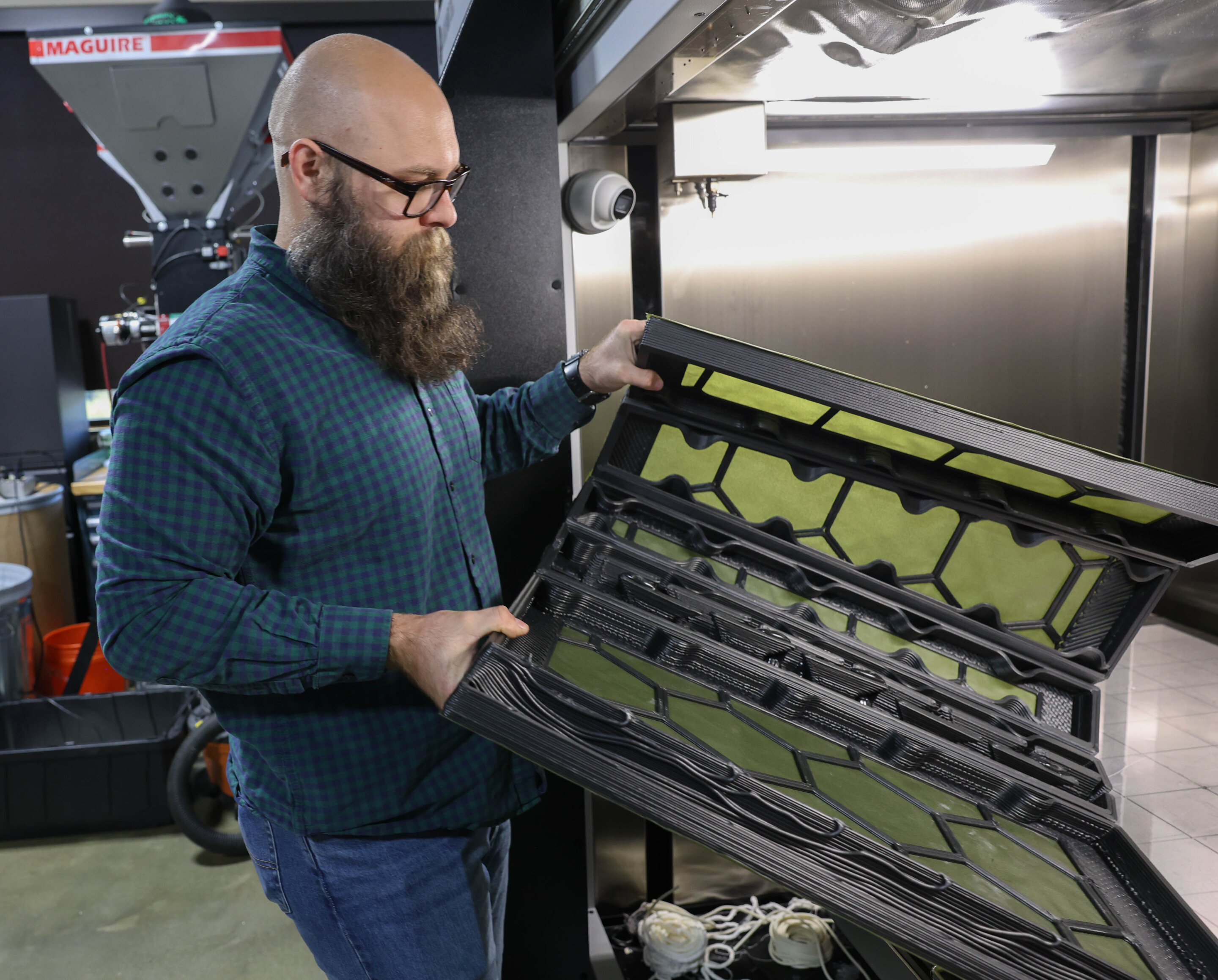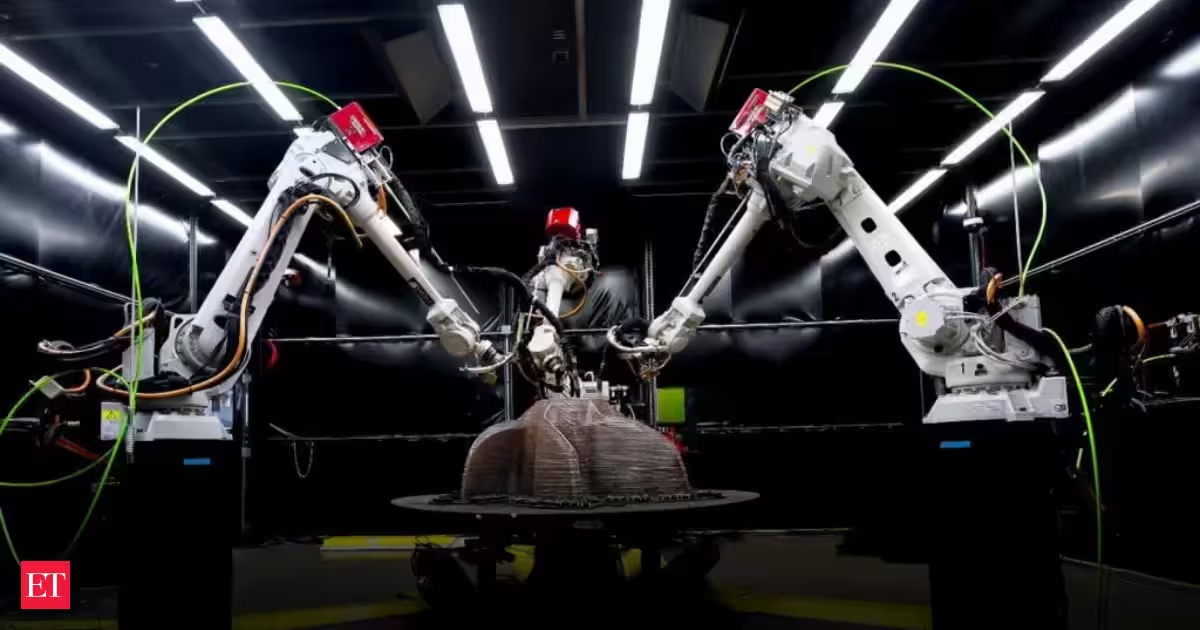
America’s nuclear industry has a problem that starts long before a reactor is assembled: the United States has limited access to the enormous forging capacity needed for major pressure-retaining components. Oak Ridge National Laboratory and Idaho National Laboratory are now exploring whether large-scale metal 3D printing can provide another route. Their latest demonstration involved a roughly 3-by-5-foot steel pressure vessel printed in Tennessee using three robotic arms, as per ORNL.gov.The vessel is an early milestone, not a certified nuclear component or a replacement for the giant forging presses used today.Why is the US looking beyond traditional forging?Oak Ridge National Laboratory has pointed to a decline in domestic casting and forging capacity for very large metal components, with much of that capacity moving overseas. The shortage affects several industries, including energy, defense, aerospace and oil and gas.Against that backdrop, ORNL and Idaho National Laboratory announced a joint program at Materials and Manufacturing Innovation Days in Tennessee on August 19.You Might Also Like:The pressure vessel was printed in July and measures roughly three feet by five feet. ORNL describes it as an early demonstration of the technology's ability to scale.That distinction matters. The laboratories did not claim to have replaced forging or produced a certified nuclear pressure vessel.ORNL has previously produced pressure-retaining nuclear hardware, including stainless steel irradiation capsules that served as containment barriers and pressure vessels and survived a month inside the High Flux Isotope Reactor.The latest demonstration is different because of its size, closed shape and steel alloy described by the laboratories as relevant to nuclear service.You Might Also Like:How do three robotic arms print the steel?The system behind the demonstration is called MedUSA, short for Large-scale Multi-agent Wire Arc Additive Manufacturing. Located at ORNL's Manufacturing Demonstration Facility, the system uses three robotic arms, each equipped with a welder. They move around a shared turntable, depositing molten wire one bead at a time.The challenge is not simply melting and placing the metal. Three active welding arcs must work around the same part without colliding or interfering with one another as the object heats and changes shape.ORNL developed the system with Lincoln Electric Additive Solutions. Lincoln's role includes path-planning software, monitoring during deposition and laser scanning that compares completed components with their original computer-aided designs.You Might Also Like:The production rate is one of the more important numbers. By 2024, MedUSA was depositing steel at about 100 pounds per hour.That makes the system considerably more interesting for industrial manufacturing than a machine limited to small laboratory components.What has MedUSA actually produced?The machine's record includes a 900-pound can printed in 46 hours for a hydropower impeller. But the can itself was not the finished impeller. It served as a mold that was filled with metal powder and processed through hot isostatic pressing. The press produced the final component.ORNL is pursuing this powder-metallurgy hot-isostatic-pressing approach alongside wire-arc printing as another possible way around conventional forging.The laboratory has also printed an 837-pound stainless steel canister for spent-fuel dry-cask storage and subjected it to drop and puncture testing.The new pressure vessel represents another step because the printed object itself is intended to retain pressure. That still leaves a substantial gap between a 3-by-5-foot demonstration and the enormous components required for full-scale reactor construction.A calandria vessel being fabricated for Canada's first small modular reactor weighs 606 tons and stretches 98 feet. The article's supplied information notes that only one shop on the continent has started work on one.The realistic near-term opportunity is therefore smaller pressure hardware, including vessels, closure heads, nozzles, tooling and other components needed by microreactors and small modular reactors.Can a printed nuclear component be qualified?Printing the shape is only the beginning. For nuclear applications, the difficult question is whether the material and component can demonstrate the long-term performance required of a pressure boundary.The Oak Ridge-Idaho program is focused on monitoring the manufacturing process using sensors and AI-driven analysis. The goal is to verify geometry and material properties as the component is deposited layer by layer. ORNL lead researcher Patxi Fernandez-Zelaia describes the objective as “born-qualified” components.Jorgen Rufner, who leads INL's advanced manufacturing group, has also framed the potential benefit around evaluating component performance while manufacturing is taking place, potentially shortening qualification timelines.Oak Ridge brings the large-scale printing capability, while Idaho brings extensive experience with reactor materials and the evidence needed for nuclear qualification.Whether ASME and the Nuclear Regulatory Commission will accept process data in place of some destructive testing for a pressure boundary remains unresolved. No printed nuclear pressure vessel has completed that process.What happened with the Antares reactor brackets?ORNL has also connected the same printer and material to hardware used near a live reactor core. The laboratory cites neutron sensor brackets for Antares Nuclear's Mark-0 microreactor. Mark-0 reached criticality at Idaho National Laboratory on June 4 under the Energy Department's pilot program, as quoted in a report by AutoNotion.However, this was zero-power criticality. INL director John Wagner clarified that the chain reaction “was sustained at essentially no measurable energy output.”The printed brackets held sensors. They were not printed steel pressure boundaries containing a reactor core.Edwin Lyman of the Union of Concerned Scientists described that achievement as a rudimentary first step and said it did not establish whether the reactor would ultimately be safe or commercially viable.The same caution applies to the new pressure-vessel demonstration.The immediate achievement is straightforward: ORNL has demonstrated a closed steel vessel of this class using large-scale robotic wire-arc manufacturing, and INL is now involved in figuring out how such components could eventually meet nuclear requirements.The next steps are far less dramatic but far more important: material testing, ASME code work and enough manufacturing data to establish how printed components perform under neutron exposure and thermal cycling.The scale of the ambition is also worth keeping in mind. ORNL says the components it ultimately wants to bring back onshore weigh at least 10,000 pounds each. The demonstration vessel is only three by five feet. That makes the Tennessee vessel a meaningful proof of concept, but not yet the answer to America's forging shortage.FAQsWhy did Oak Ridge print a steel pressure vessel?To explore whether large nuclear components can be made without relying on traditional forging presses.How large was the printed vessel?You Might Also Like:It was roughly 3 feet by 5 feet and was an early demonstration, not a certified nuclear component.
Oak Ridge and Idaho National Lab Print New Steel Pressure Vessel to Combat U.S. Forging Shortage
In a groundbreaking development, Oak Ridge and Idaho National Laboratory have utilized advanced robotic welding technology to 3D print a steel pressure vessel in Tennessee. This innovation aims to address the U.S. forging shortage, particularly for nuclear components weighing 10,000 pounds or more, marking a significant step toward reviving domestic manufacturing capabilities in critical industries.
1,049 words~5 min read