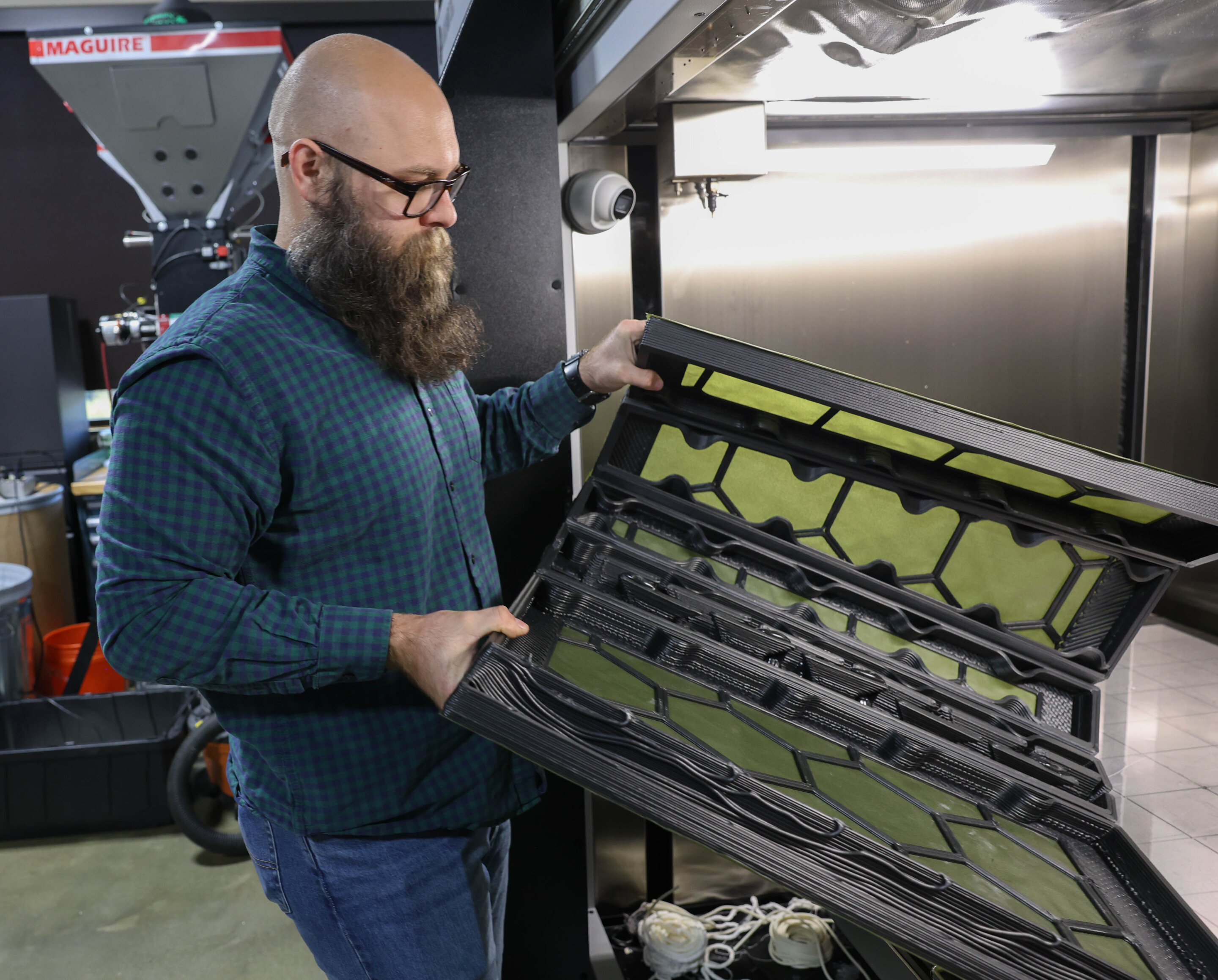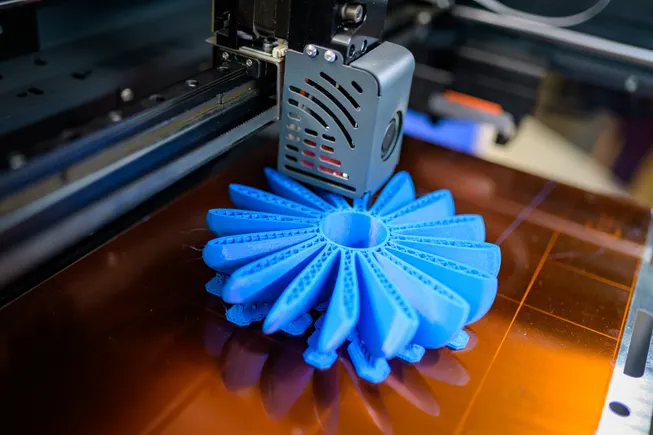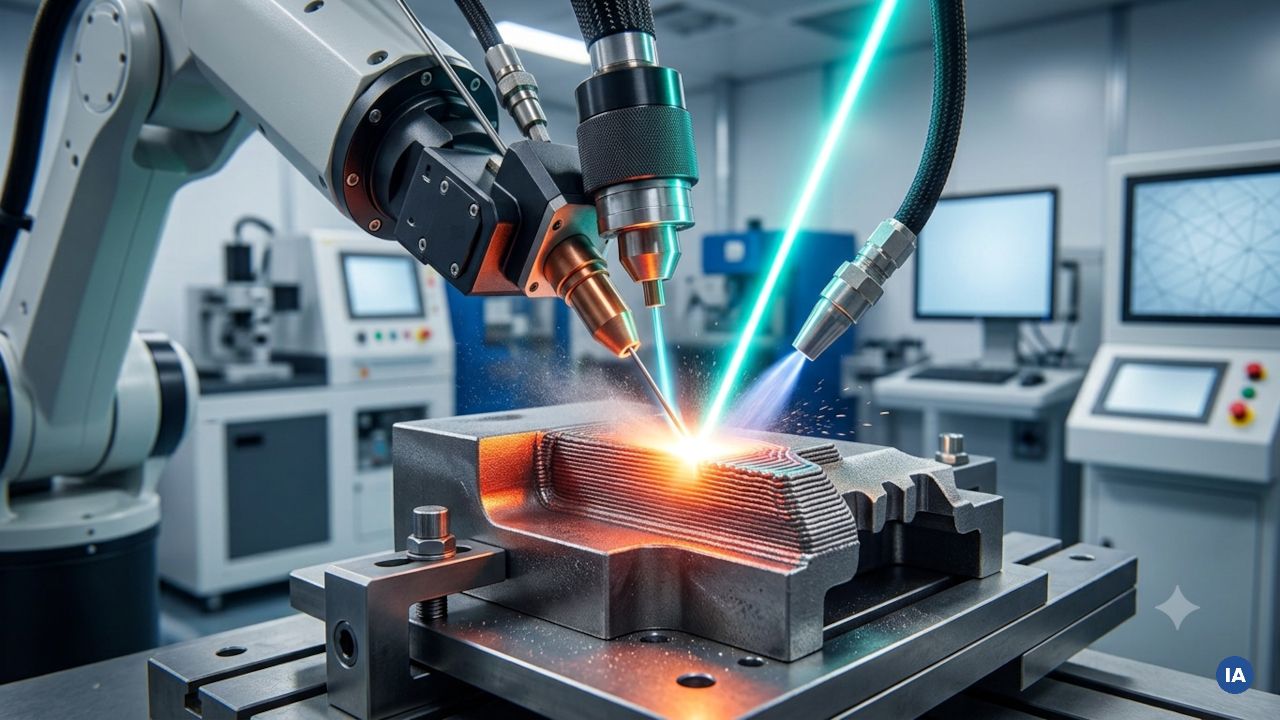
Three‑dimensional (3D) printing is no longer an experimental technology. In aviation, medicine and automotive manufacturing, additive manufacturing has already entered mainstream production. The traditionally cautious nuclear industry is now starting to adopt it in carefully regulated ways as well. Additive manufacturing builds components layer by layer from a digital design, usually using metal powder fused by laser. Unlike conventional forging or machining, it adds rather than removes material. This results in greater precision, less waste and the ability to create shapes that were previously difficult or too expensive to manufacture. In nuclear power, early applications have been deliberate and thoroughly supervised. In 2017 engineers installed a 3D‑printed pump impeller at the Krško nuclear power plant in Slovenia when the original technical drawings were no longer available. In the US, Oak Ridge National Laboratory produced reactor brackets that were installed in a commercial plant in 2021 for long‑term performance testing — a sign that regulators are beginning to treat additive components as viable options. Sweden is one of the clearest examples of how the technology can support long‑term plant operation. At the Ringhals nuclear power station, operators began testing and implementing this technology in 2017. Sweden’s fleet, built mainly in the 1970s and 1980s, is being prepared for extended operating lifetimes. That requires replacement components that are increasingly difficult to source through traditional suppliers. In 2022 the French company Framatome also installed a 3D‑printed stainless‑steel fuel component at Sweden’s Forsmark station, expanding on the country’s early efforts in additive manufacturing. Additive manufacturing makes it possible to produce parts from certified digital models whenever needed. Tests have shown that when properly approved, these components can meet the same structural integrity standards as traditionally produced ones. Today, 3D‑printed elements are installed at Swedish nuclear plants in noncritical positions (parts that are not part of safety systems) while new standards for broader use continue to emerge internationally. The regulatory dimension remains essential since nuclear components must pass some of the most stringent quality codes in engineering. International projects, including European research programmes and work led by the Electric Power Research Institute, focus on establishing clear qualification pathways for additive manufacturing. The International Atomic Energy Agency is also working to harmonise safety and performance benchmarks worldwide for advanced manufacturing methods. For South Africa these developments are especially relevant, as Africa’s only commercial nuclear power station at Koeberg has been in operation for more than 40 years. As the country works to stabilise the electricity supply and extend the life of existing generating assets, access to dependable spare parts is critical. Eskom’s life extension project at Koeberg includes the replacement of major components and refurbishment of systems originally designed more than four decades ago. Nuclear plants depend on specialised components, some of which were designed for suppliers that no longer exist. Production runs are often too small to justify traditional manufacturing, and long lead times can raise costs and disrupt planned maintenance outages. Additive manufacturing offers a realistic way to strengthen these supply chains. By maintaining secure digital inventories — virtual warehouses of certified component designs — plant operators can produce approved parts on demand under regulatory oversight. This approach does not replace conventional manufacturing, but it can shorten delivery times, reduce dependence on limited suppliers and give operators more flexibility when timing is critical. In a country where the reliability of electricity supply affects every sector of the economy, even small improvements in plant availability carry significant benefits. Nuclear plants depend on specialised components, some of which were designed for suppliers that no longer exist. Production runs are often too small to justify traditional manufacturing, and long lead times can raise costs and disrupt planned maintenance outages. Globally, additive manufacturing is now moving into more demanding nuclear applications. Rosatom, Russia’s state nuclear corporation, has also advanced this technology. In 2025 its mechanical engineering division received permission to manufacture elements of the RITM‑200 reactor (these compact units are deployed on Russia’s nuclear icebreakers, and are being adapted for land-based power plants as well) using a domestically produced 3D printer. The first component, part of a pumping system, underwent full qualification testing and regulatory approval. In pilot applications additive manufacturing has reduced production times by about 30% while significantly lowering material use compared to conventional methods. At the same time, the development of dedicated standards and qualification procedures is gradually enabling a shift from isolated use cases to more systematic deployment. This achievement demonstrates that properly certified additive techniques can support not only auxiliary systems but also more complex areas of reactor equipment. The broader implication goes beyond technological novelty: it is about supply resilience. As nuclear programmes expand or modernise in South Africa and across the continent, the capacity to manufacture certain components more flexibly can reduce downtime, simplify maintenance planning and enhance infrastructure stability. Additive manufacturing will not replace forging, casting or machining in nuclear engineering. Reactors will not be “printed” wholesale. However, as global standards mature, the technology is becoming an additional, reliable tool for operators and engineers. For South Africa, with decades of nuclear experience and an urgent need for dependable electricity, that tool could prove quietly transformative. In an energy system where reliability is paramount, any improvement that strengthens industrial resilience and extends a plant’s lifespan is not a marginal upgrade but a practical contribution to the nation’s stability and economic confidence. • Ospennikova is development director at the Association of Additive Technologies.
OLGA OSPENNIKOVA | 3D printing the future of nuclear energy
Traditionally cautious nuclear industry is beginning to adopt 3D printing, which provides greater precision and less waste
901 words~4 min read