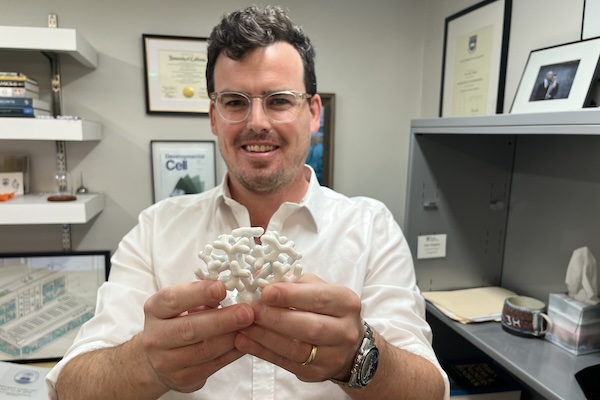
Bioengineering professor Alex Hughes tackles the burden of chronic kidney disease by creating kidney tissue from scratch, which could reduce the need for both dialysis and transplantation.
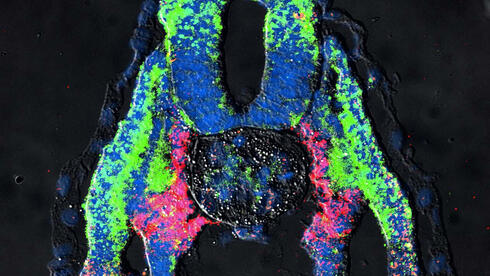
To Alex Hughes, assistant professor in bioengineering in Penn’s School of Engineering and Applied Science and in cell and developmental biology in the Perelman School of Medicine, the kidney is a work of art. “I find the development of the kidney to be a really beautiful process,” says Hughes.
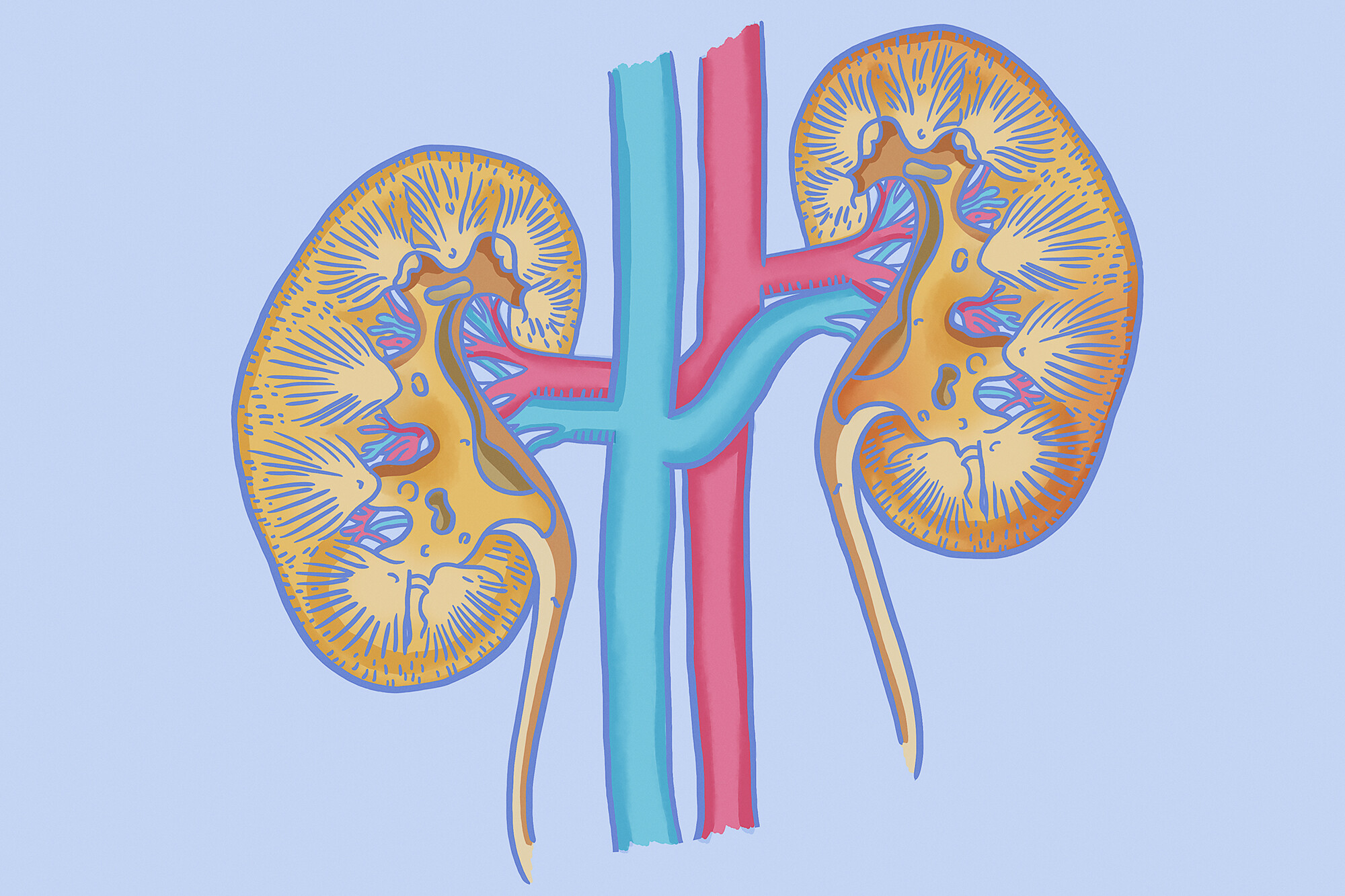
Densely packed with tubules clustered in units known as nephrons, kidneys cleanse the blood, maintaining the body’s fluid and electrolyte balance, while also regulating blood pressure. The organ played a crucial role in vertebrates emerging from the ocean: as one paper puts it, kidneys preserve the primordial ocean in all of us.
Unfortunately, kidneys struggle in the modern world. Excessively salty food, being overweight, not exercising enough, drinking too much and smoking can all raise blood pressure, which damages the kidney’s tiny blood vessels, as does diabetes.
In some cases, damage to the kidney’s nephrons can be slowed with lifestyle changes, but, unlike the liver, bones and skin, which can regrow damaged tissue, kidneys have a limited capacity to regenerate. At present, without a transplant, the nephrons we have at birth must last a lifetime.