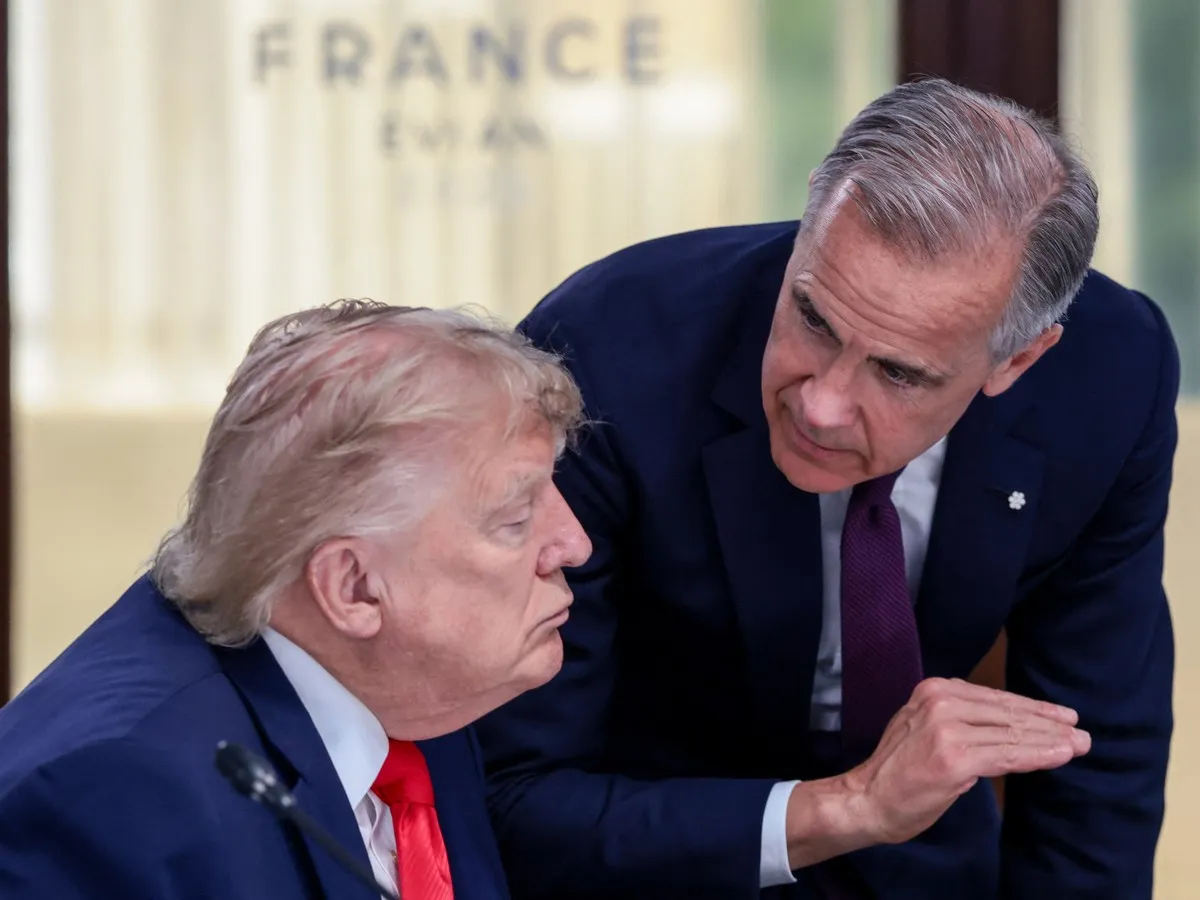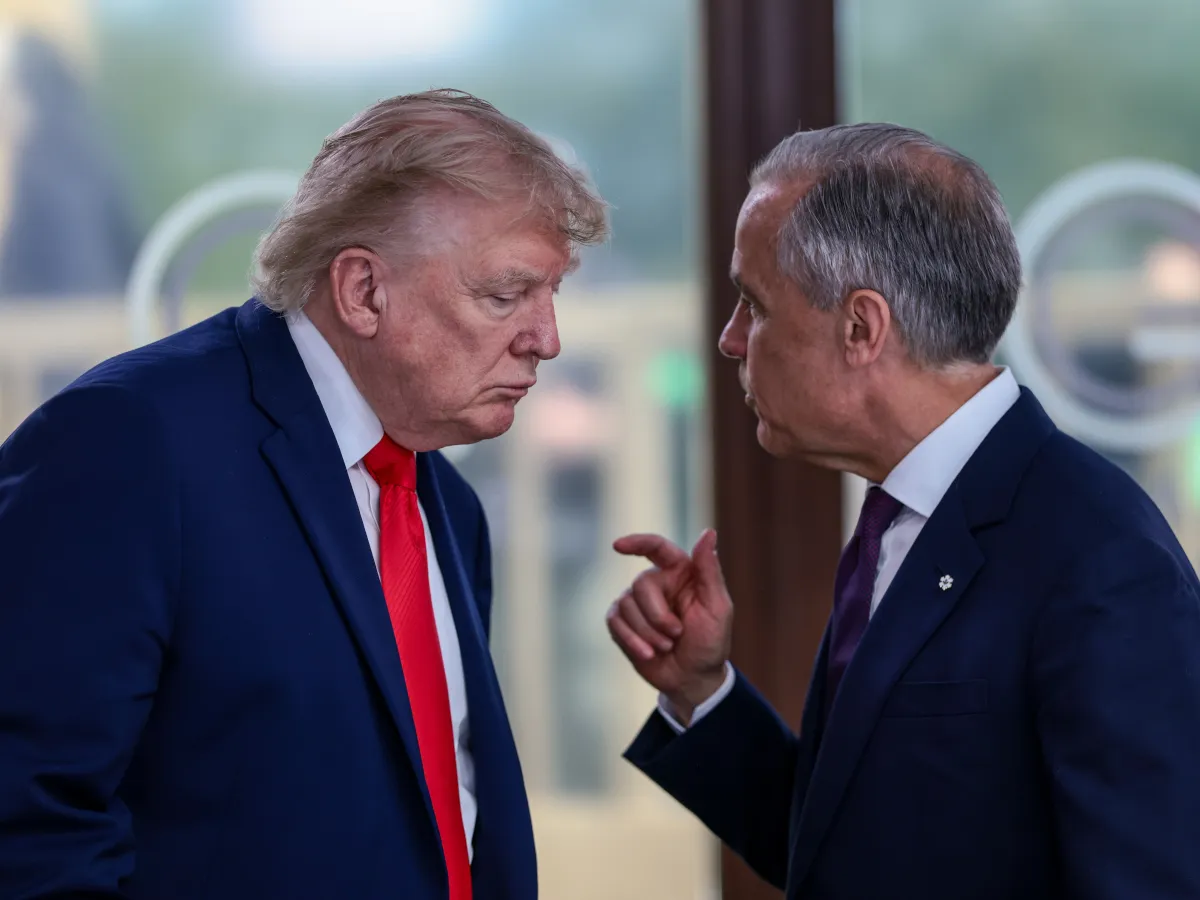
Skip to Content Subscribe My Account Manage My Subscriptions FAQ Newsletters Canada Canadian True Crime Canadian Politics Health World Israel & Middle East Financial Post NP Comment Longreads Puzzmo Diversions Comics NP News Quiz New York Times Crossword Horoscopes Life Eating & Drinking Style Sponsored Play for Ontario Travel Travel Canada Travel USA Travel International Cruises Travel Essentials Culture Books Celebrity Movies Music Theatre Television Business Essentials Advice Lives Told Tails Told Shopping Buy Canadian Home Living Outdoor Living Kitchen & Dining Tech Style & Beauty Personal Care Entertainment & Hobbies Gift Guide Travel Guide Amazon Prime Day Deals Savings National Post Store More Sports Hockey Baseball Basketball Football Soccer Golf Tennis Driving Vehicle Research Reviews News Gear Guide Obituaries Place an Obituary Place an In Memoriam Classifieds Place an Ad Celebrations Working Business Ads Archives Healthing Epaper Manage Print Subscription Profile Settings My Subscriptions My Offers Newsletters Customer Service FAQ Newsletters Canada World Financial Post NP Comment Longreads Puzzmo Diversions Life Shopping Epaper Manage Print Subscription HomeNP CommentJ.D. Tuccille: Canada can win at trade by ignoring TrumpNegotiating the rules of trade is always a losing proposition; politicians should just get out of the way.Last updated 5 minutes ago Prime Minister of Canada Mark Carney (L) speaks with U.S. President Donald Trump during a family photo at the G7 Summit on June 16, 2026 in Evian-les-Bains, France. Photo by Anna Moneymaker /Getty ImagesPrime Minister Mark Carney insists Canada is “at war” with the U.S. after trade talks between the two countries fell apart over the weekend. Fortunately, the war is a rhetorical one over commerce rather than a military conflict, for which Canadians are woefully unprepared. But the exchange of talking points instead of bullets is foolish and destructive enough, and evidence of the futility of managing trade rather than simply getting governments out of the way of people freely exchanging goods and services.Enjoy the latest local, national and international news.Exclusive articles by Conrad Black, Barbara Kay and others. Plus, special edition NP Platformed and First Reading newsletters and virtual events.Unlimited online access to National Post.National Post ePaper, an electronic replica of the print edition to view on any device, share and comment on.Daily puzzles including the New York Times Crossword.Support local journalism.Enjoy the latest local, national and international news.Exclusive articles by Conrad Black, Barbara Kay and others. Plus, special edition NP Platformed and First Reading newsletters and virtual events.Unlimited online access to National Post.National Post ePaper, an electronic replica of the print edition to view on any device, share and comment on.Daily puzzles including the New York Times Crossword.Support local journalism.Create an account or sign in to continue with your reading experience.Access articles from across Canada with one account.Share your thoughts and join the conversation in the comments.Enjoy additional articles per month.Get email updates from your favourite authors.Create an account or sign in to continue with your reading experience.Access articles from across Canada with one accountShare your thoughts and join the conversation in the commentsEnjoy additional articles per monthGet email updates from your favourite authorsSign In or Create an Accountor“You’re at war when you get attacked. We got attacked,” Carney insisted towards the end of his Saturday press conference after the failure of the trade talks.The National Post newsletter that doesn’t hold back, giving readers the unvarnished truth on media, politics and culture.By signing up, you consent to receive the above newsletter from Postmedia Network Inc.A welcome email is on its way. If you don't see it, please check your junk folder.The next issue of Right? will soon be in your inbox.We encountered an issue signing you up. Please try againFor his part, U.S. President Donald Trump responded that “Canada wants the benefits of being a State, without being one.” He complained that Canadians have “charged our great farmers, for many years, massive amounts of Tariffs. No more!”Amidst recriminations as to who caused the breakdown — Politico reports the talks “ultimately buckled under a combination of last-minute demands and political constraints on both sides” — the two national leaders are threatening new trade barriers in addition to preexisting tariffs. Pundits and policy experts are digging through such details as have leaked to figure out just where the deal went off the rails.Strictly speaking, Carney is the more credible figure in the dispute since he’s right that “America has changed” and the U.S. government is trying to “put a series of tariffs on its closest allies and use economic integration as a weapon.” Trump has been notably belligerent in the process of reshaping trade — as he is in all things — making Carney’s “war” talk somewhat believable.But the parsing of trade demands and personalities misses a larger point. While Donald Trump can be a bully and Carney retains his calm while sniffily complaining about insults to the sovereignty of his country, both of them, and their flunkies, have engaged in the presumptuous business of trying to negotiate the rules of exchange between millions of buyers and sellers in two countries.We’d all be far better off if even just one of them stepped aside and let matters work themselves out.Decades ago, economist Milton Friedman noted that protectionists constantly hand-wave away arguments in favour of free trade as “fine in theory” while insisting that trade must be “reciprocal” — precisely the argument the Trump administration makes as it reworks already rule-burdened trade deals.At a time when Japan was the feared economic behemoth that was supposedly going to eat the world, Friedman warned that tariffs “raise prices to customers and waste our resources.” He argued that when the governments of other countries shield their markets from competition, instead of benefiting their economies they hurt their people and businesses.“The wise course for us is precisely the opposite — to move unilaterally toward free trade. If they still choose to impose restrictions, that is too bad but at least we have not added insult to injury.”Evidence for Friedman’s position is found in a recent New York Times article about the vulnerability of electricity grids, largely because of their dependence on expensive, hand-crafted power transformers that are difficult to replace. While U.S. companies are building manufacturing facilities and developing alternative transformer technologies, they’re hampered by tariffs on copper and aluminum. “Costs are up almost 20 percent,” an industry executive told the Times. “We need relief on all of the metals.”The next massive blackout may happen because trade barriers raised the cost of preventing it beyond the industry’s ability to afford resilience.Just because Trump is an economic ignoramus who thinks economic activity can be successfully managed by government, despite a long history of evidence to the contrary, doesn’t mean that Carney should follow his example and contribute to the conflict.Quebec-born Vincent Geloso, an economics professor at Virginia’s George Mason University, argues that “Canada’s response to American tariffs should be incredibly simple: slash our own tariffs and trade barriers. And do not impose counter-tariffs.”He makes the same argument offered by Friedman, that tariffs hurt consumers and businesses in the countries that impose them. “How exactly does making Canadians poorer punish Donald Trump? If the Trump admin wants to shoot itself in the foot, the Carney government is under no obligation to shoot Canadians in the face with a twelve gauge shotgun for the sake of ‘reciprocity.’”Or, as the late British economist Joan Robinson wrote, “The popular view that free trade is all very well so long as all nations are free-traders, but that when other nations erect tariffs we must erect tariffs too, is countered by the argument that it would be just as sensible to drop rocks into our harbours because other nations have rocky coasts.”In a 2025 paper, Geloso pointed out that Britain benefited from repealing “Corn Law” tariffs on imported grain. “The Corn Laws had the effect of keeping food prices in the UK 9% higher relative to world markets. Since food items were a major component of the budgets of the poor, the repeal of the tariffs was largely a ‘pro-poor’ policy.” He added that most 19th century trade liberalization was unilateral, with no expectation that other nations would necessarily reciprocate. Liberalizing nations quickly prospered.Yes, it’s better when all governments get out of the way and let people and businesses exercise their right to engage in voluntary exchange without regard to borders. But holding trade hostage to the intelligence, decency, and economic wisdom of political leaders in multiple countries is a sucker’s bet. Inevitably, populists with neo-mercantilist ideas arise and burden their own people with tariffs while claiming to help them.In the days to come, people will spend much time digging for and through the details of the failed U.S.-Canada trade talks. There will be much debate over what was fair and what was not.But that’s a waste of time. The only definition of “fair” that matters is what people voluntarily agree to in their own dealings. If, under current management, the U.S. won’t embrace free trade policies that make everybody wealthier, Canada should do so on its own. Canadians would be freer and more prosperous by avoiding the American mistake of burdening commerce with tariffs and conditions.National Post Join the Conversation This website uses cookies to personalize your content (including ads), and allows us to analyze our traffic. Read more about cookies here. By continuing to use our site, you agree to our Terms of Use and Privacy Policy.
J.D. Tuccille: Canada can win at trade by ignoring Trump
Negotiating the rules of trade is always a losing proposition; politicians should just get out of the way.
1,557 words~7 min read