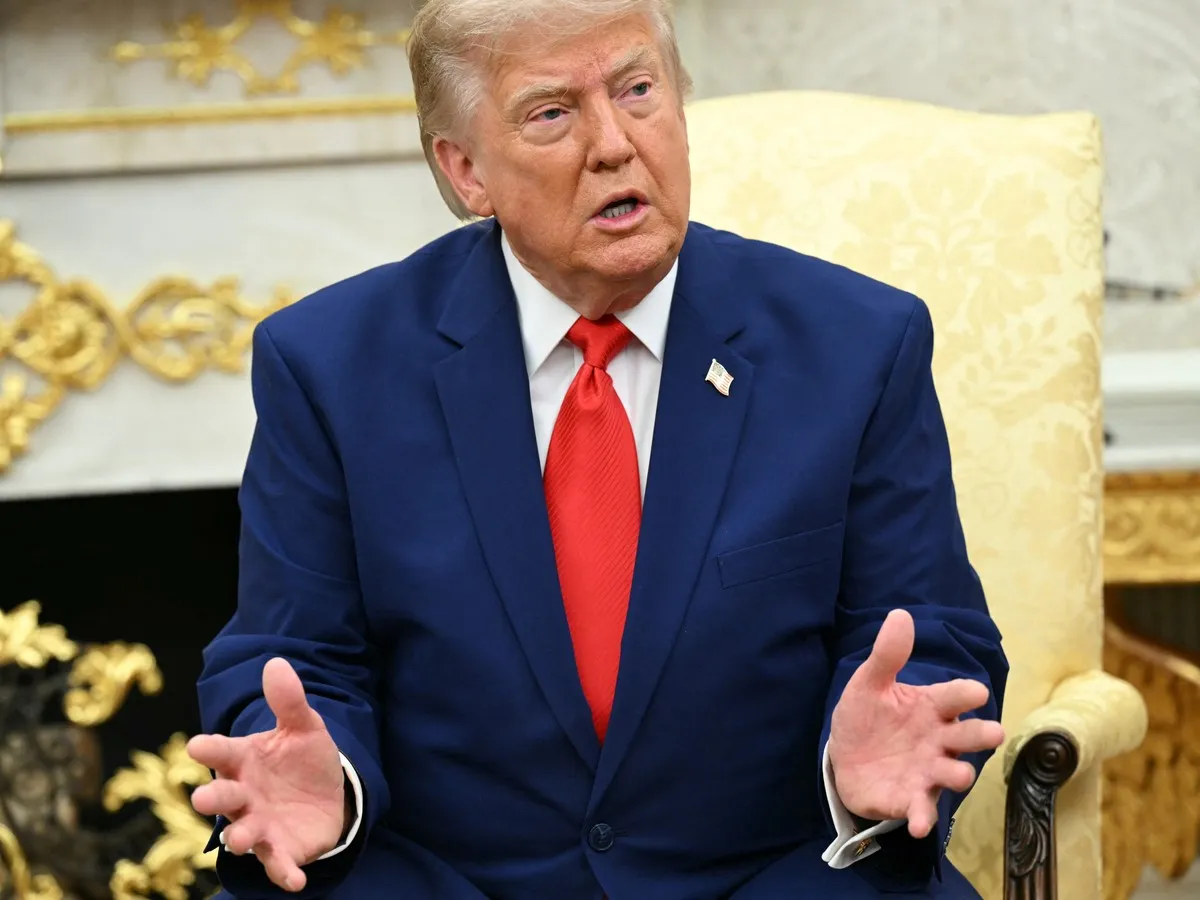
Skip to Content Subscribe Our Offers My Account Manage My Subscriptions FAQ Newsletters Canada Canadian True Crime Canadian Politics Health World Israel & Middle East Financial Post NP Comment Longreads Puzzmo Diversions Comics NP News Quiz New York Times Crossword Horoscopes Life Eating & Drinking Style Sponsored Play for Ontario Travel Travel Canada Travel USA Travel International Cruises Travel Essentials Culture Books Celebrity Movies Music Theatre Television Business Essentials Advice Lives Told Tails Told Shopping Buy Canadian Home Living Outdoor Living Tech Style & Beauty Kitchen & Dining Personal Care Entertainment & Hobbies Gift Guide Travel Guide Deals Savings National Post Store More Sports Hockey Baseball Basketball Football Soccer Golf Tennis Driving Vehicle Research Reviews News Gear Guide Obituaries Place an Obituary Place an In Memoriam Classifieds Place an Ad Celebrations Working Business Ads Archives Healthing Epaper Manage Print Subscription Profile Settings My Subscriptions Saved Articles My Offers Newsletters Customer Service FAQ Newsletters Canada World Financial Post NP Comment Longreads Puzzmo Diversions Life Shopping Epaper Manage Print Subscription HomeNewsCanadaCanadian Politics'We can’t afford to do what Mexico can do': Can Trump play Canada and Mexico against each other?Some trade watchers fear that if the American and Mexican trade teams reach a bilateral agreement, Canada may risk exclusionLast updated 16 minutes ago You can save this article by registering for free here. Or sign-in if you have an account.U.S. President Donald Trump speaks during a press briefing held at the White House in Washington, D.C., on Feb. 20, 2026. Photo by Aaron Schwartz/Getty ImagesWASHINGTON, D.C. — Mexican leaders are weighing a U.S. proposal to revise the Canada-U.S.-Mexico Agreement’s (CUSMA) auto rules of origin — changes that could force a major restructuring of North America’s tightly integrated auto supply chains.Enjoy the latest local, national and international news.Exclusive articles by Conrad Black, Barbara Kay and others. Plus, special edition NP Platformed and First Reading newsletters and virtual events.Unlimited online access to National Post.National Post ePaper, an electronic replica of the print edition to view on any device, share and comment on.Daily puzzles including the New York Times Crossword.Support local journalism.Enjoy the latest local, national and international news.Exclusive articles by Conrad Black, Barbara Kay and others. Plus, special edition NP Platformed and First Reading newsletters and virtual events.Unlimited online access to National Post.National Post ePaper, an electronic replica of the print edition to view on any device, share and comment on.Daily puzzles including the New York Times Crossword.Support local journalism.Create an account or sign in to continue with your reading experience.Access articles from across Canada with one account.Share your thoughts and join the conversation in the comments.Enjoy additional articles per month.Get email updates from your favourite authors.Create an account or sign in to continue with your reading experience.Access articles from across Canada with one accountShare your thoughts and join the conversation in the commentsEnjoy additional articles per monthGet email updates from your favourite authorsSign In or Create an AccountorLast week, U.S. Trade Representative Jamieson Greer’s team told their Mexican counterparts that U.S. President Donald Trump’s administration wants to raise the overall required North American parts threshold from 75 to 82 per cent and, more controversially, require that 50 per cent of all components originate specifically in the United States.Bilateral talks between the U.S. and Mexico have been progressing, but Canada has been sidelined from formal technical talks in recent months, despite ongoing backchannel conversations. Canada-U.S. Trade Minister Dominic LeBlanc visited Washington on Tuesday to meet with his chief negotiator, Janice Charette, and Greer. He said afterward he remains hopeful for a positive outcome.“I remain optimistic,” he told reporters at the Canadian embassy in Washington, “that there will be a conclusion by all three parties — that the economic interest of North America is served by committing to what Ambassador Greer has previously, publicly referred to as the load-bearing walls of their trade relationship with Canada and Mexico.”He also downplayed concerns about the rules-of-origin proposal, adding that Canada is “very confident that we will have those conversations with the Americans and the Mexicans” on such important changes to the trilateral agreement.Still, some trade watchers fear that if the American and Mexican trade teams reach a bilateral agreement, Canada may be pressured to accept that framework or risk exclusion — a similar approach was used the first time in 2018.“It is clear the Trump administration is trying to drive a wedge between Canada and Mexico,” said Andrew Hale, fellow at Advancing American Freedom in Washington. “The countries should be negotiating trilaterally given that this is a trilateral free trade agreement.”Carlo Dade, director of international policy at the University of Calgary’s School of Public Policy, agreed but said the outcome is up to Canada.“The Americans have forced their hand to make that choice. So the way this will logically read is that the Americans concluded negotiations with the easier of the two partners, and it’s now turning to the third partner to sign on,” he said.“That’s what the Americans tried to do (in 2018),” he said, referring to the original CUSMA negotiations, “and last time Mexico was able not to go for it.”Mexico’s trade team will be in Washington for a continuation of the bilateral negotiations in mid-June.“(The Mexican team) should reject this proposal,” said Hale. “Not only is it unfair, but it’s counterproductive to the long-term integration of the North American supply chains.”But the Mexican side was probably not surprised, said Diego Marroquín Bitar, fellow at the Washington-based Center for Strategic and International Studies, referring to how former USTR Robert Lighthizer originally wanted it at 85 per cent.“It makes sense for them to go back to their original position,” Marroquín said, though that doesn’t mean Mexico will accept it.“There’s a reason why the Mexicans and the Canadians didn’t accept the original 85 per cent request … because the auto industry couldn’t take it,” he said.He also pointed to how the sides negotiated a gradual approach last time, giving auto companies time to adapt to comply with the agreement.“So anything that’s negotiated from now on will definitely have to include some gradual implementation,” he added.But Marroquín is more concerned by the proposed 50 per cent U.S. content floor.“The 50 per cent minimum US content floor would be devastating for the auto industry. It would cause major disruption,” Marroquín said, referring to the need for flexibility to make auto production efficient.But that may not be the case for Canada.According to Matthew Holmes of the Canadian Chamber of Commerce, most Canadian vehicles already effectively meet the 50 per cent U.S. content threshold.“It’s not as acute an issue for us,” he said.The real disruptor for Canada, he said, are the Section 232 tariffs on autos, steel, and aluminum, which are driving layoffs in Canada and raising U.S. car prices — all while failing to boost U.S. production as intended.Marroquín also emphasized that layering stricter rules of origin atop the 232 tariffs would risk job losses in all three countries while reducing North America’s competitiveness against Asia and Europe.“If you make the rules of origin more stringent and you still have tariffs on top of them, that can really destabilize the auto industry,” he said.While the 50 per cent U.S.-specific requirement may be less vexing for Canada, Canada is more vulnerable than Mexico when it comes to boxing out China, which Washington is keen to do.Dade urged Canada to recognize that Mexico faces a different set of strategic pressures – namely the need to retain jobs and avoid civil unrest — and has an easier path on the China question.“This time around, China is front and center,” Dade said, referring to how it’s been a key part of the 19 trade agreements Washington has forged with other countries.Canada exports far more to China than Mexico, he said.“We can’t afford to do what Mexico can do.”Negotiations over rules of origin changes are likely to continue in the weeks to come, running up to the July 1 review date. But LeBlanc has repeatedly said he is not concerned by having a resolution before then.“We’ve got to be careful not to set up a cliff that doesn’t exist,” LeBlanc said Tuesday, noting how CUSMA remains in place for 10 more years even if there is no consensus by the three parties to extend it for 16 years.Besides, biding their time might benefit Canadian negotiators, some trade watchers say, especially if control of Congress swings to the left in the November U.S. midterm elections.“Wait it out,” said Hale. “A future Congress and president will likely come to their senses by then.”National PostOur website is the place for the latest breaking news, exclusive scoops, longreads and provocative commentary. Please bookmark nationalpost.com and sign up for our newsletters here. Join the Conversation This website uses cookies to personalize your content (including ads), and allows us to analyze our traffic. Read more about cookies here. By continuing to use our site, you agree to our Terms of Use and Privacy Policy.
'We can’t afford to do what Mexico can do': Can Trump play Canada and Mexico against each other?
Trade watchers warn Canada risks being sidelined in talks with Mexico while facing unique vulnerabilities on China exports.
1,482 words~7 min read