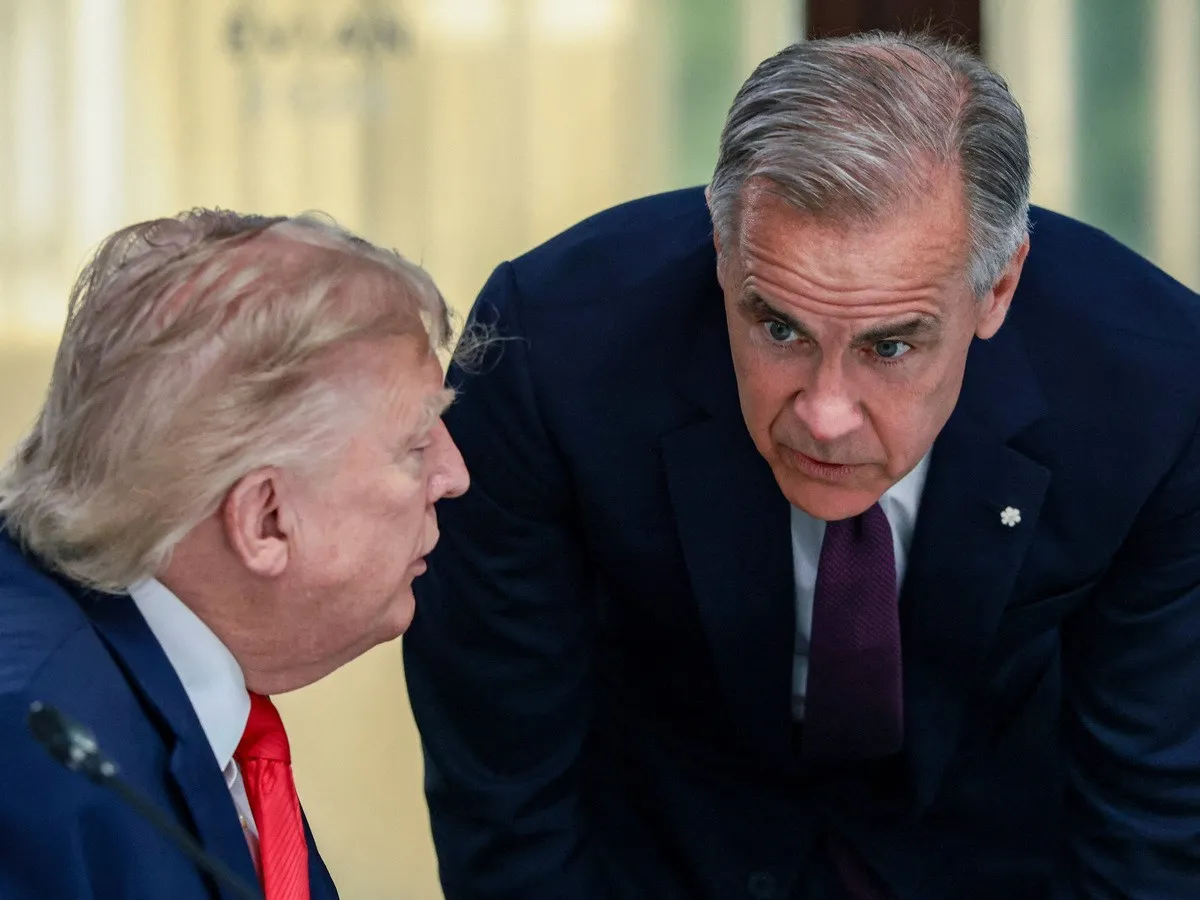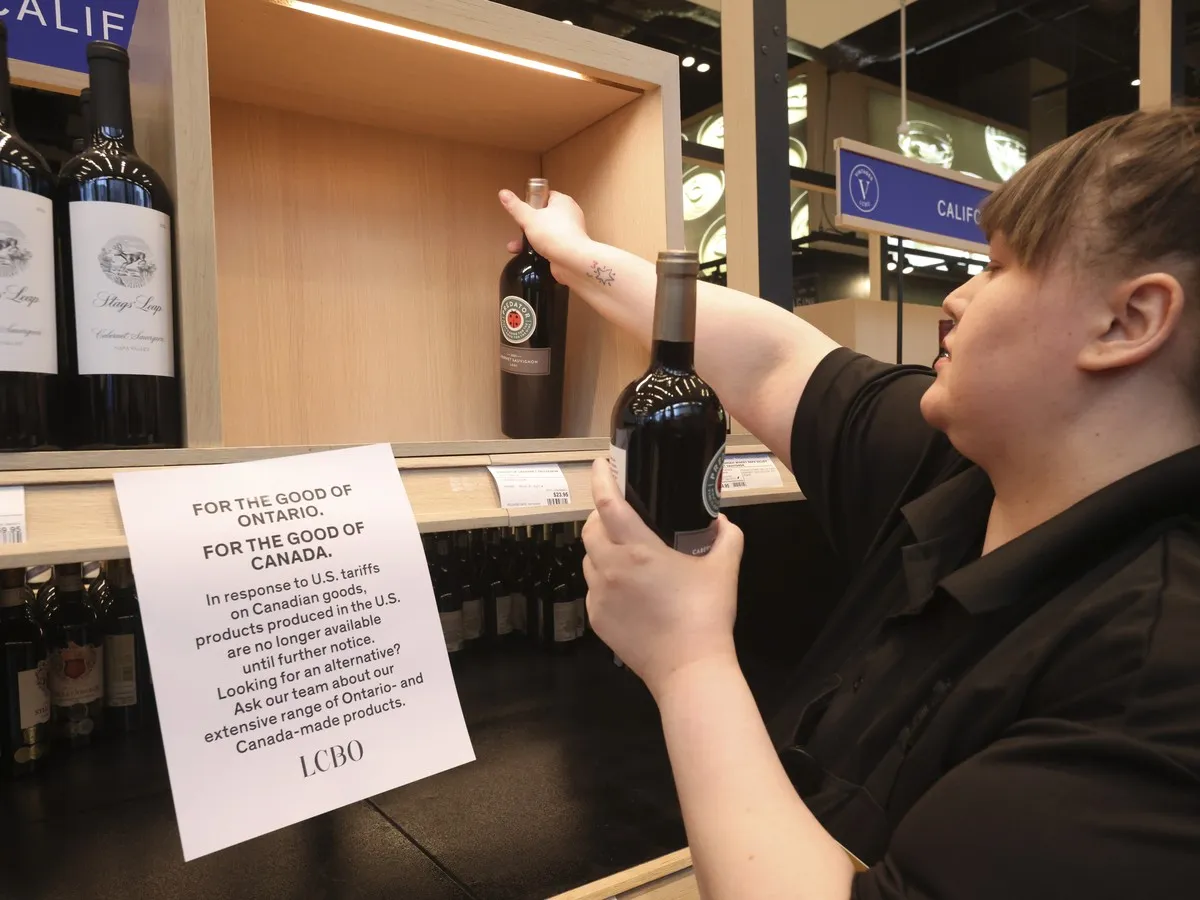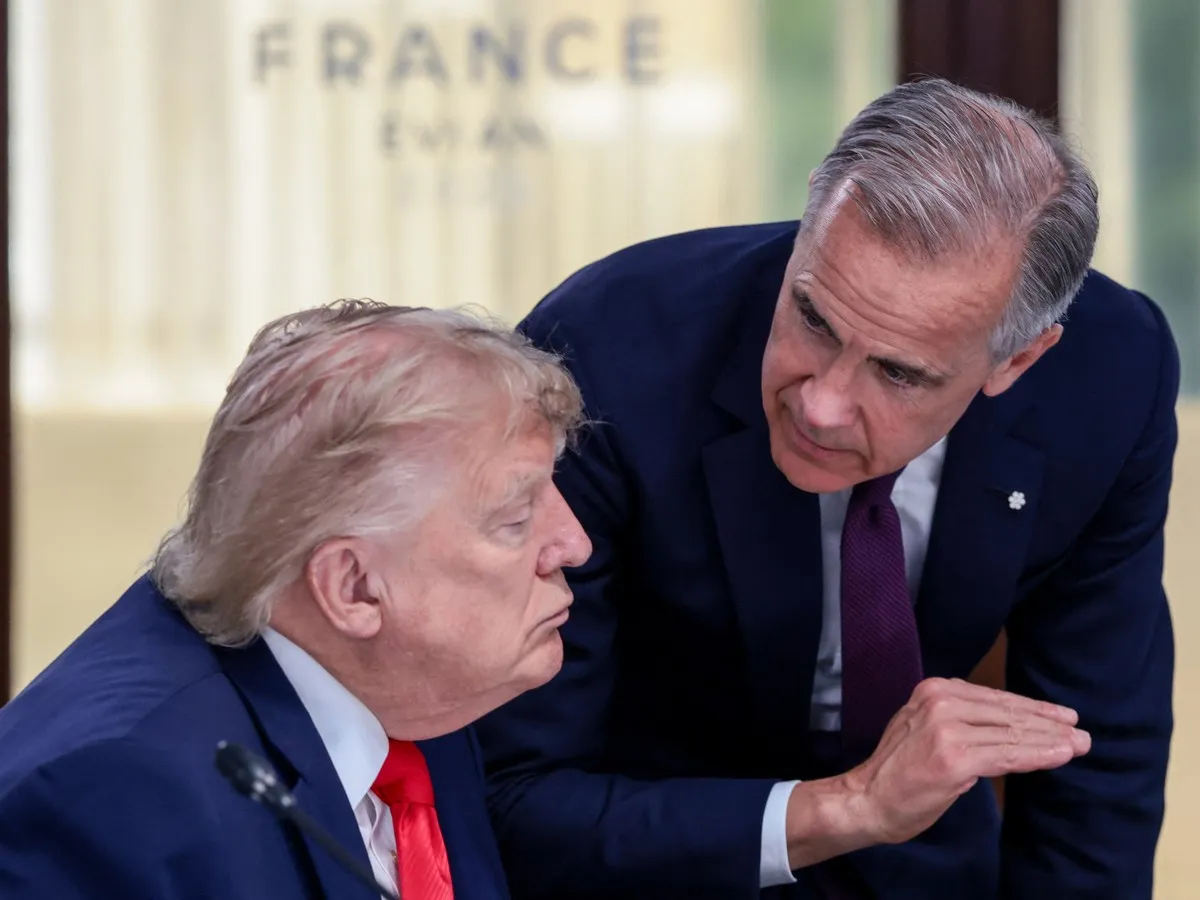
Skip to Content Subscribe Our Offers My Account Manage My Subscriptions FAQ Newsletters Canada Canadian True Crime Canadian Politics Health World Israel & Middle East Financial Post NP Comment Longreads Puzzmo Diversions Comics NP News Quiz New York Times Crossword Horoscopes Life Eating & Drinking Style Sponsored Play for Ontario Travel Travel Canada Travel USA Travel International Cruises Travel Essentials Culture Books Celebrity Movies Music Theatre Television Business Essentials Advice Lives Told Tails Told Shopping Buy Canadian Home Living Outdoor Living Kitchen & Dining Tech Style & Beauty Personal Care Entertainment & Hobbies Gift Guide Travel Guide Amazon Prime Day Deals Savings National Post Store More Sports Hockey Baseball Basketball Football Soccer Golf Tennis Driving Vehicle Research Reviews News Gear Guide Obituaries Place an Obituary Place an In Memoriam Classifieds Place an Ad Celebrations Working Business Ads Archives Healthing Epaper Manage Print Subscription Profile Settings My Subscriptions Saved Articles My Offers Newsletters Customer Service FAQ Newsletters Canada World Financial Post NP Comment Longreads Puzzmo Diversions Life Shopping Epaper Manage Print Subscription HomeNP CommentPeter Navarro: Canada wants free trade — only on its termsBehind the maple-leaf branding is a protectionist system that singles out AmericansLast updated 8 hours ago You can save this article by registering for free here. Or sign-in if you have an account.US President Donald Trump (L) speaks with Canada's Prime Minister Mark Carney during a work lunch as part of the G7 summit, in Evian, eastern France, on June 16, 2026. Photo by EVELYN HOCKSTEIN /POOL/AFP via Getty ImagesPeter Navarro is the White House Senior Counselor for Trade and Manufacturing. He submitted this to National Post to articulate the U.S. view on trade with Canada. Read the Post’s Carson Jerema’s response.Enjoy the latest local, national and international news.Exclusive articles by Conrad Black, Barbara Kay and others. Plus, special edition NP Platformed and First Reading newsletters and virtual events.Unlimited online access to National Post.National Post ePaper, an electronic replica of the print edition to view on any device, share and comment on.Daily puzzles including the New York Times Crossword.Support local journalism.Enjoy the latest local, national and international news.Exclusive articles by Conrad Black, Barbara Kay and others. Plus, special edition NP Platformed and First Reading newsletters and virtual events.Unlimited online access to National Post.National Post ePaper, an electronic replica of the print edition to view on any device, share and comment on.Daily puzzles including the New York Times Crossword.Support local journalism.Create an account or sign in to continue with your reading experience.Access articles from across Canada with one account.Share your thoughts and join the conversation in the comments.Enjoy additional articles per month.Get email updates from your favourite authors.Create an account or sign in to continue with your reading experience.Access articles from across Canada with one accountShare your thoughts and join the conversation in the commentsEnjoy additional articles per monthGet email updates from your favourite authorsSign In or Create an AccountorCanada has long cultivated the image of America’s friendly, free-trading neighbor. The reality is less polite.Behind the maple-leaf branding is a protectionist system that singles out American farmers, distillers, automakers, and workers. Canada demands access to the American market while reserving the right to close its own when competition becomes inconvenient.President Donald Trump is ending that one-way arrangement with three proclamations imposing additional 50 per cent tariffs in response to Canada’s obstruction of American dairy exports, government-directed blockade of American alcoholic beverages, and punitive tariff system targeting U.S. made vehicles.The National Post newsletter that doesn’t hold back, giving readers the unvarnished truth on media, politics and culture.By signing up, you consent to receive the above newsletter from Postmedia Network Inc.A welcome email is on its way. If you don't see it, please check your junk folder.The next issue of Right? will soon be in your inbox.We encountered an issue signing you up. Please try againThe authority is Section 338 of the Tariff Act of 1930. It permits additional duties of up to 50 per cent when another country discriminates against American commerce or favourrs competitors. The duties take effect 30 days after the proclamations, giving Canada time to end them.These are not blanket tariffs. Each proclamation targets selected products to offset a burden on American commerce.Section 338 authorizes the President to offset the full burden, not merely mirror the offending product. Tariffs on Canadian dairy, alcohol, or autos alone would not equal the damage caused by Canada’s measures, while autos and auto parts are already covered by a separate Section 232 regime. The proclamations therefore extend to additional Canadian goods. The goal is a comparable burden until Ottawa lifts its burden on American producers. This is reciprocal trade enforcement, not economic aggression.Consider dairy.Canada’s supply-management fortress uses production quotas, administered prices, import controls, and prohibitive over-quota tariffs. Its tariff schedule imposes rates of approximately 241 per cent on some fluid milk, 245.5 per cent on cheese, and 298.5 per cent on butter.These are megatariffs designed to stop trade.President Trump’s United States-Mexico-Canada Agreement secured additional quota access for American dairy producers. Canada then manipulated that access.Under Canada’s allocation rules for the USMCA cheese quota, retailers cannot receive allocations. Yet under Canada’s agreement with the European Union, retailers may participate in the comparable quota. European cheese therefore receives access denied to American cheese.That is discrimination by nationality.The dairy proclamation answers with an additional 50 percent tariff on targeted Canadian goods, including milk powders, whey products, milk proteins, lactose, and casein.Next comes alcoholic beverages.Beginning in March 2025, Canadian provinces and territories used their control over wholesale purchasing and retail distribution to remove American beer, wine, bourbon, whiskey, and other beverages from Canadian commerce.Provincial governments control alcohol wholesaling and often retail. They stopped purchasing American products, canceled orders, erased them from catalogues and websites, and removed American bottles from government-controlled shelves.Ontario’s liquor monopoly removed American alcohol from stores. Quebec ordered American products off shelves and stopped supplying stores, restaurants, and bars. Most Canadian jurisdictions continued buying from other foreign suppliers.The damage was immediate. Comparing March 2025 through February 2026 with the previous year, Canadian imports of American alcoholic beverages fell 81 per cent — from roughly $718 million to $136 million. Imports from other countries increased by more than $170 million, including over $100 million from the European Union.The alcohol proclamation responds with an additional 50 per cent tariff on Canadian beer, wine, whiskey, vodka, gin, rum, liqueurs, and other selected products.Finally, automobiles.Since April 9, 2025, Canada has imposed a 25 per cent tariff on non-USMCA-compliant U.S.-made vehicles. Even qualifying vehicles are taxed on the value of components not originating in Canada or Mexico. No comparable tariff applies to vehicles from Japan, Korea, Germany, or other competitors.Comparing April 2025 through March 2026 with the preceding year, U.S. vehicle exports to Canada fell approximately 22 per cent, from roughly $25.9 billion to $20.3 billion. Canadian imports from Mexico rose 23.6 per cent, while imports from Japan, Korea, and Germany also increased.That is industrial discrimination: penalize the American vehicle, reward the foreign substitute, and use tariff relief to keep factories in Canada.Ottawa will argue that these actions retaliated against American tariffs. That misses the law and economics. American Section 232 auto tariffs operate under a national-security framework and credit American content. Canada’s system singles out U.S. commerce while treating competing foreign commerce more favorably.Section 338 was written for such conduct.Free trade cannot mean Canada is free to sell while America is forbidden to compete. Under President Trump, the era of one-way concessions is over.Special to National Post Join the Conversation This website uses cookies to personalize your content (including ads), and allows us to analyze our traffic. Read more about cookies here. By continuing to use our site, you agree to our Terms of Use and Privacy Policy.
Peter Navarro: Canada wants free trade — only on its terms
Behind the maple-leaf branding is a protectionist system that singles out Americans
1,281 words~6 min read