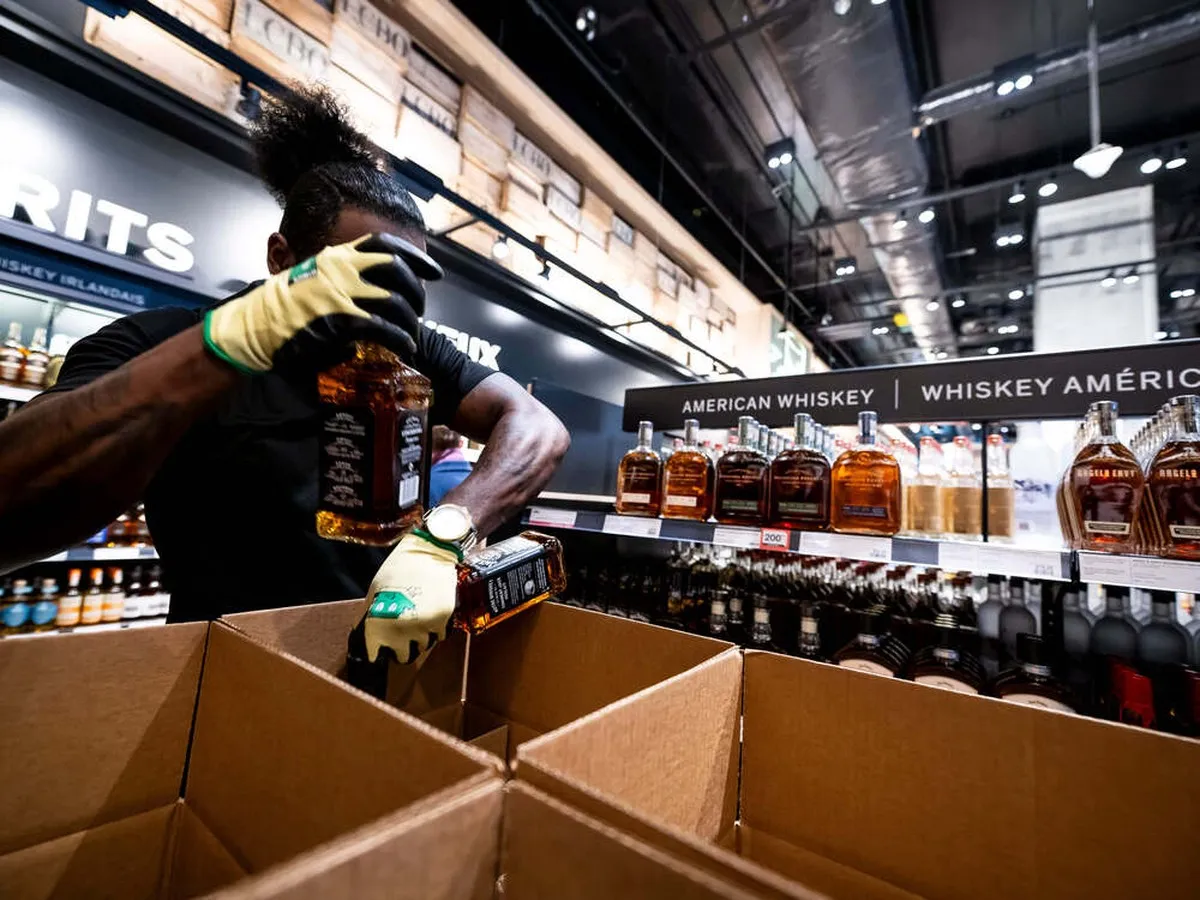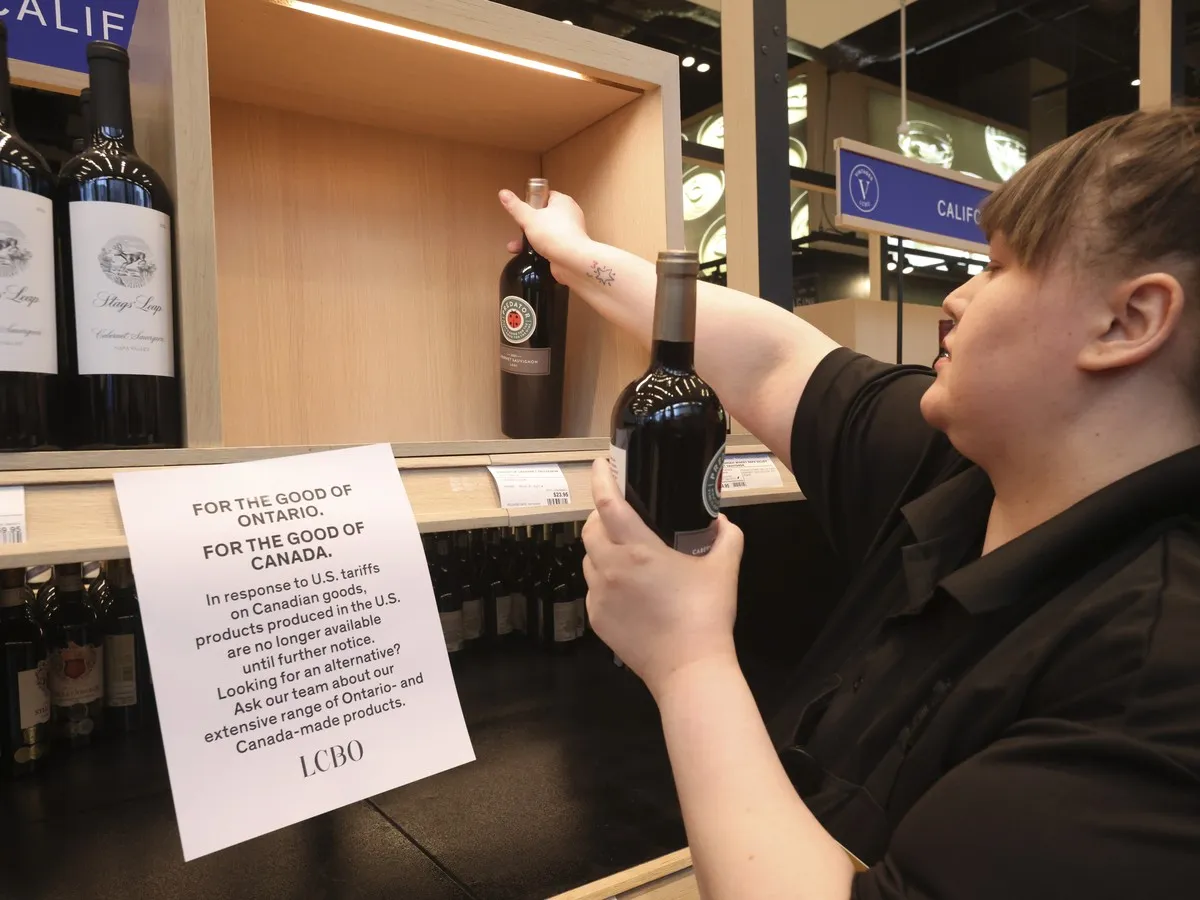
Skip to Content Subscribe My Account Manage My Subscriptions FAQ Newsletters Canada Canadian True Crime Canadian Politics Health World Israel & Middle East Financial Post NP Comment Longreads Puzzmo Diversions Comics NP News Quiz New York Times Crossword Horoscopes Life Eating & Drinking Style Sponsored Play for Ontario Travel Travel Canada Travel USA Travel International Cruises Travel Essentials Culture Books Celebrity Movies Music Theatre Television Business Essentials Advice Lives Told Tails Told Shopping Buy Canadian Home Living Outdoor Living Kitchen & Dining Tech Style & Beauty Personal Care Entertainment & Hobbies Gift Guide Travel Guide Amazon Prime Day Deals Savings National Post Store More Sports Hockey Baseball Basketball Football Soccer Golf Tennis Driving Vehicle Research Reviews News Gear Guide Obituaries Place an Obituary Place an In Memoriam Classifieds Place an Ad Celebrations Working Business Ads Archives Healthing Epaper Manage Print Subscription Profile Settings My Subscriptions My Offers Newsletters Customer Service FAQ Newsletters Canada World Financial Post NP Comment Longreads Puzzmo Diversions Life Shopping Epaper Manage Print Subscription HomeNP CommentChris Selley: On Canada-U.S. trade negotiations, what are we even doing?What if we had let consumers boycott American booze, like they have travel, instead of doing it by government decree?At the Queens Quay LCBO store a worker loads up boxes of California wine as part of removing American liquor, wine and beer from their shelves on March 4, 2025. Photo by Jack Boland /PostmediaHere’s something we haven’t heard much about in Central Canada: Sales and therefore imports of American alcoholic beverages in Alberta and especially Saskatchewan, the heretic provinces that don’t maintain outright bans on Yankee liquor, have declined considerably.Enjoy the latest local, national and international news.Exclusive articles by Conrad Black, Barbara Kay and others. Plus, special edition NP Platformed and First Reading newsletters and virtual events.Unlimited online access to National Post.National Post ePaper, an electronic replica of the print edition to view on any device, share and comment on.Daily puzzles including the New York Times Crossword.Support local journalism.Enjoy the latest local, national and international news.Exclusive articles by Conrad Black, Barbara Kay and others. Plus, special edition NP Platformed and First Reading newsletters and virtual events.Unlimited online access to National Post.National Post ePaper, an electronic replica of the print edition to view on any device, share and comment on.Daily puzzles including the New York Times Crossword.Support local journalism.Create an account or sign in to continue with your reading experience.Access articles from across Canada with one account.Share your thoughts and join the conversation in the comments.Enjoy additional articles per month.Get email updates from your favourite authors.Create an account or sign in to continue with your reading experience.Access articles from across Canada with one accountShare your thoughts and join the conversation in the commentsEnjoy additional articles per monthGet email updates from your favourite authorsSign In or Create an AccountorGovernment data on liquor imports compiled by Carleton University political management professor Jennifer Robson, published this week, suggest sales in Saskatchewan might be down by two-thirds, and by roughly one-quarter in Alberta. In Alberta, according to reported figures from Alberta Liquor, Gaming & Cannabis (which owns the province’s monopoly liquor wholesaler), the biggest drops in U.S. imports from 2023 to 2025 were in wine (down 42 per cent) and beer (down 92 per cent).This is relevant, surely, when you consider the downsides of the outright bans in the other provinces — which is something many of the bans’ most passionate proponents never really did.The National Post newsletter that doesn’t hold back, giving readers the unvarnished truth on media, politics and culture.By signing up, you consent to receive the above newsletter from Postmedia Network Inc.A welcome email is on its way. If you don't see it, please check your junk folder.The next issue of Right? will soon be in your inbox.We encountered an issue signing you up. Please try againMost of those proponents probably wouldn’t even consider them downsides now. Canada didn’t ban flights or travel to the United States in response to Donald Trump’s trade menaces, though it probably would have found remarkable support had it proposed it. But government-enforced patriotism is not the most compelling form of patriotism. Surely consumer-led action is more compelling as a nation-to-nation statement, and it’s not something the prime minister can direct like a stage play: “Elbows up! Now down! One up, one down!”If Albertans and Saskatchewanians, reputedly among the most pro-American Canadians, are eschewing American booze on principle, that can only be a stronger political signal to however many American businesses rely on the Canadian market than what a government could deliver. A government position can be offered up as a bargaining chip. Public sentiment and spending cannot. And it can’t be altered on a whim by the prime minister, based on how the day’s negotiations have gone.There is an obvious, longstanding and ongoing analogy.I remember being quite skeptical that as many Canadians would avoid travel to the United States as said they would, initially, to pollsters. I was wrong. You can’t really deny the numbers now. They’re rebounding, according to Statistics Canada’s latest data drop. But still, 11 per cent fewer Canadians made a return crossing from the U.S. into Alberta in June 2026 than in June 2016, when the province only had three-quarters its current population. Not even two-thirds as many crossed into Saskatchewan, which is also considerably more populous than 10 years ago.Jurisdictions in Florida, Nevada, Maine and other states have been reduced practically to begging Canadians to return. That wasn’t in response to the government voting with our dollars. It was Canadians voting with theirs.I have no time, sub-zero, for those who would chide Canadians for visiting the United States. The sheer number of those scolds makes me nauseous.But one of the interesting things about Trump is that he sometimes seems baffled, wrong-footed, by the level of pushback from countries and regimes he imagines he can just idly threaten, humiliate and subjugate through his “art of the deal,” which seems to boil down to “not living up to any deal.” (It’s understandable why this works for the President of the United States of America, somewhat less so why it would work for a real-estate magnate.)Canada’s “government-first” approach to pushback projects mistrust of the very same people being asked to display solidarity. And once the allegations of “MAGA traitors” start winging around — as former NDP MP Charlie Angus called Alberta Premier Danielle Smith and her supporters on his Substack — I think it’s safe to say we’ve made a net loss on gross collective patriotism and goodwill among Canadians.If Saskatchewan and Alberta are the most America-friendly provinces, it’s not by much: A recent Angus Reid Institute poll measuring Canadians’ attitudes toward Americans and vice-versa found 54 per cent and 52 per cent, respectively, had a “favourable view of the American people,” while all the others were in the mid-to-high 40s except Quebec, at 38 per cent.Can Quebecers, Ontarians, British Columbians and Nova Scotians be trusted to drink less American hooch, without government intervention? Polls suggest they probably can. I’m not saying they should have to. But that pushback is a whole lot less compelling, I have to believe, than what’s coming from the legislatures. Manitoba Premier Wab Kinew this week said Prime Minister Mark Carney had been nearly “begging” the premiers to put American booze back on shelves. That’s pathetic.Kinew also called Trump a “bad person,” which is not something I have any interest in contesting. But I’m not sure that all added up to a win for the Carney agenda, or for Canadian unity and patriotism. I’m not sure any of this does.National Post cselley@postmedia.com Join the Conversation This website uses cookies to personalize your content (including ads), and allows us to analyze our traffic. Read more about cookies here. By continuing to use our site, you agree to our Terms of Use and Privacy Policy.
Chris Selley: On Canada-U.S. trade negotiations, what are we even doing?
What if we had let consumers boycott American booze, like they have travel, instead of doing it by government decree?
1,302 words~6 min read