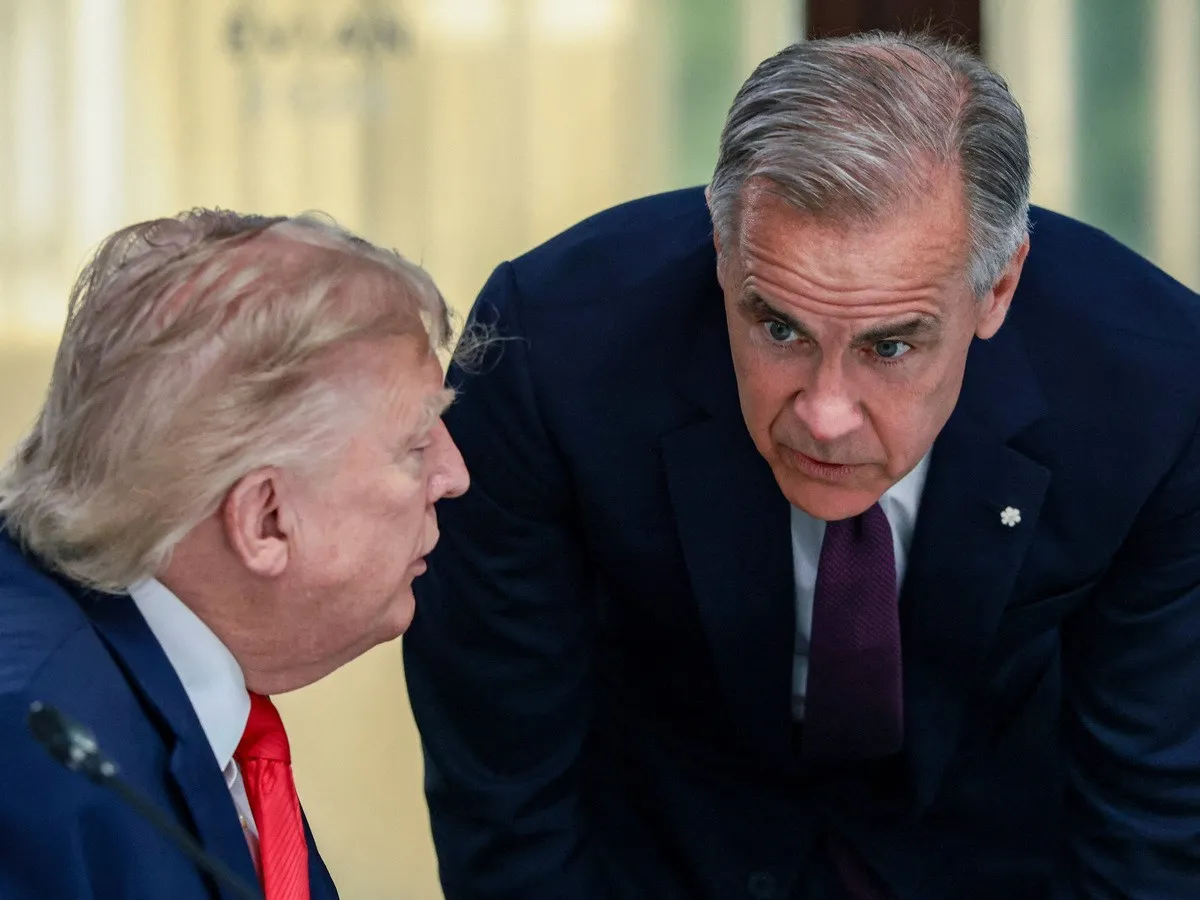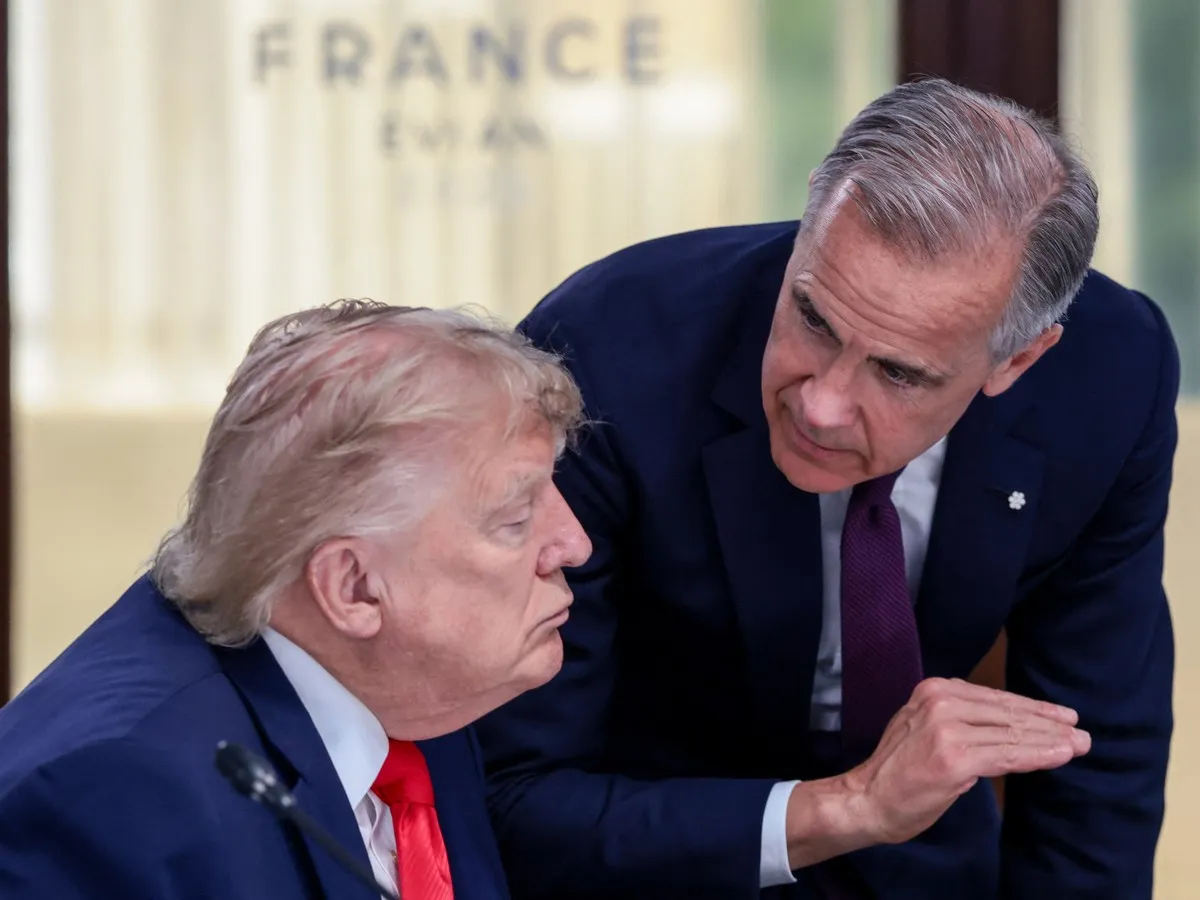
Skip to Content Subscribe Our Offers My Account Manage My Subscriptions FAQ Newsletters Canada Canadian True Crime Canadian Politics Health World Israel & Middle East Financial Post NP Comment Longreads Puzzmo Diversions Comics NP News Quiz New York Times Crossword Horoscopes Life Eating & Drinking Style Sponsored Play for Ontario Travel Travel Canada Travel USA Travel International Cruises Travel Essentials Culture Books Celebrity Movies Music Theatre Television Business Essentials Advice Lives Told Tails Told Shopping Buy Canadian Home Living Outdoor Living Kitchen & Dining Tech Style & Beauty Personal Care Entertainment & Hobbies Gift Guide Travel Guide Amazon Prime Day Deals Savings National Post Store More Sports Hockey Baseball Basketball Football Soccer Golf Tennis Driving Vehicle Research Reviews News Gear Guide Obituaries Place an Obituary Place an In Memoriam Classifieds Place an Ad Celebrations Working Business Ads Archives Healthing Epaper Manage Print Subscription Profile Settings My Subscriptions Saved Articles My Offers Newsletters Customer Service FAQ Newsletters Canada World Financial Post NP Comment Longreads Puzzmo Diversions Life Shopping Epaper Manage Print Subscription HomeNP CommentMargareta Dovgal: How Canada can win by giving Trump what he wantsConceding on supply management and streaming, while leveraging oil and gas is how to get through trade negotiationsLast updated 44 minutes ago You can save this article by registering for free here. Or sign-in if you have an account.US President Donald Trump (L) speaks with Canada's Prime Minister Mark Carney during a work lunch as part of the G7 summit, in Evian, eastern France, on June 16, 2026. Photo by EVELYN HOCKSTEIN /POOL/AFP via Getty ImagesPredictably, the Americans have declined to renew the Canada U.S. Mexico Agreement. As of Wednesday’s deadline, the trade deal enters potentially a decade of annual reviews, staying in force and expiring in 2036. That precarious uncertainty weighs heavily on the Canadian economy. A review decade is also a decade-long negotiation: nothing prevents the two countries from striking a new deal earlier, or conversely scrapping it with six months’ notice. In bargaining, Canada should concede where our own policies make us poorer, and hold the line only where it makes us richer.Enjoy the latest local, national and international news.Exclusive articles by Conrad Black, Barbara Kay and others. Plus, special edition NP Platformed and First Reading newsletters and virtual events.Unlimited online access to National Post.National Post ePaper, an electronic replica of the print edition to view on any device, share and comment on.Daily puzzles including the New York Times Crossword.Support local journalism.Enjoy the latest local, national and international news.Exclusive articles by Conrad Black, Barbara Kay and others. Plus, special edition NP Platformed and First Reading newsletters and virtual events.Unlimited online access to National Post.National Post ePaper, an electronic replica of the print edition to view on any device, share and comment on.Daily puzzles including the New York Times Crossword.Support local journalism.Create an account or sign in to continue with your reading experience.Access articles from across Canada with one account.Share your thoughts and join the conversation in the comments.Enjoy additional articles per month.Get email updates from your favourite authors.Create an account or sign in to continue with your reading experience.Access articles from across Canada with one accountShare your thoughts and join the conversation in the commentsEnjoy additional articles per monthGet email updates from your favourite authorsSign In or Create an AccountorU.S. trade representatives blamed the agreement’s “shortcomings and our trade deficits with these countries.” By their figures, the goods deficit with Canada ran $46 billion last year, against $197 billion with Mexico. U.S. President Donald Trump frames it less delicately. “We don’t need anything that Canada has,” he said last month. “They need everything that we have. And they have to treat us better.”This newsletter from NP Comment tackles the topics you care about. (Subscriber-exclusive edition on Fridays)By signing up you consent to receive the above newsletter from Postmedia Network Inc.We encountered an issue signing you up. Please try againThe substance of the grievance suggests the opposite. The goods deficit Trump resents exists because Americans buy enormous volumes of Canadian oil and gas.At least for now, Canada’s energy industry provides leverage in negotiations. Two decades plus of U.S. maneuvering have secured energy independence by volume, with America a net petroleum exporter since 2020. But shale, which they excel at producing, is a different input than what we offer. The refineries of the American Midwest are built to run on Canadian heavy crude, which contributes to American export prowess.The political fortunes of U.S. presidents operate in lockstep with domestic energy affordability. Trump rapidly backtracked on Iran when rising fuel prices spurred American consumer frustration. In Canada-U.S. trade, the same was shown in the 10 per cent tariff carve-out for Canadian energy, when, last year, other goods drew 25 per cent.We are just as dependent: energy is our most important export. The U.S. is our top customer.Roughly nine in 10 barrels exported go south. The Canadian government can’t forget that, nor that refinery slates and pipeline geography make Canadian heavy crude nearly irreplaceable in the Midwest, at least for now. Our presently strong hand will weaken as American re-sourcing efforts mature, particular if Venezuelan heavy oil production is restored to historic levels.American reliance on Canadian energy imports, and our economic reliance on exporting these commodities to them, is the real subtext for this as-yet unresolved trade dispute, but the concerns officially put forward by the U.S. are not nominal. Each demand needs to be parsed on its own merits, not merely through the short time-horizon lens of trade disputes.Does resisting it make Canada richer? Or does it feel good, but make Canada poorer?Auto manufacturing is an obvious example. Washington wants a 50 per cent U.S.-content floor on North American vehicles. Conceding here would be economically devastating for Canada, because the capital is already sunk and the supply chains are continental. The industry represents nearly $17 billion of our GDP. Such a floor would fracture integrated supply chains, raises costs and shifts production southward.The line must be held, as over 100,000 direct family-supporting jobs rely on it, and many more throughout Central Canada. Canada and Mexico pushed back on the same demand in Trump’s first term, and succeeded.The supply management cartel is a different case: it is in Trump’s crosshairs because it keeps American producers out. Canadians should dislike it because quotas and over-quota tariffs, defended as “food security,” transfer wealth to fewer than 15,000 quota-holding dairy, poultry and egg farms, most of them in Quebec and Ontario. The cost of catering to them is absorbed by every grocery budget in this country.CUSMA incrementally increased American dairy access. Further modest increases would not collapse the system. The bigger win would be taking it as an opportunity to introduce real domestic competition.The streaming mandates that Washington objects to deserve scrutiny too. The CRTC insists that large foreign platforms like Netflix must direct 15 per cent of Canadian revenues, not profit, into domestic production funds, tripled this May from the interim five.Canadian-content rules for streaming are coercive. They yield a negligible economic footprint. Cultural rent-seeking is not a vital national interest merely by virtue of irritating our “opponent.”Allowing them to persist funnels dollars to more nihilistic slop and provides Trump with another ready-made complaint. Defending quota rents and coercive levies is corrosive.Drop them. Better yet, fortify our export capacity and market reach for our most valuable export commodities, oil and gas. Despite being our most valuable source of leverage in the Canada-U.S. trade relationship, regulatory drag and policy inconsistency continue to slow major energy projects at home. That keeps us dependent on one buyer and hands the U.S. an easy target.The concessions we can offer should be done for their own sake. Whether the counterparty reciprocates, reliably or not, cheaper groceries and a broadcasting policy built for this decade are intrinsic wins.If we are willing to loosen our stance, we have a better chance of eking out wins that shield auto integration and secure relief on tariffs.And if we can convert talk about diversifying and growing energy production into real results, we will also reap domestic benefits and additional trade leverage over the long term.Let’s negotiate like a country that knows exactly how much the U.S. needs us, not losing sight of everything else squarely in our control that secures Canadian competitiveness and our quality of life.National Post Join the Conversation This website uses cookies to personalize your content (including ads), and allows us to analyze our traffic. Read more about cookies here. By continuing to use our site, you agree to our Terms of Use and Privacy Policy.
Margareta Dovgal: How Canada can win by giving Trump what he wants
Conceding on supply management and streaming, while leveraging oil and gas is how to get through trade negotiations
1,419 words~6 min read