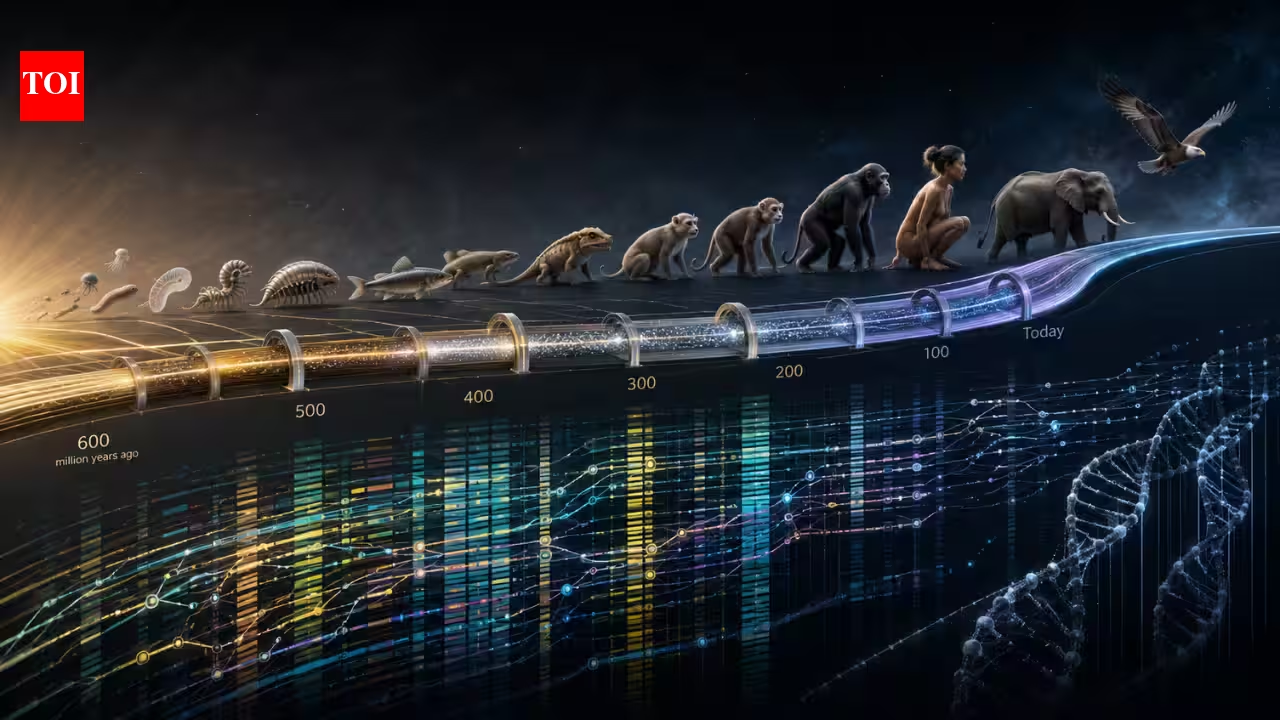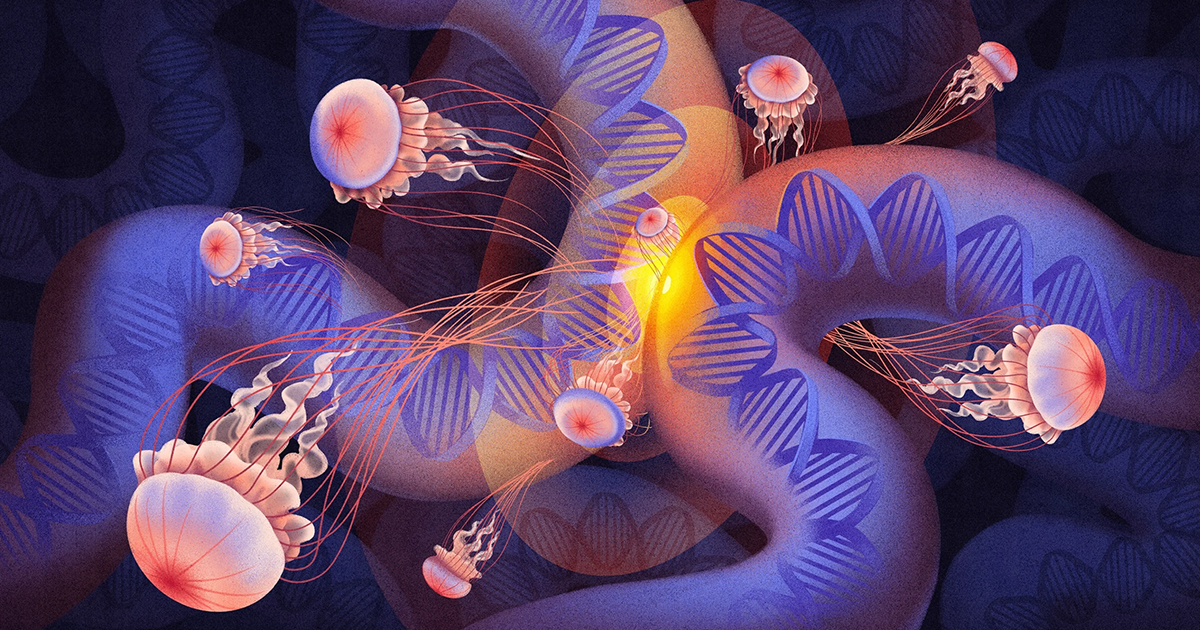
A human, an octopus, and a coral may appear to have almost nothing in common, but their chromosomes still contain recognizable fragments inherited from an animal ancestor that lived more than 600 million years ago. Researchers at the University of Vienna have now traced how those ancient genomic pieces were reorganized as animal life diversified.
The study, published in Science Advances, suggests that animal genomes do not evolve through an unlimited number of possible routes. Instead, chromosome changes tend to move along a restricted set of irreversible pathways that the researchers describe as "evolutionary highways." The findings may also provide a valuable foundation for efforts to understand and conserve animal biodiversity.
Tracing More Than 600 Million Years of Genome Evolution
Every living animal ultimately descends from a common ancestor that existed more than 600 million years ago. Since that time, chromosomes have repeatedly fused, separated, and been rearranged as new animal lineages emerged.
Thousands of animal genomes have now been sequenced, but comparing their long-term evolution has remained difficult. In this study, an international team led by University of Vienna researchers brought thousands of genomes together in a single large-scale comparison.