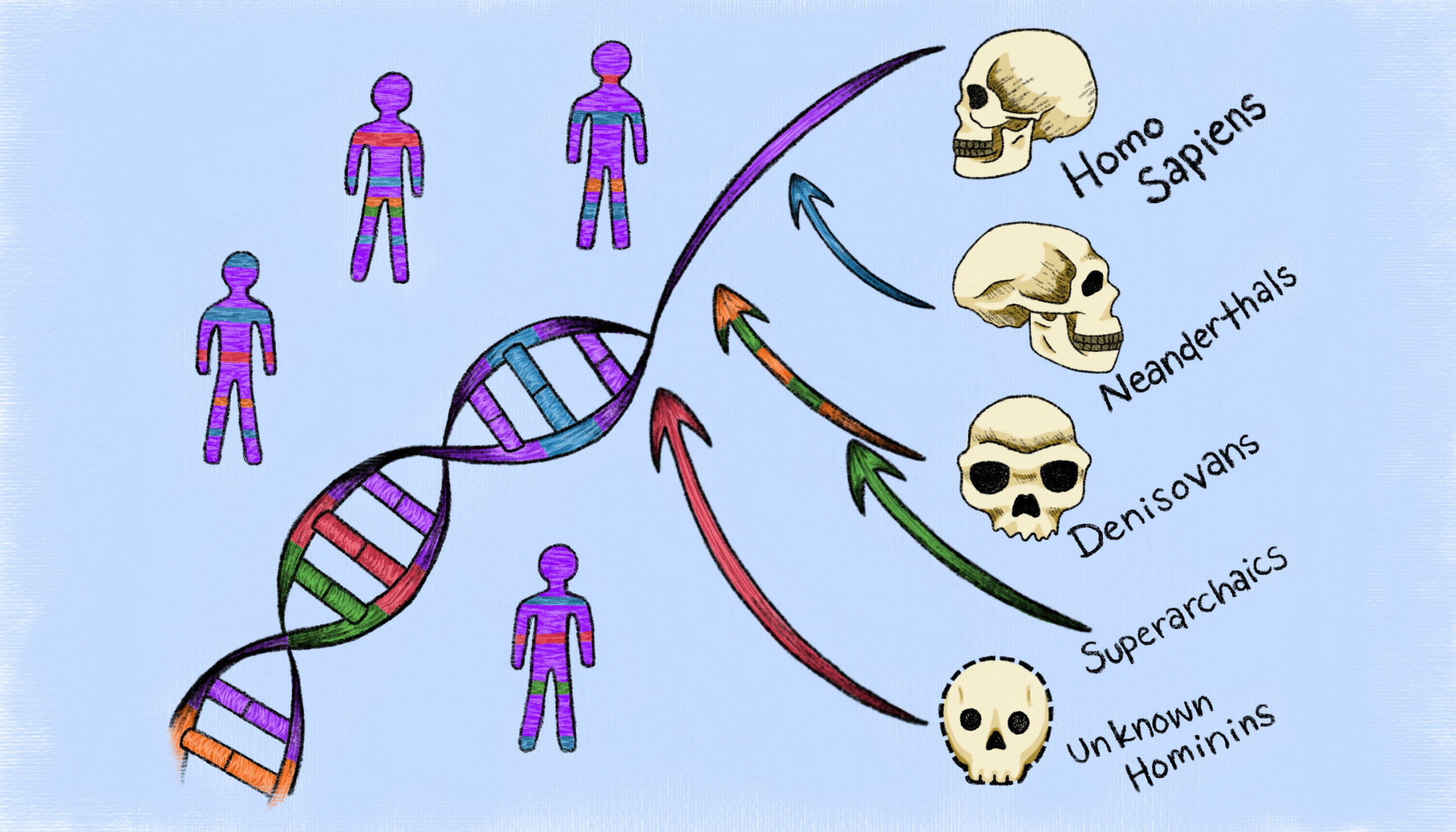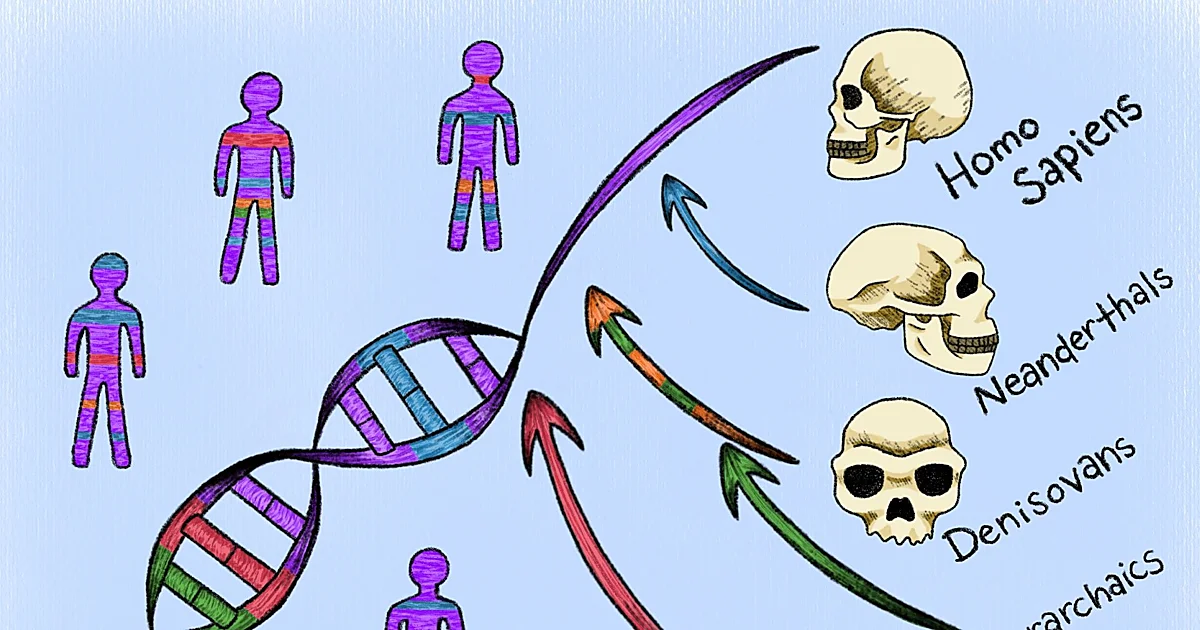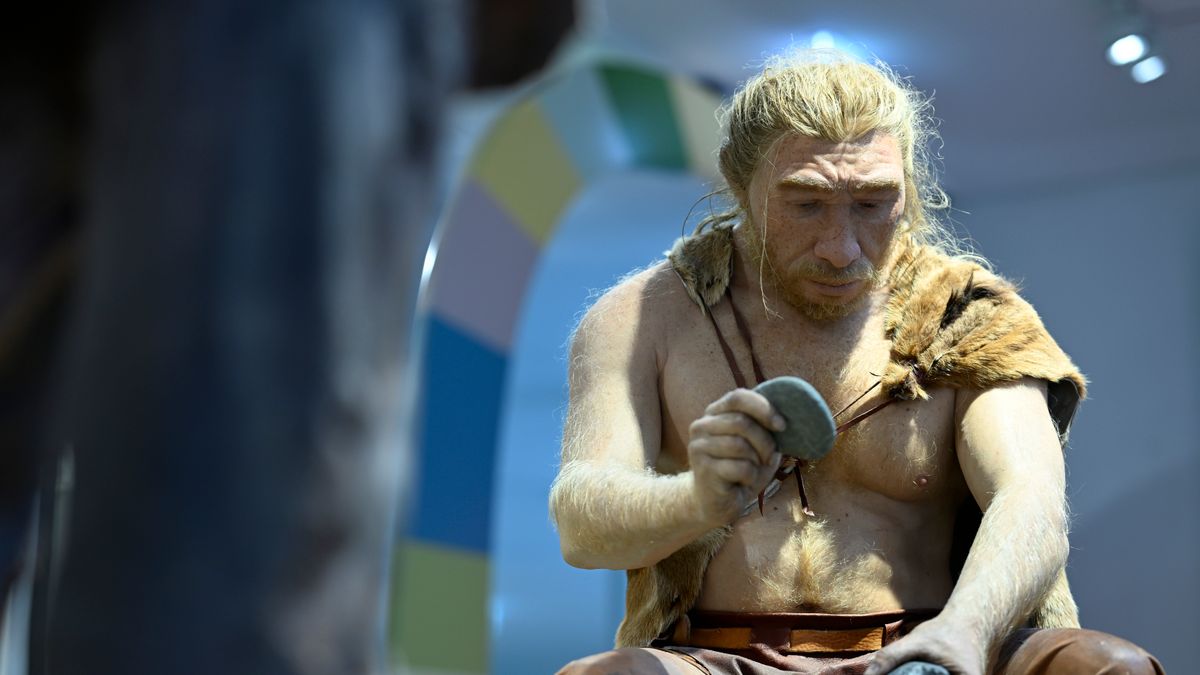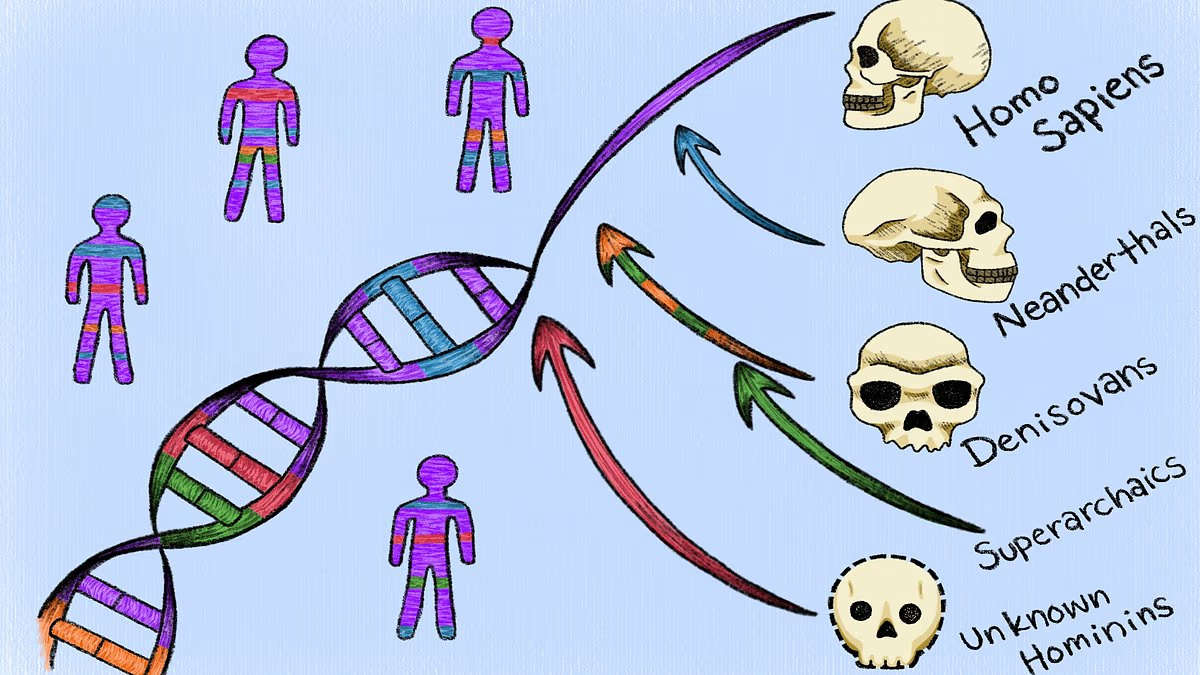
Hidden traces of two mysterious hominin species have been discovered hiding inside our DNA.Scientists have known for years that ancient homo sapiens interbred with other human species, particularly the Neanderthals and Denisovans.However, studies have also suggested that parts of the modern human genome may have been inherited from ancient species which have never been found.Now, researchers from UC Berkeley and Johns Hopkins University have pinpointed the exact sections of DNA that come from these 'ghost ancestors'.One of these ancient relatives branched off from the modern human lineage 800,000 years ago, according to the results of a new paper published in the journal Science. However, this unknown species later interbred with Homo sapiens some 50,000 years ago.This was before the most recent migration of modern humans out of Africa, meaning that their genes are found in modern Africans and non-Africans alike.Incredibly, each person alive today gets about 0.5 per cent to one per cent of their genome from our ancient ghost ancestor – the same amount that we get from the Neanderthals. Scientists have found traces of two unknown ancestors in our DNA: A 'ghost ancestor' and a 'super-archaic ancestor' Co-author Yulin Zhang, of UC Berkeley, says: 'Previous publications suggested that there might be ghost ancestry, but they hadn't concluded whether this unknown ancestry is present only in Africans or not, and when this introgression event happened.'We were actually able to find and map genomic locations in modern humans that are from this ghost lineage and show that this ghost ancestry is in all modern humans, not only in Africans.'But the researchers didn't just find one ancient human lurking inside our genes.In addition to the ghost ancestor, the scientists also spotted a trace of what they call the 'super-archaic ancestor'.This is a 1.8-million-year-old hominin lineage that interbred, not with humans, but with Denisovans.The Denisovans were an ancient human species that lived in Eurasia 200,000 to 32,000 years ago.Modern humans interbred with the Denisovans, and traces of their DNA are found in people today, especially in Asia, where their DNA can make up to four per cent of some people's genome.When the researchers looked at modern-day genomes, they found that they had traces of a super-archaic ancestor contained within DNA sections inherited from the Denisovans. Scientists know that modern humans interbred with Neanderthals, but researchers have now spotted traces in our DNA that don't match any known ancient species. Pictured: reconstruction of the face of the oldest Neanderthal found in the Netherlands The super-ancient ancestor is a 1.8-million-year-old hominin lineage that interbred, not with humans, but with Denisovans (artist's impression), who then passed these genes on to us Our ancient human relatives Homo erectusThis species lived between 1.89 million and 110,000 years ago.They were the first human species to walk upright the entire time.Homo floresiensisA tiny species which lived between 700,000 and 50,000 years ago.Due to insular dwarfism, Homo floresiensis was only three and a half feet tall.Homo neanderthalensisLived 430,000 and 40,000 years ago and overlapped with modern humans.Otherwise known as Neanderthals, these are our closest human relatives.Denisova homininsLived between 200,000 and 32,000 years ago in Asia.Interbred with humans, and traces of their DNA can still be found in people from Asia and Oceania. That means, at some point in the past, this lost species bred with Denisovans, leaving DNA in their genome that was eventually passed on to modern humans.Co-author Dr Arjun Biddanda, of Johns Hopkins University, told the Daily Mail: 'One important takeaway is that human evolution was far more interconnected than we once imaginedProfessor Moorjani says: 'Rather than a simple branching tree, our history is increasingly emerging as a network of populations that repeatedly diverged, migrated, and mixed. 'Our genomes contain remnants of that history today.'Scientists know that Homo sapiens bred with Neanderthals and Denisovans because they have been able to piece together these species' genomes from fossil samples.However, identifying the DNA traces of our ghost ancestors has proven significantly harder since we don't know what their genomes looked like.The researchers used a new method known as TRACE (TRacking Archaic Contributions via ARG Estimation), which can find these ancient DNA sections based on modern humans alone.The system works by taking genome data from modern humans around the world and reconstructing the genealogical relationships between different populations. Scientists know where Denisovan and Neanderthal DNA is in our genome because we have reconstructed these species' genomes. To do this for unknown species requires using a new technique that only looks at modern humans. Pictured: The 'Dragon Man' Denisovan skull discovered in China
Scientists uncover traces of 'ghost ancestors' hiding in your DNA
Hidden traces of two mysterious human species have been discovered hiding inside our DNA.
1,428 words~6 min read