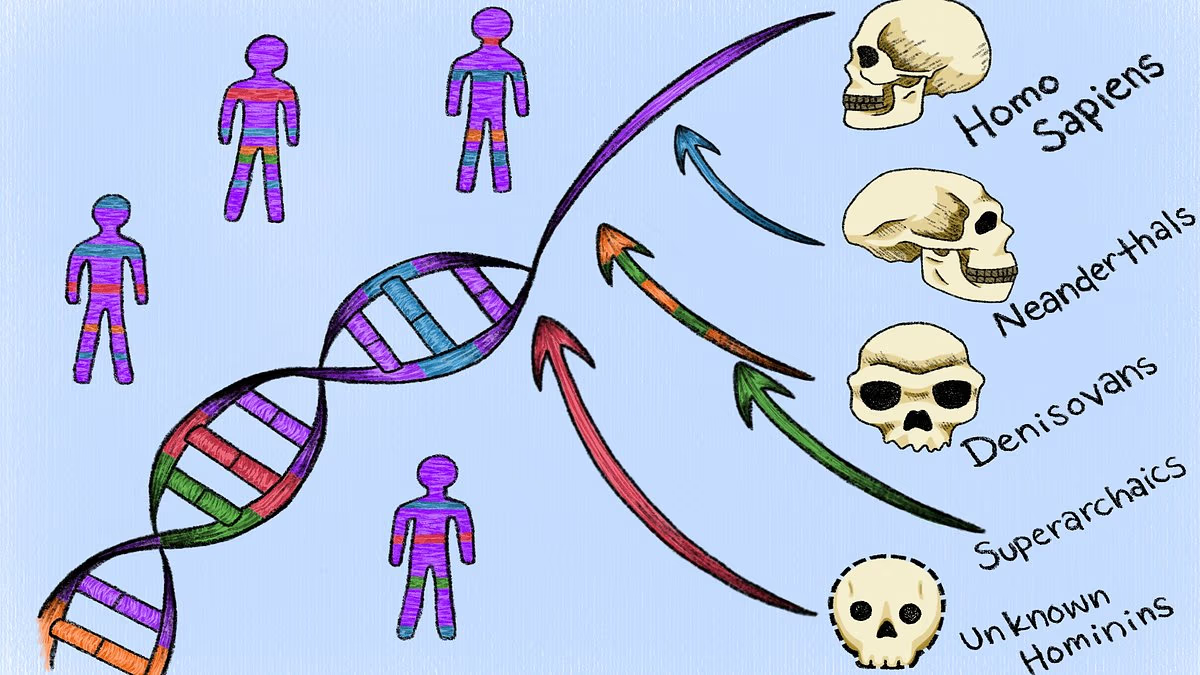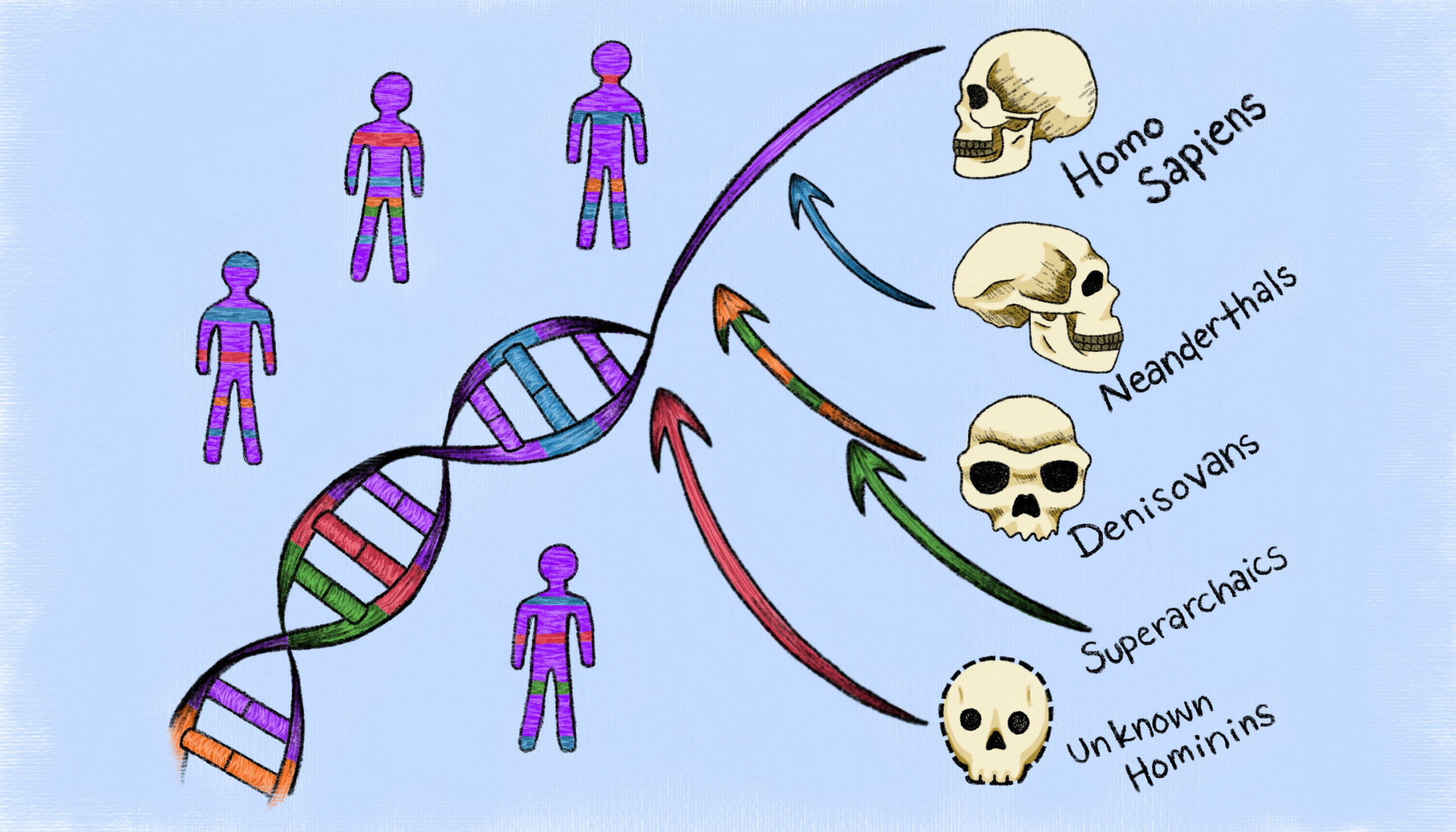
Researchers at the prestigious University of California, Berkeley, have made a spectacular discovery: they identified stretches of DNA in the genomes of modern humans (source in German) that come from previously unknown ancestors. The scientists talk about so-called "ghost ancestors," because nothing is yet known about these extinct human groups.
Homo sapiens is today the only human species still alive. In the distant past, however, it shared the Earth with numerous other hominins.
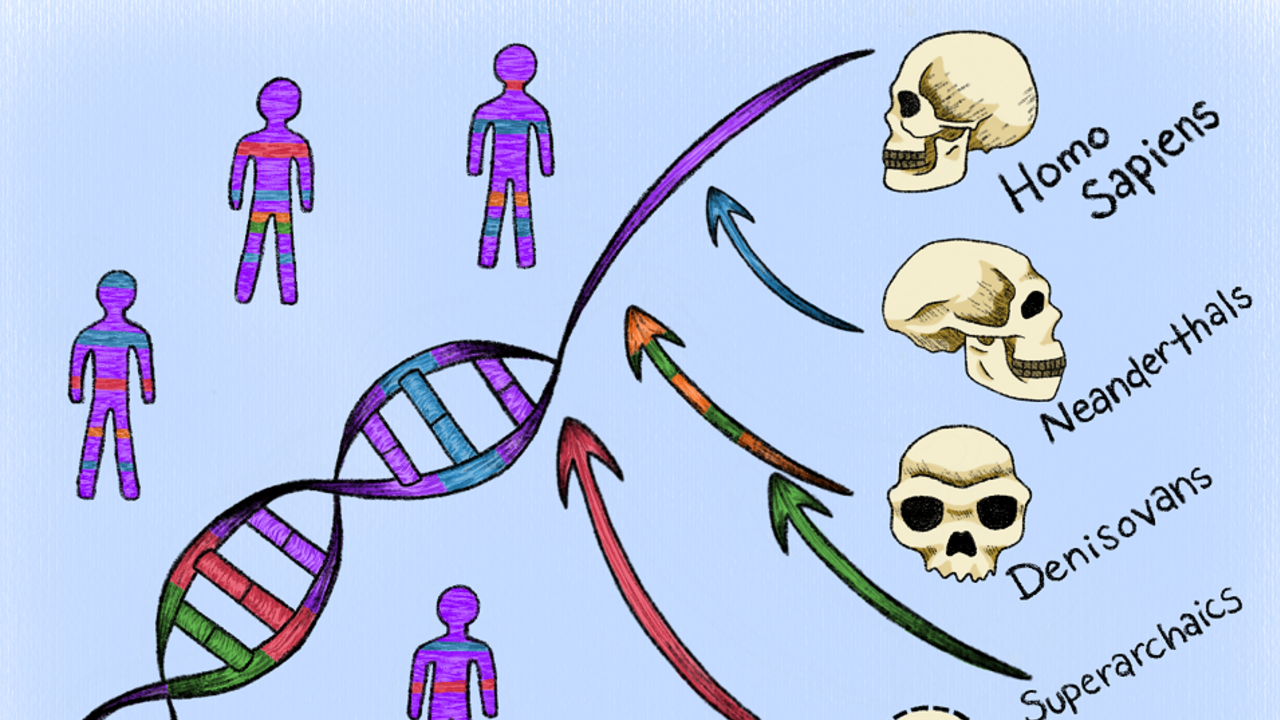
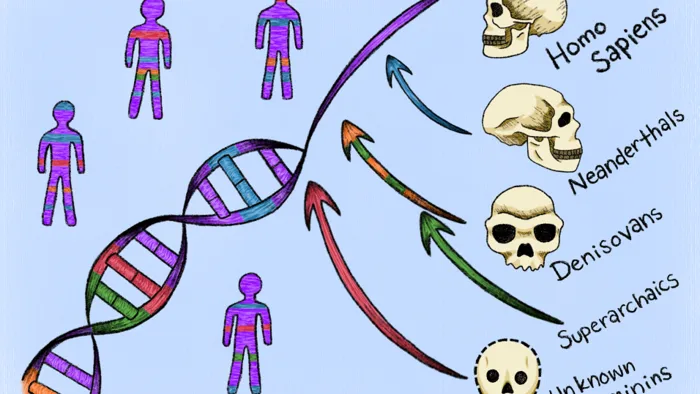
Earlier studies had already shown that modern humans interbred with Neanderthals and the so-called Denisovans and had joint offspring. Many people still carry the genetic traces of these encounters in their DNA today. A new study now suggests that there were at least two further, previously unknown human groups that also passed on DNA to our ancestors.
One of these previously unknown ancestors interbred in Africa with the forebears of modern humans more than 50,000 years ago. This happened before the last major migration wave of Homo sapiens to Europe and Asia. The genes inherited at that time now account for around 1% of the DNA of all humans, roughly as much as the share of Neanderthal DNA.
According to the researchers' calculations, this mysterious human lineage had split from the evolutionary line leading to modern humans around 800,000 years ago, roughly at the time when Neanderthals and Denisovans also diverged from one another.