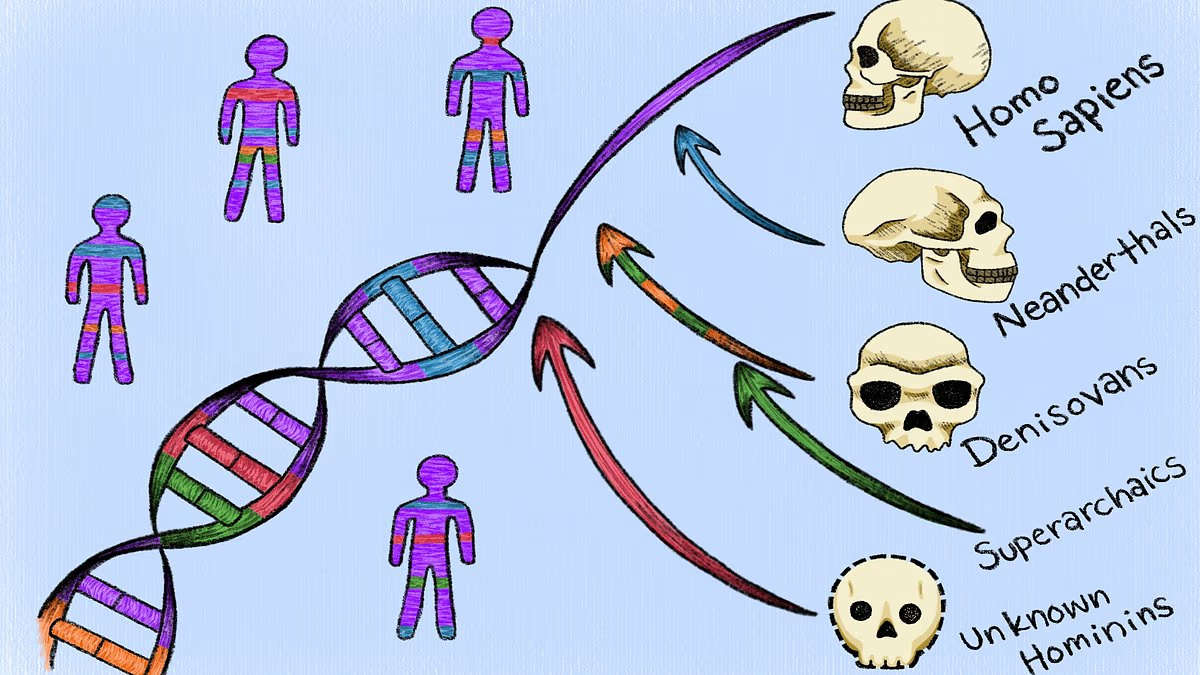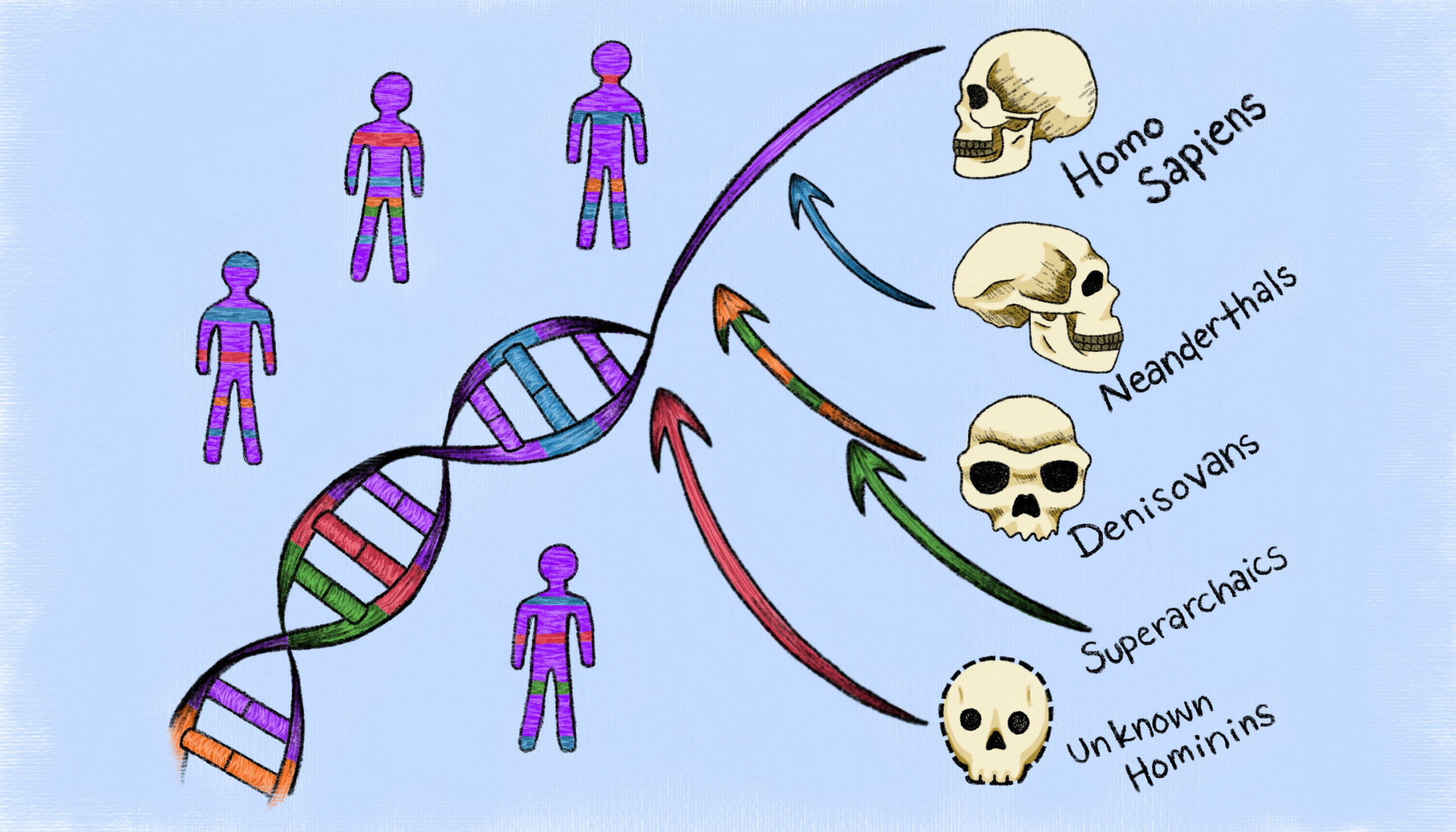
Two previously unknown human relatives left traces of their DNA in people alive today, adding another layer to the genetic legacy already inherited from Neanderthals and Denisovans. The discovery reinforces a growing view of human evolution as a long history of encounters and interbreeding among many related hominin populations.
Earlier studies had found signs that Homo sapiens mixed with archaic humans beyond Neanderthals and Denisovans. Now, researchers at UC Berkeley have identified specific regions of the modern human genome that came from these unidentified ancestors and estimated when the interbreeding occurred.
The team made the discovery using a new method that examines hundreds of present-day human genomes and reconstructs ancient genealogical connections among their DNA sequences.
A Ghost Ancestor Shared by All Humans
One of the unknown groups, described by the researchers as a ghost ancestor, interbred with modern humans in Africa more than 50,000 years ago. The encounter took place before the most recent major movement of Homo sapiens out of Africa and into Europe and Asia.