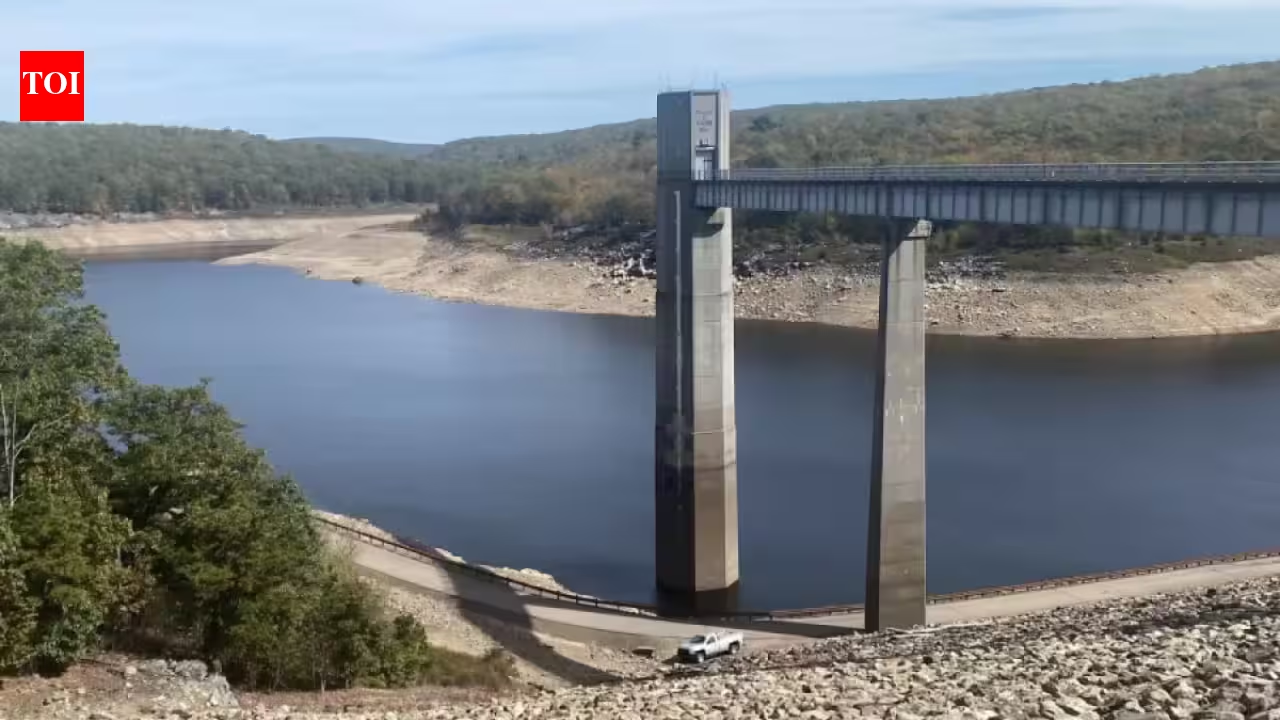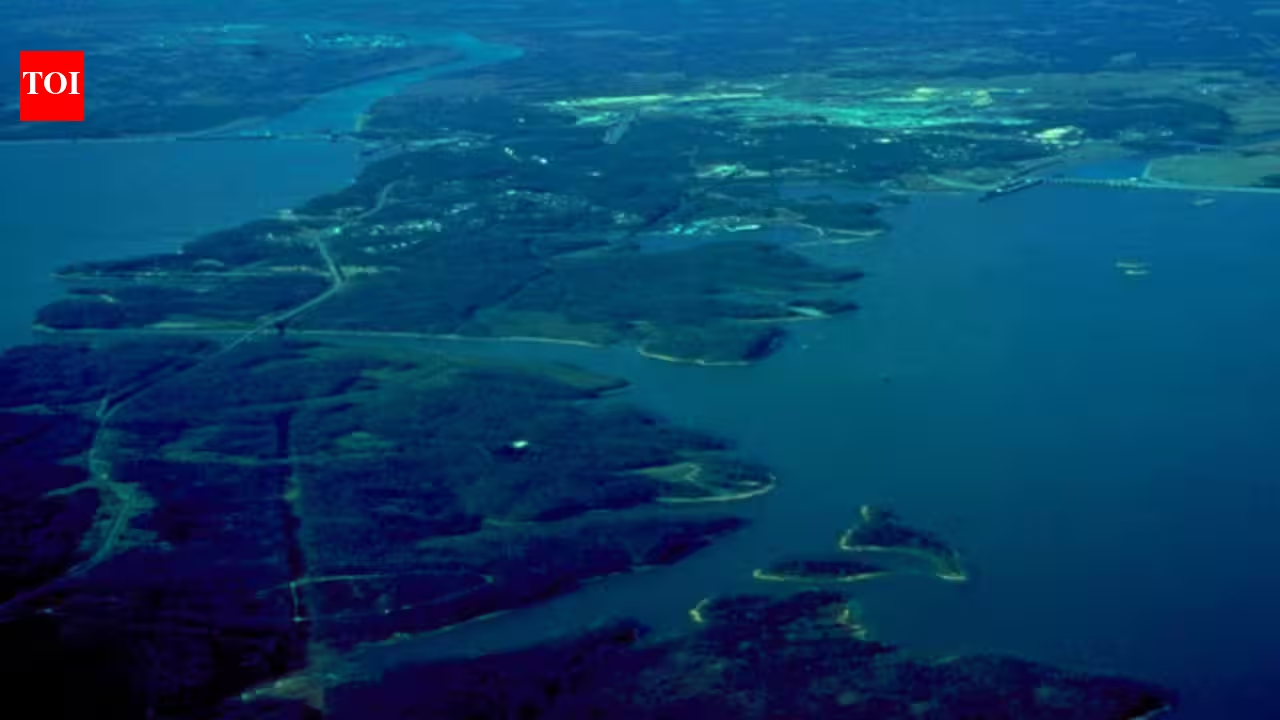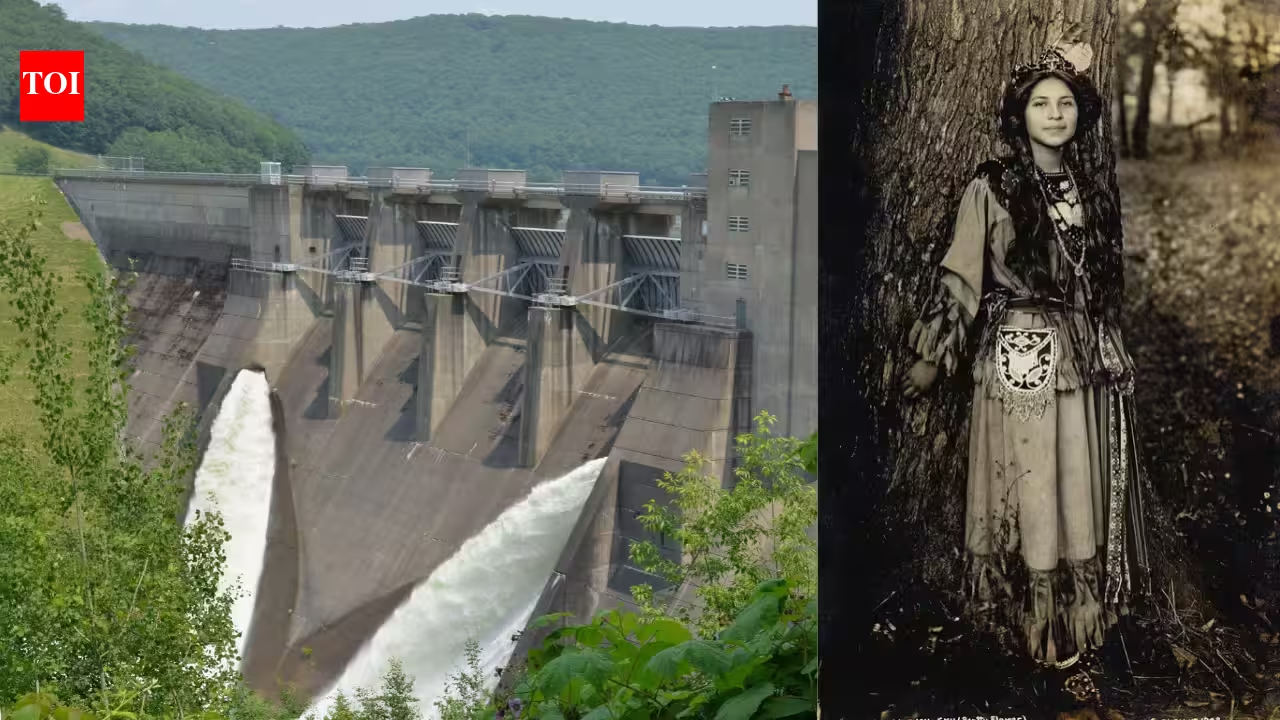
Kinzua Dam in July 2015/Seneca woman, 1908 | Wikimedia CommonsKinzua Dam was completed in 1965, and the project had already become the center of a long fight over the federal government's acquisition of Seneca land in western New York. The dam was built on the Allegheny River in northwestern Pennsylvania as part of a flood-control system for the Ohio River Basin. But the reservoir behind it extended into New York, which affected the Seneca Nation's Allegany Territory and forced families from communities along the river. Today, the same project sits at the center of one of the largest outdoor recreation complexes in the northeastern United States, according to the U.S. Army Corps of Engineers.The project had been authorized decades earlier under the Flood Control Acts of 1936 and 1938. The Army Corps says Kinzua was one of 16 flood-control projects in its Pittsburgh District, and was designed to protect communities downstream and reduce flooding across the Allegheny and upper Ohio River valleys. Construction began in 1960, while the proposed taking of Seneca land triggered court battles and congressional action. Federal records from the Bureau of Indian Affairs show that the project required more than 9,000 acres of Seneca land, while the Seneca Nation says roughly 10,000 acres of its Allegany Territory were eventually inundated by the reservoir. The land was part of a larger territory that had covered 30,469 acres along the Allegheny River.Kinzua Dam in July 2015/Seneca woman, 1908 | Wikimedia CommonsA flood-control project with a human costThe federal government viewed the dam as part of a wider plan to control damaging floods in the region, but for the Seneca Nation, however, the project meant the loss of homes, communities and riverfront land. The Bureau of Indian Affairs documented the dispute while construction was underway, and noted that Congress had approved funding for the project after years of testimony for and against it. In 1959, the U.S. Supreme Court declined to hear litigation seeking to stop the taking of the land.In 1964, Congress passed legislation that addressed the acquisition of land and the relocation and rehabilitation of affected Seneca people. A BIA record states that the legislation awarded $15 million for relocation and rehabilitation after approximately one-third of the Allegany Reservation had been taken for the reservoir. Another federal account from the period described 133 Seneca families, or about 830 people, as facing displacement from the area designated for the project.The reservoir did not simply appear on the day construction ended, and this distinction matters in telling the story. The dam itself was completed in 1965, according to the Army Corps of Engineers, while the impoundment of water and the full effects of the reservoir followed as the project became operational. The National Archives has documented the controversy surrounding the project and the public opposition it generated, including protests over the taking of Seneca land and concerns about treaty obligations. The project nevertheless moved forward, permanently changing the use of a large stretch of the river valley.What Kinzua Dam was built to doKinzua became a major piece of flood management infrastructure after it became operational. The Army Corps says the project provides complete protection for Warren, Pennsylvania, from Allegheny River flooding and works alongside other projects to reduce flood risks farther downstream. Its flood-control capacity was tested during the 1972 floods associated with Tropical Storm Agnes. The Corps estimates that Kinzua prevented $247 million in flood damage during that event. Since the project's completion, the agency says the dam has prevented more than $1.2 billion in estimated flood damages. The reservoir also stores water for release during dry periods, and those releases are intended to support water quality and quantity and help maintain navigable depths for commercial traffic on the Allegheny and upper Ohio rivers.Hydroelectric generation became another function of the project, and the Corps says a power plant associated with Kinzua has a peak capacity of 400,000 kilowatts per hour. The Big Bend Visitor Center near the dam includes exhibits explaining the hydroelectric system. These functions explain why Kinzua was built, but they do not erase the dispute surrounding the land acquisition. The Seneca Nation continues to describe the reservoir's impact on its Allegany Territory in terms of lost land and forced relocation. The Nation's current account notes that the territory originally stretched across more than 30,000 acres and that a substantial portion was inundated after the federal project was built. That history remains directly connected to the reservoir's geography today: in New York, its shoreline borders both Allegany State Park and the Allegany Territory.Seneca Pumped Storage Generating Station on the left, looking downstream | Wikimedia Commons River valley to recreation complexAllegheny Reservoir is also a major recreation destination six decades after the dam's completion. The Army Corps describes Kinzua Dam and the reservoir as being at the heart of one of the largest and most popular outdoor recreation complexes in the northeastern United States. The area is surrounded largely by forest, with the Allegheny National Forest covering the Pennsylvania side. Summer brings boating, swimming, water-skiing, camping and fishing, while hiking, sightseeing and fall foliage draw visitors during autumn. Winter activities include cross-country skiing, ice fishing and snowmobiling, while spring brings canoeists, trout anglers and other outdoor visitors.The reservoir stretches across the Pennsylvania-New York border. Recreation.gov notes that popular activities include boating, camping, fishing, hiking, picnicking, water sports and wildlife viewing. Campgrounds around the water provide access to the reservoir and its tributary arms, while the surrounding public lands have made the region a destination for visitors seeking forest and water-based recreation.That is Kinzua's present-day reality: a federal flood-control project with an estimated multibillion-dollar record of avoided flood damage, a hydroelectric facility and a major recreation landscape. It is also a place whose shoreline still reflects the consequences of a 1960s land acquisition that displaced Seneca families and submerged thousands of acres within the Nation's Allegany Territory.
Kinzua Dam’s construction displaced Seneca communities in the 1960s: 61 years after its completion, Allegheny Reservoir anchors one of the Northeast’s biggest outdoor recreation complexes
Kinzua Dam was completed in 1965, and the project had already become the center of a long fight over the federal government's acquisition of Seneca land in western New York. The dam was built on the Allegheny River in northwestern Pennsylvania as part of a flood-control system for the Ohio River Basin.
979 words~4 min read