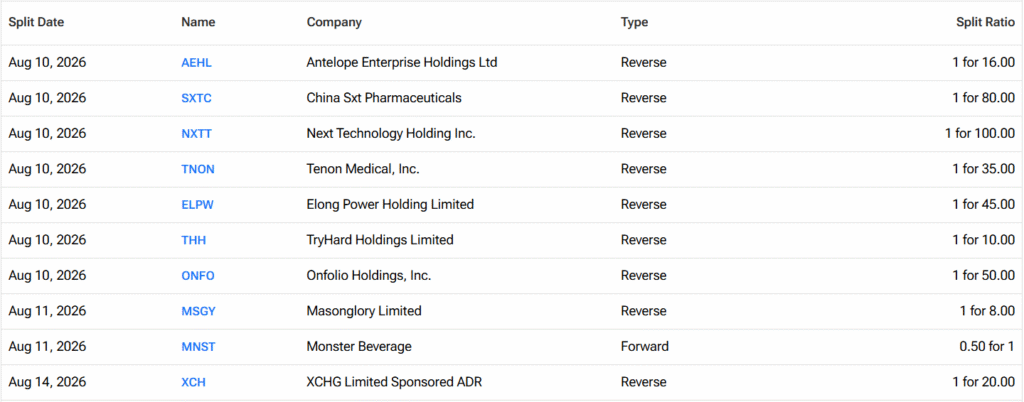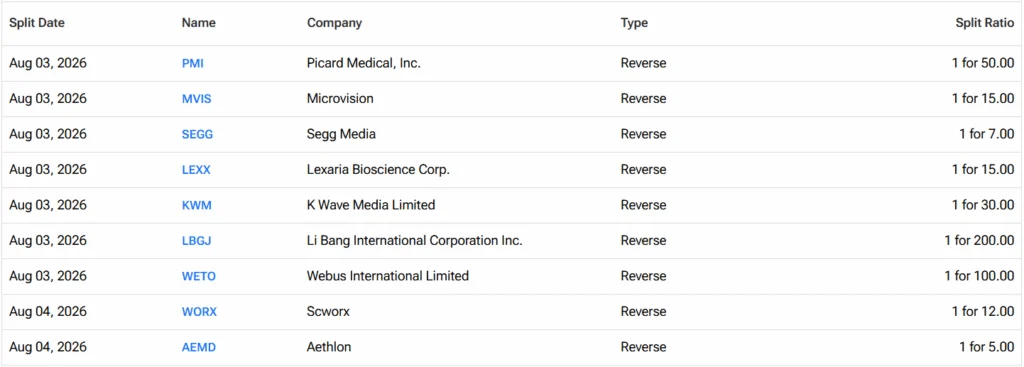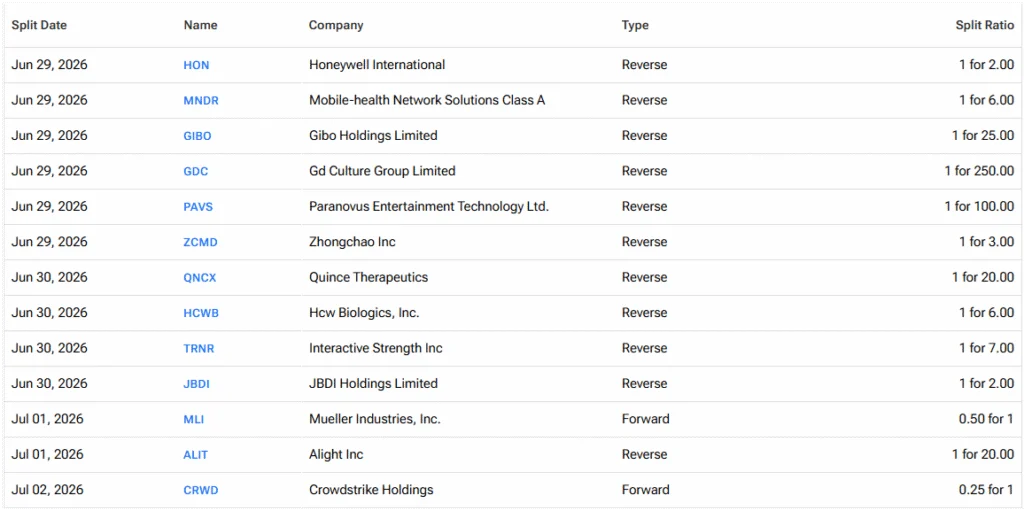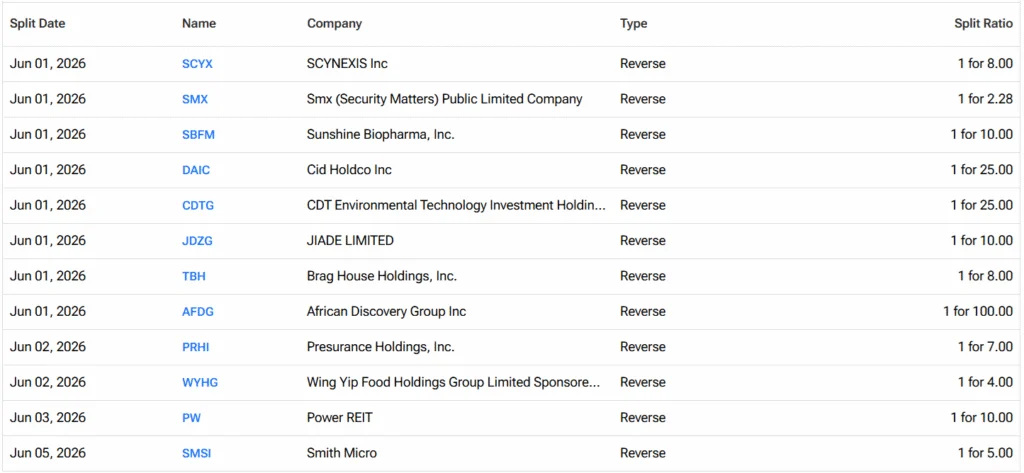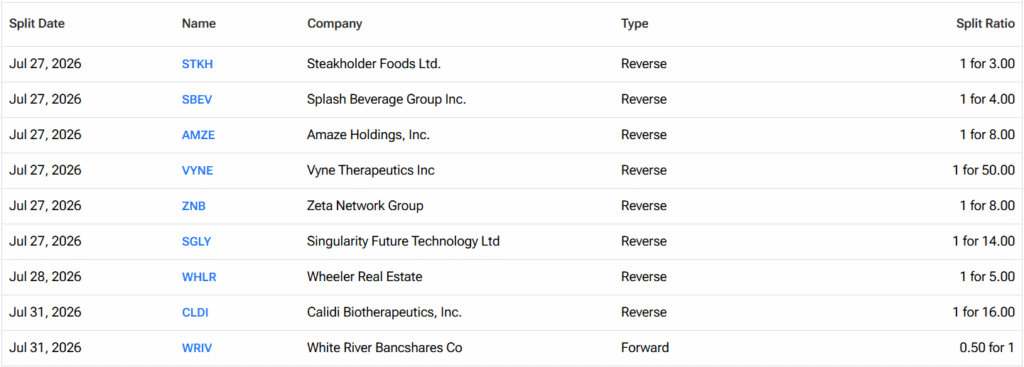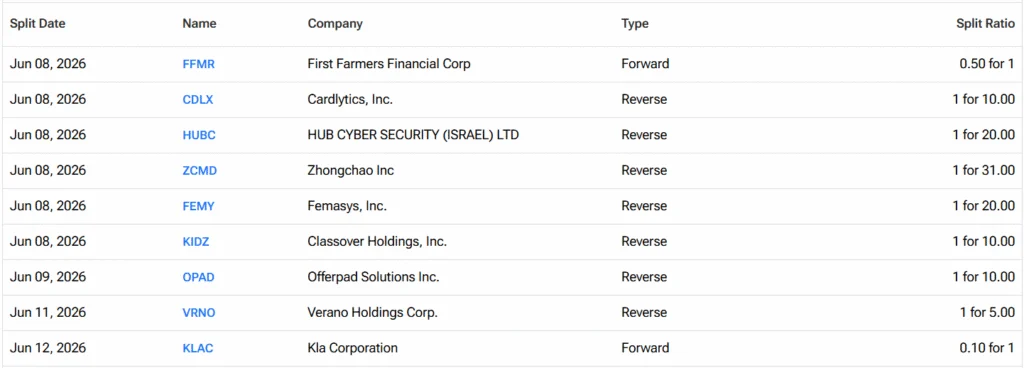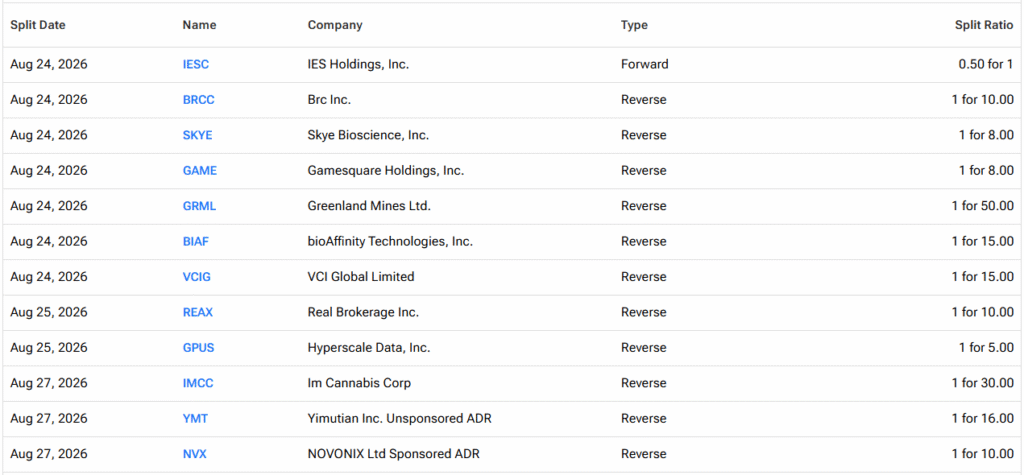
But before getting to the names on this week’s list, it helps to understand that not all stock splits tell the same story. In fact, depending on the type of split, they can point to two very different paths for a stock.
On one side are companies with a share-price problem most businesses would love to have: their stock has climbed so far that buying a single share has become expensive. A traditional stock split offers a simple fix. The company breaks each share into several smaller pieces, bringing down the price without taking a dollar off its overall market value. Investors own more shares at a lower price, while their total stake remains unchanged.
On the other side are companies facing the exact opposite problem, with their shares having become too cheap. That is where the reverse stock split comes in. Instead of breaking shares apart, the company puts them back together. Ten shares might become one, for example, instantly turning a $1 stock into a $10 stock without changing what the company is worth. For tiny stocks flirting with exchange minimums, that mathematical reset can help bring their shares back above requirements such as Nasdaq’s minimum bid price.
So, what makes a split worth watching is not simply what happens to the share count. It is what came before it, whether years of gains that made the stock expensive or a long slide that left its price uncomfortably low.