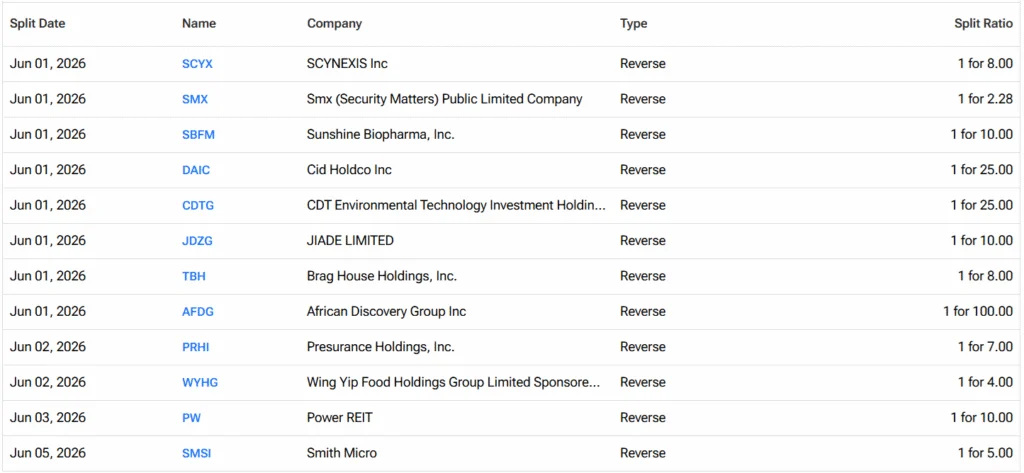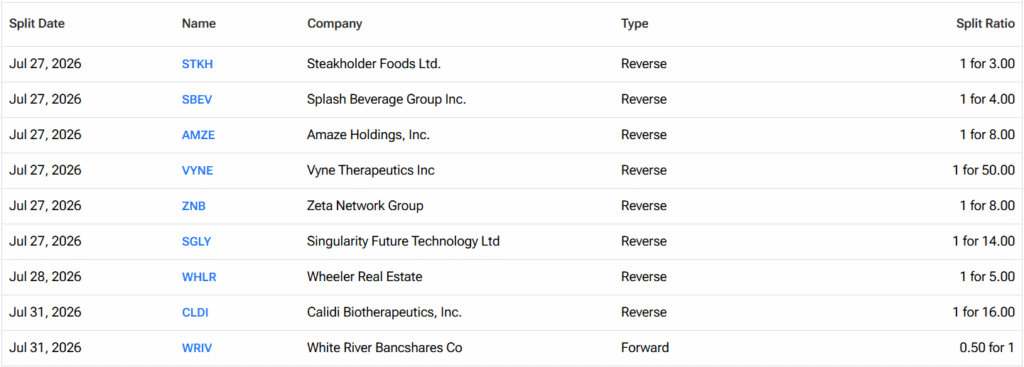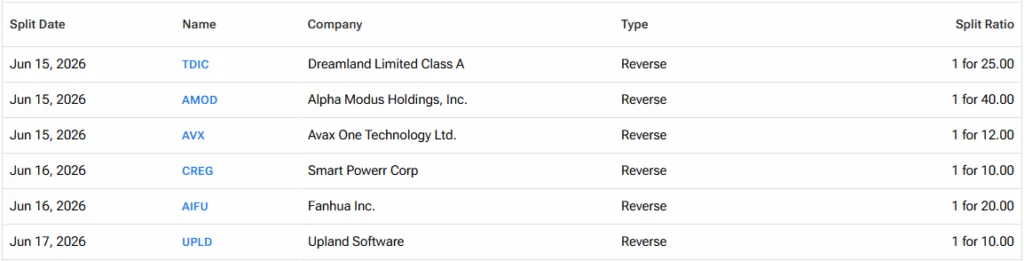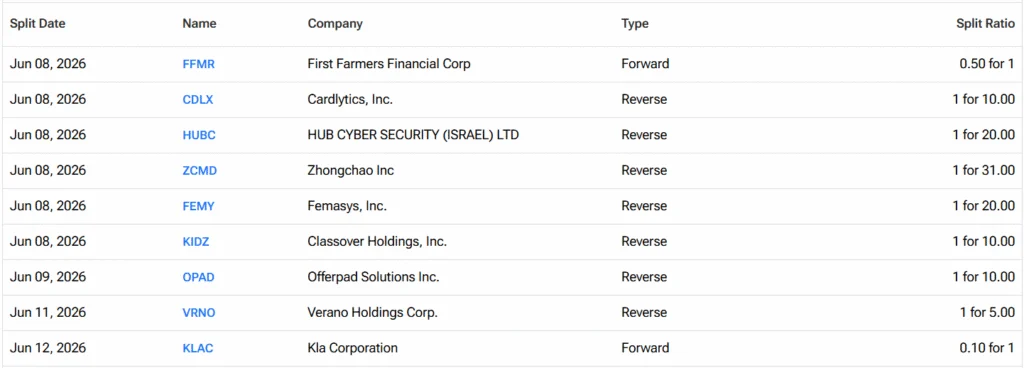
Stock splits are among the corporate actions that investors watch most closely. In a regular stock split, a company increases the number of outstanding shares while reducing the price of each share by the same proportion. The company’s overall value does not change, but the lower share price can make the stock more affordable for retail investors.
Some companies take the opposite approach by carrying out a reverse stock split. Instead of issuing more shares, they combine several existing shares into one, resulting in a smaller share count and a higher share price. Although the company’s market cap stays the same, this step is often taken when a stock has fallen to levels that could threaten its stock exchange listing. A higher share price can help the company remain in compliance with listing standards, including Nasdaq’s minimum bid requirement.
A traditional stock split is usually the result of a strong share price performance, while a reverse stock split is more commonly used after a stock has lost a significant portion of its value. That makes stock split announcements a useful way to gauge both a company’s recent trajectory and management’s objectives.
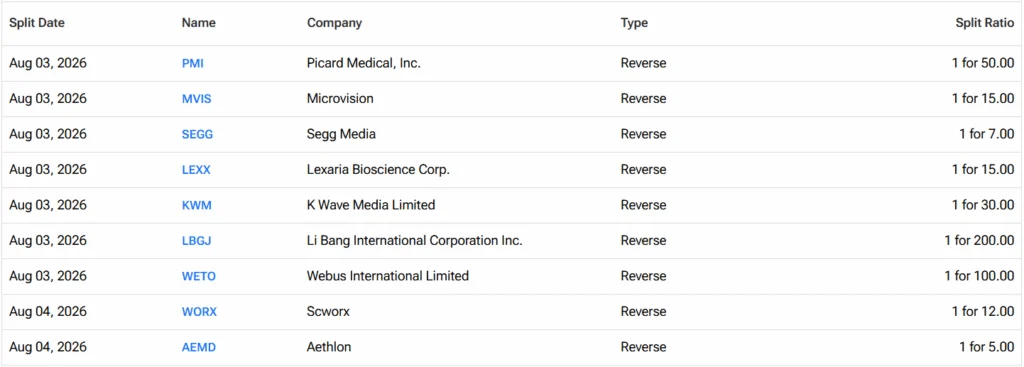
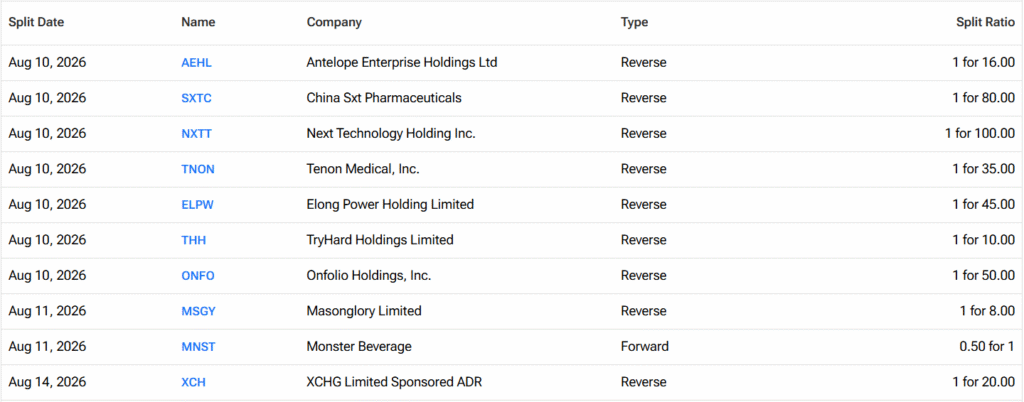
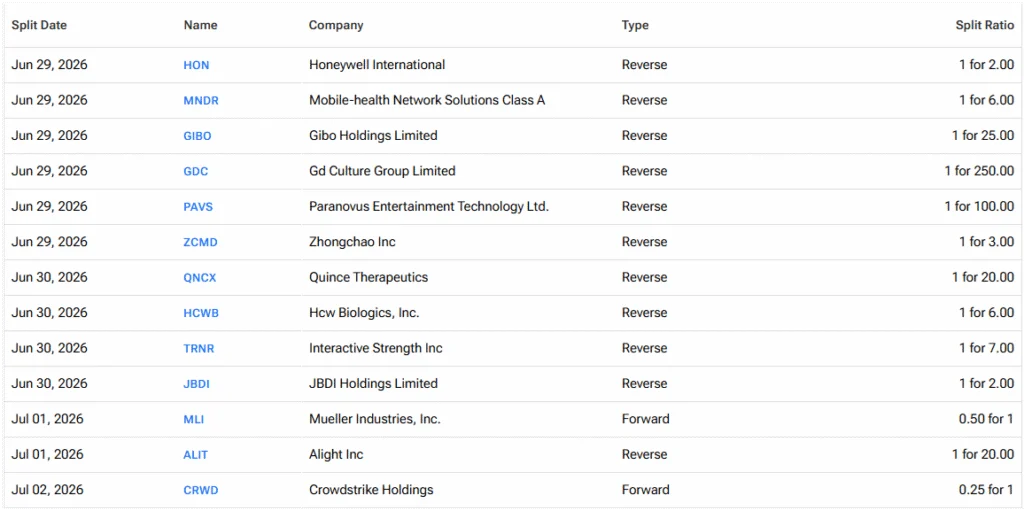
Here are the upcoming stock splits for the week: