Discover high-conviction stock picks and new investing opportunities with the TipRanks Smart Investor Newsletter
A traditional stock split increases the number of shares outstanding while reducing the price of each share, making a stock appear more affordable to individual investors. While the company’s overall value remains unchanged, lower share prices can improve accessibility and sometimes boost trading activity.
These days, however, reverse stock splits are far more common. In a reverse split, a company combines existing shares into fewer, higher-priced shares. Such moves are frequently tied to efforts to meet exchange listing requirements, particularly Nasdaq’s minimum bid price rule, and avoid the risk of delisting.
Yet, reverse splits can also reflect management’s confidence that the business is positioned for improvement. By maintaining a public listing and creating a higher share price, companies may be seeking to attract a broader pool of investors and support future growth initiatives.
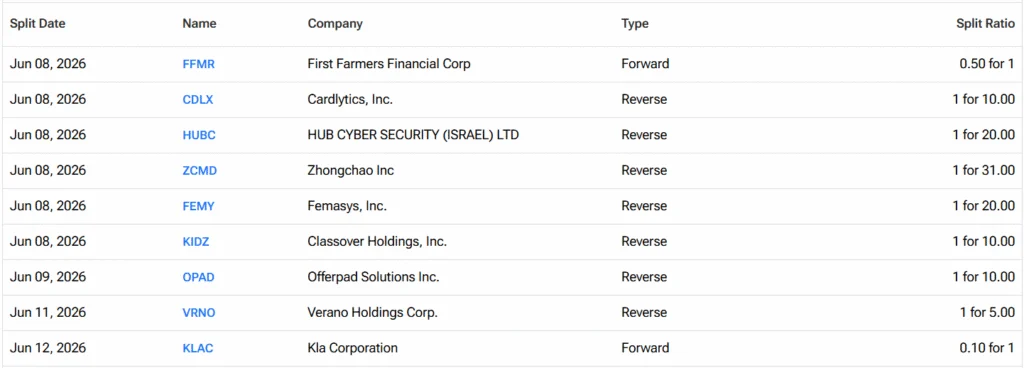
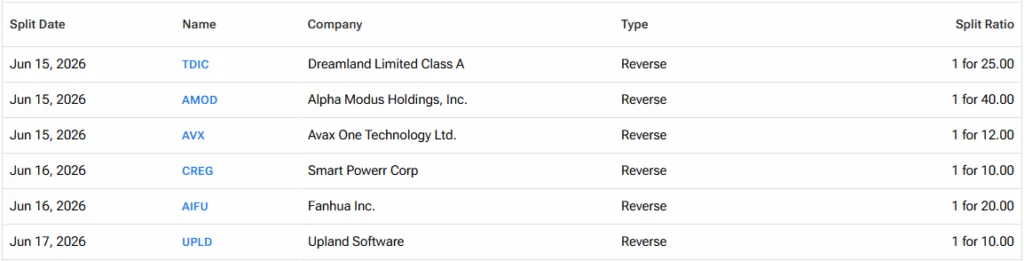
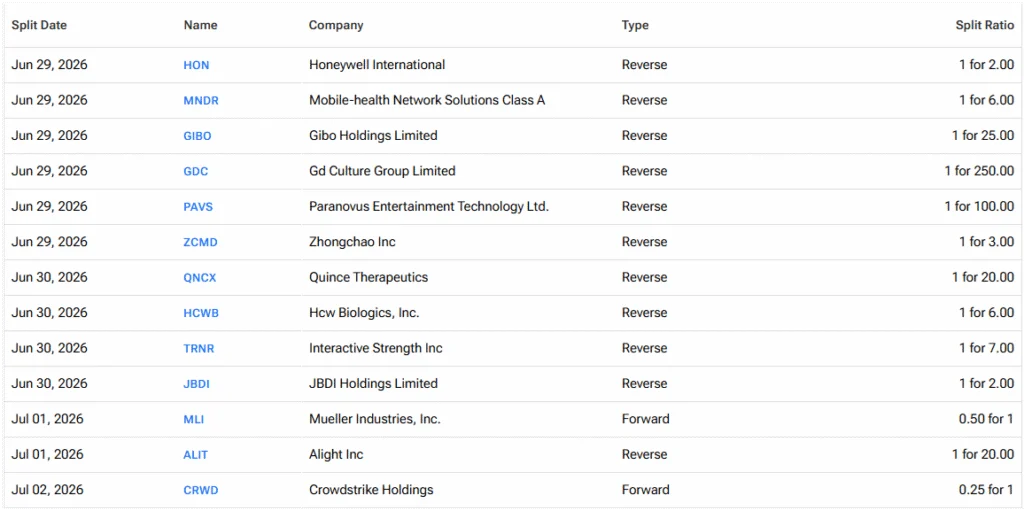
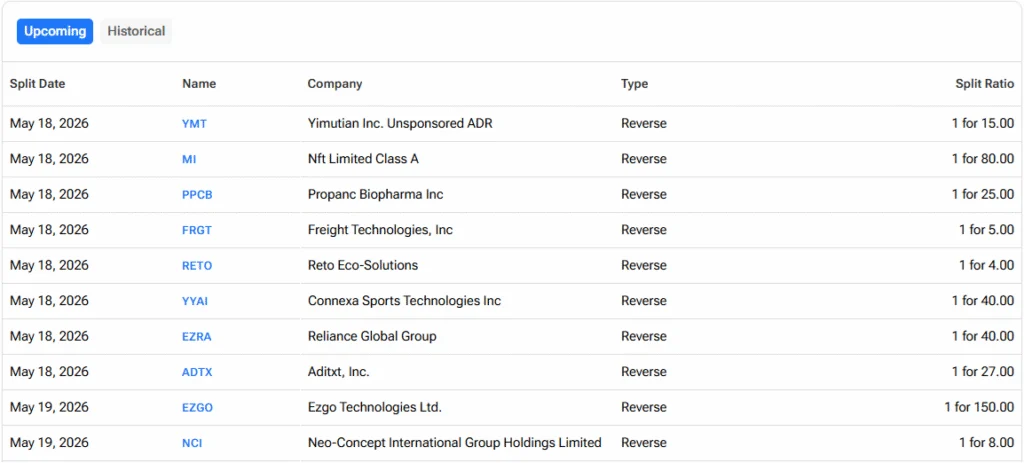
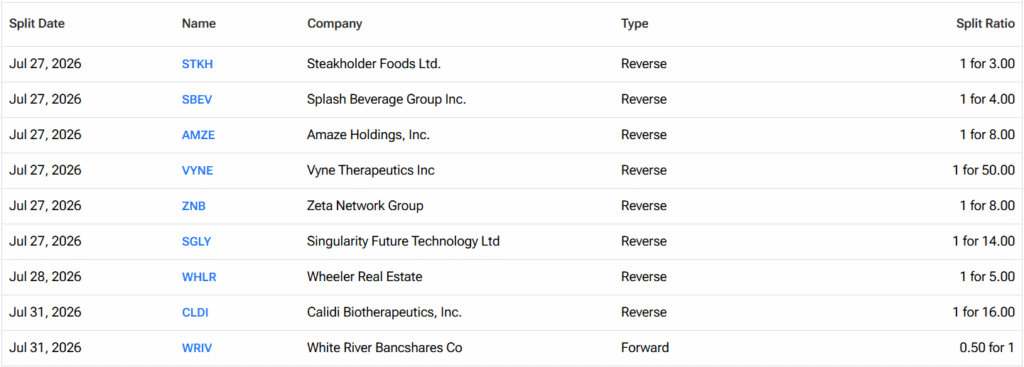
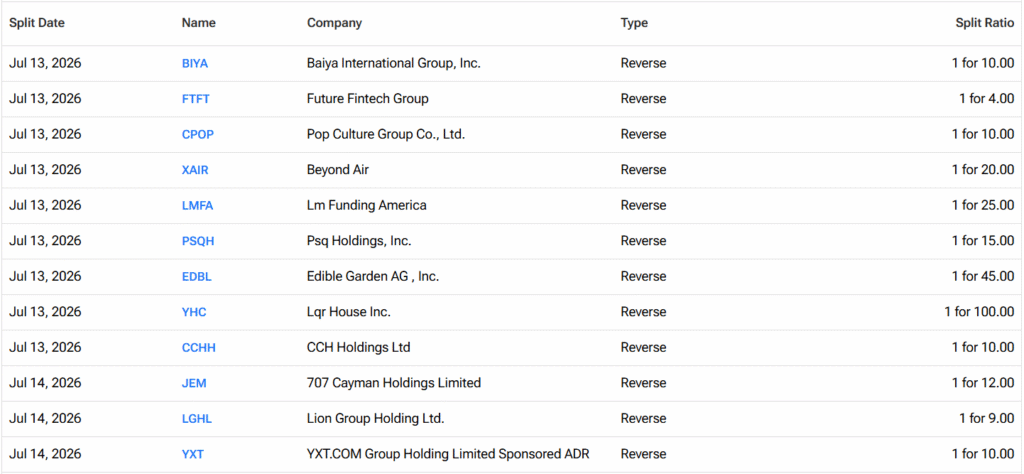
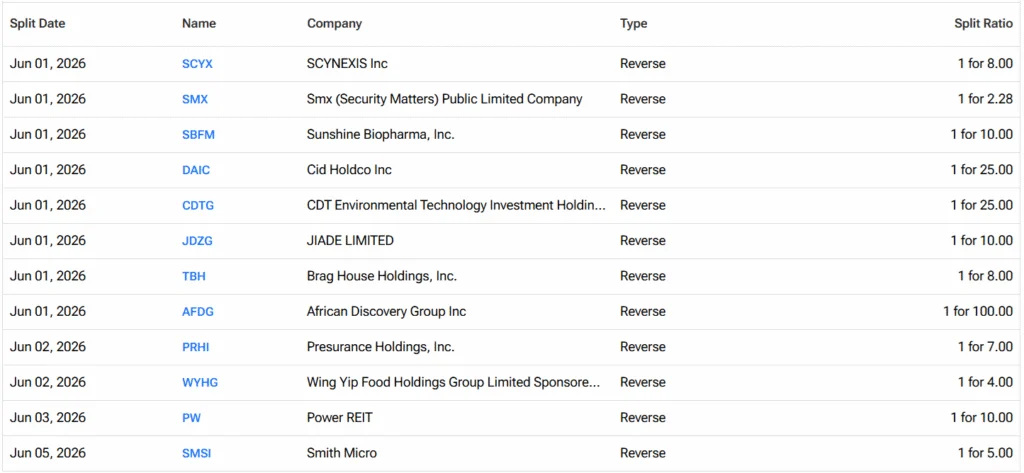
Let’s take a look at the upcoming stock splits for the week.