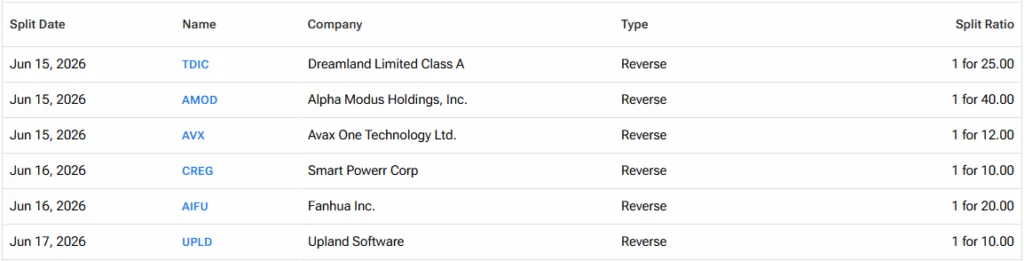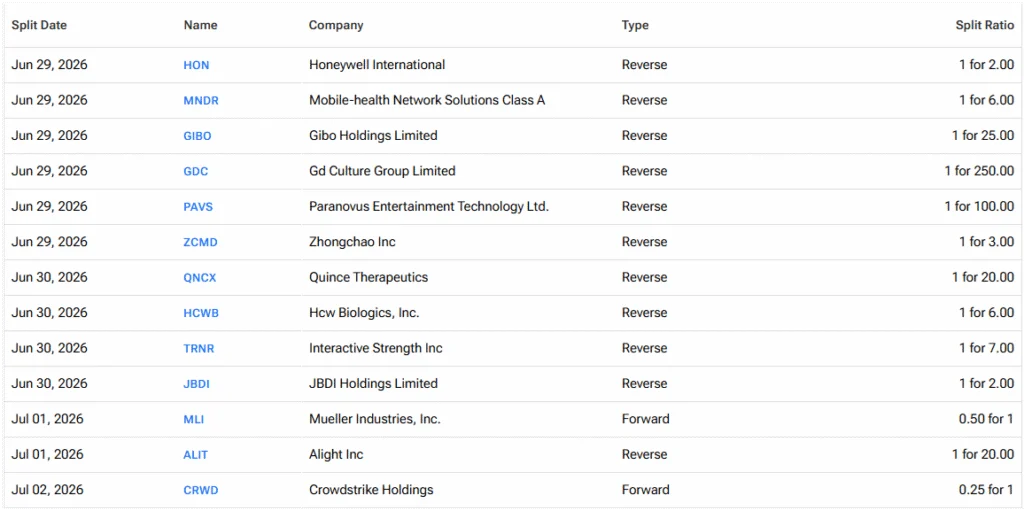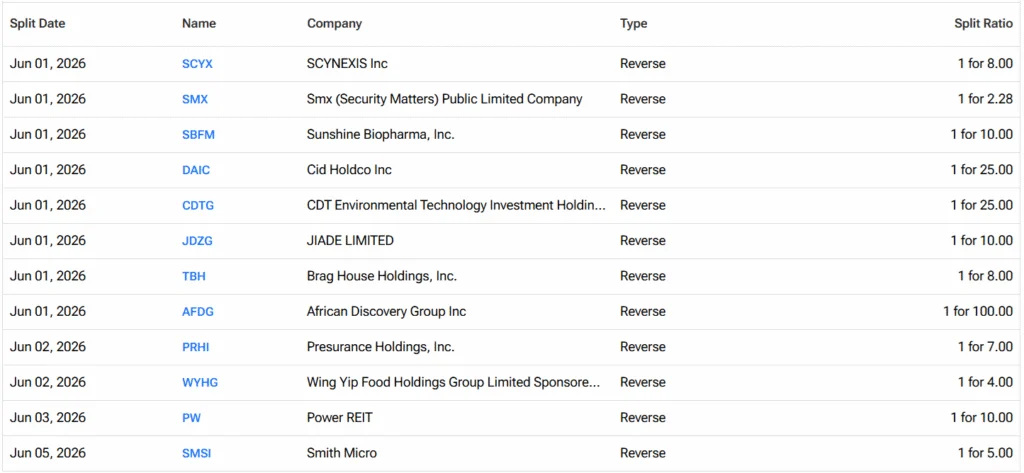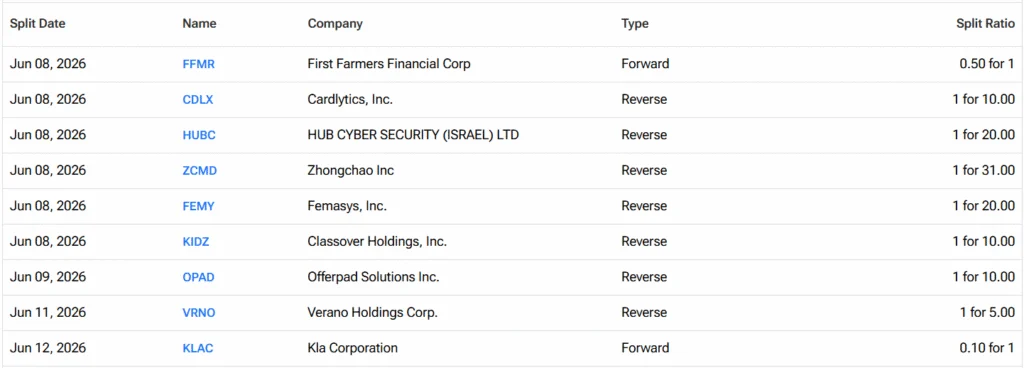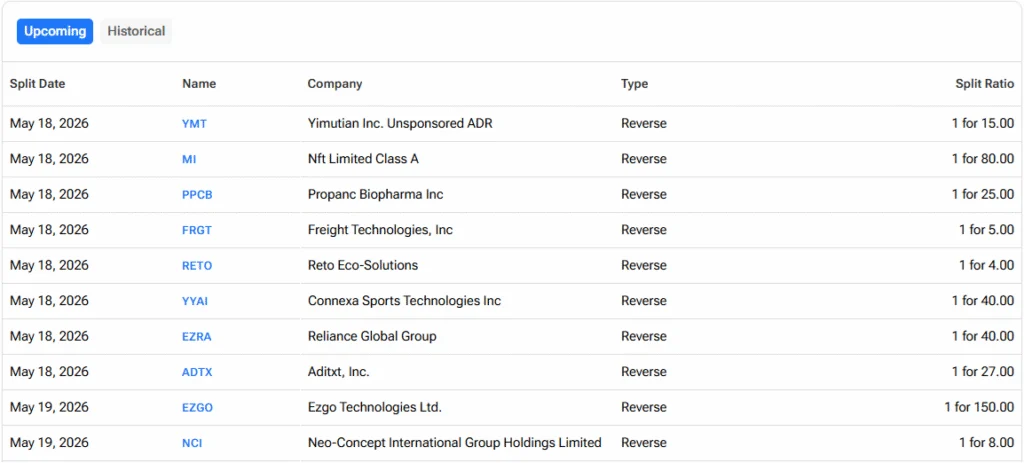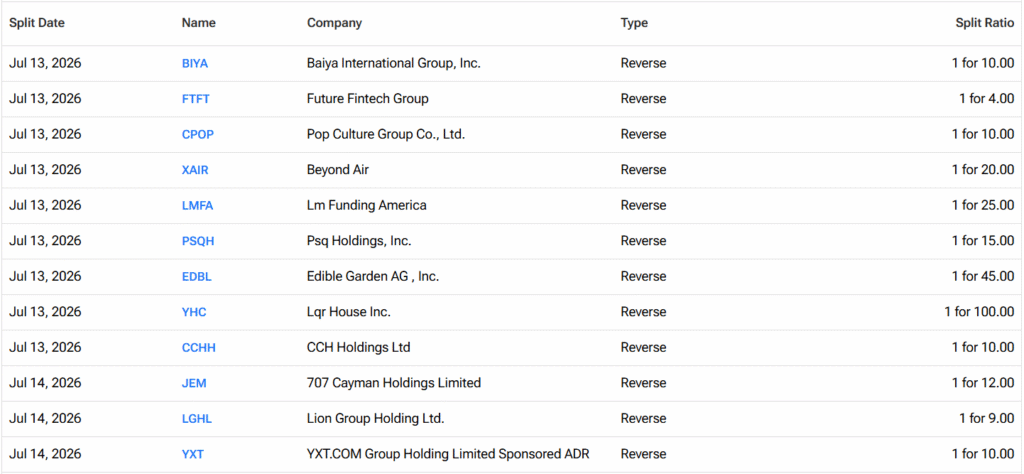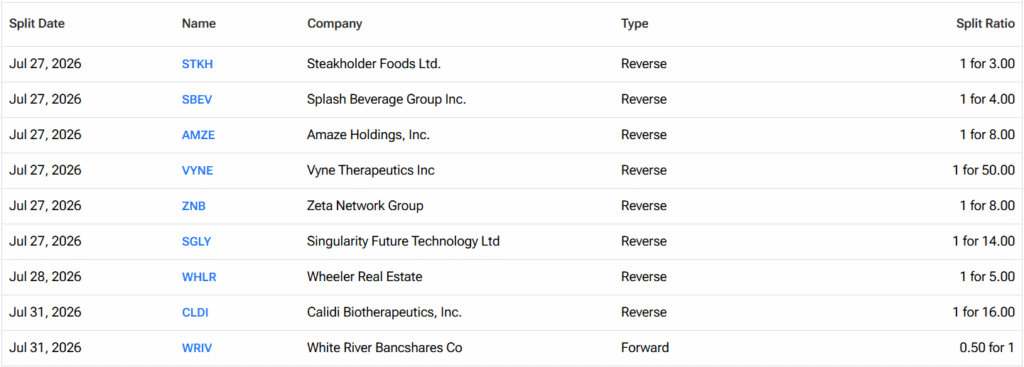
Stock splits have long been one of the corporate actions investors watch most closely. A traditional stock split increases the number of shares outstanding while reducing the price of each share by the same ratio. The company’s market value stays exactly the same, but the lower share price can make the stock more affordable for individual investors.
A reverse stock split accomplishes the opposite objective. Instead of issuing more shares, the company combines several existing shares into one, resulting in a higher price per share. While the company’s overall value remains unchanged, businesses often use reverse splits after prolonged share-price declines that leave them at risk of falling below exchange listing standards. Raising the stock price can help them remain compliant with requirements such as Nasdaq’s minimum bid rule.
Although both transactions fall under the same broad category, they often reflect very different circumstances. Traditional stock splits are usually associated with companies whose shares have appreciated substantially over time, whereas reverse stock splits are far more common among companies working to recover from significant declines. As a result, split announcements can offer investors useful insight into a company’s recent performance and the direction management hopes to take from here.