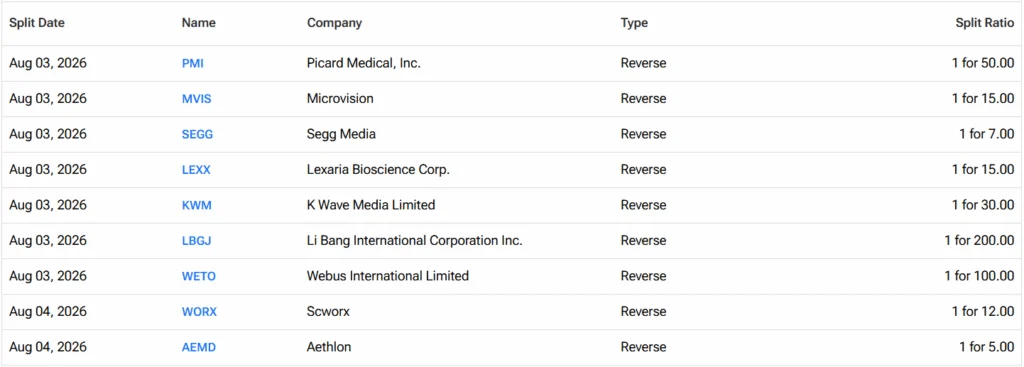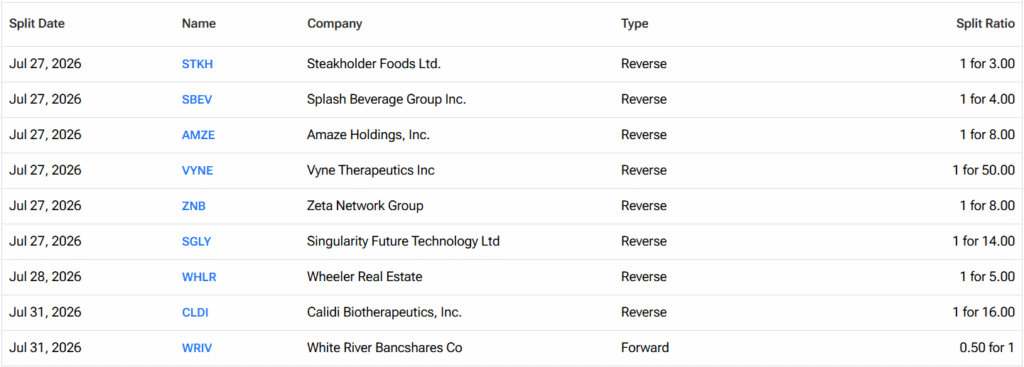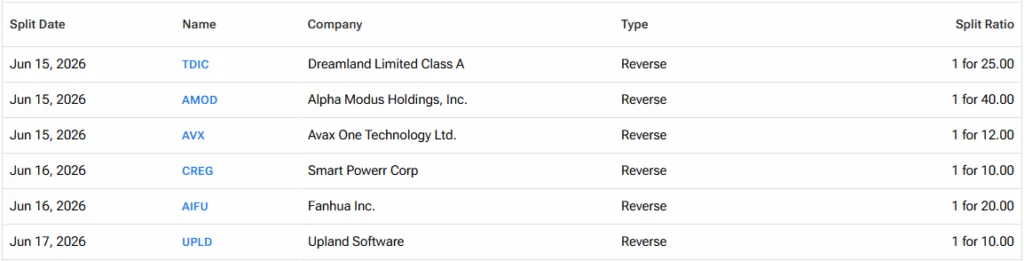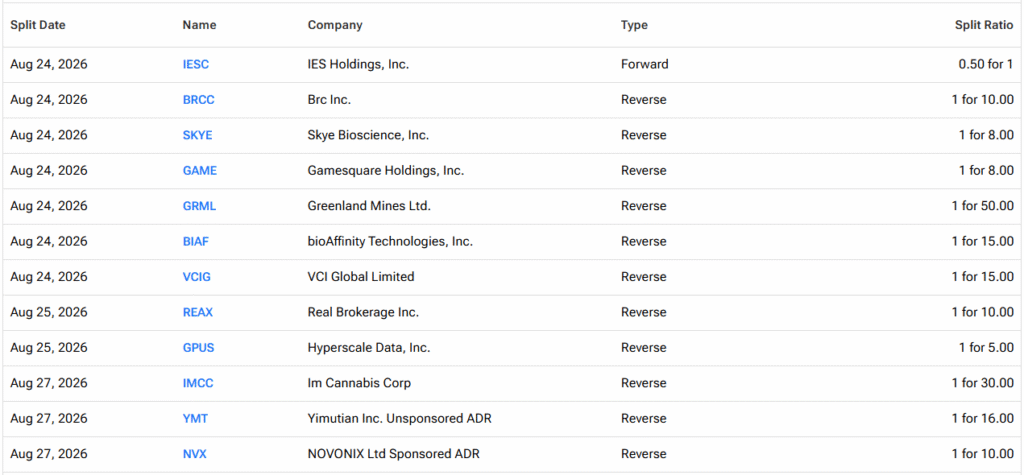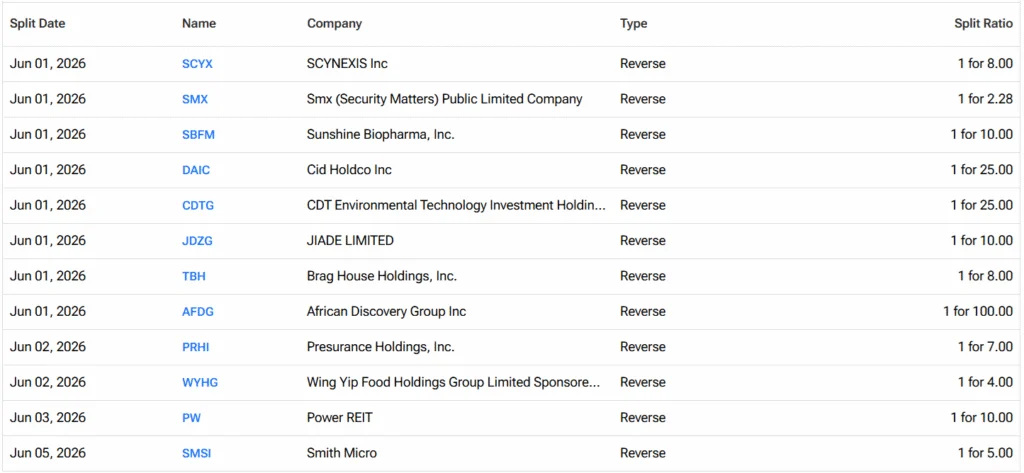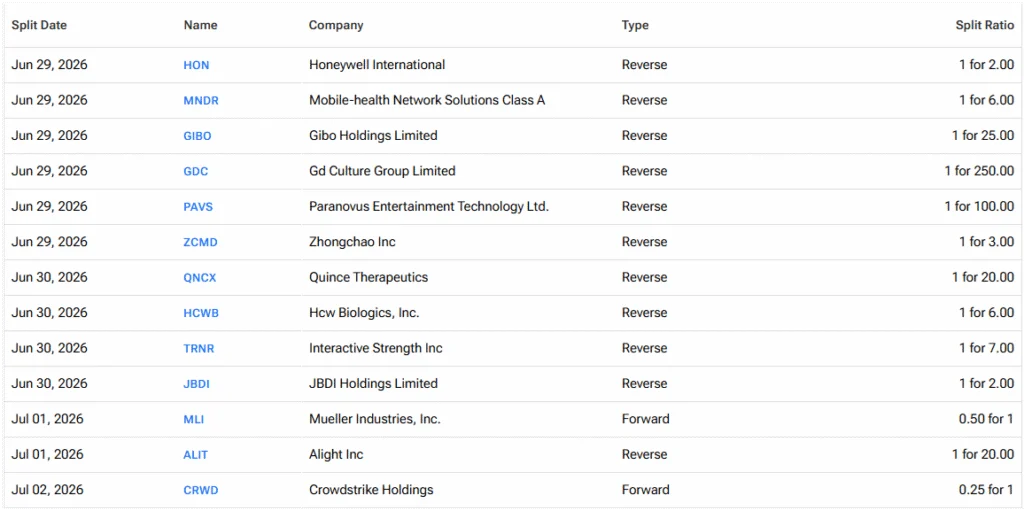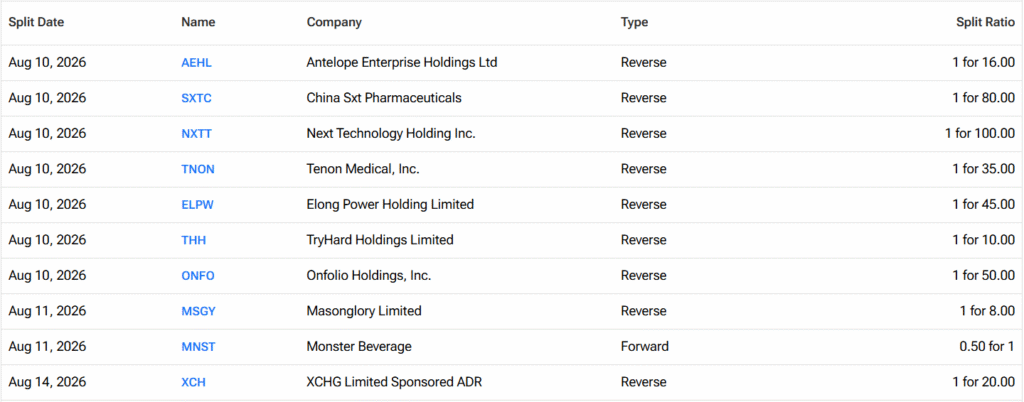
A stock split can take one of two very different forms, but neither changes what a company is actually worth. In a traditional split, a company divides its existing shares into a larger number, bringing down the price of each share while leaving its total market cap untouched. The lower share price can make the stock more accessible to retail investors and, in some cases, help improve trading liquidity.
Reverse stock splits work in the opposite direction. Instead of creating more shares, a company combines existing shares into fewer ones, lifting the share price while keeping its overall valuation the same. Companies often turn to this option for a more practical reason, as a higher share price can help them meet an exchange’s minimum bid-price requirement and reduce the risk of delisting from venues such as Nasdaq.
Neither type of split creates value on its own, but that does not mean investors ignore them. A split can offer clues about how management views the stock’s current position, while a reverse split can reveal the practical challenges a company is trying to address. Either way, these moves often give investors another reason to take a closer look at what is happening with the stock.