The next phase of India’s dairy growth cannot be measured only in litres. It has to be measured in value, quality and trust.
| Photo Credit:
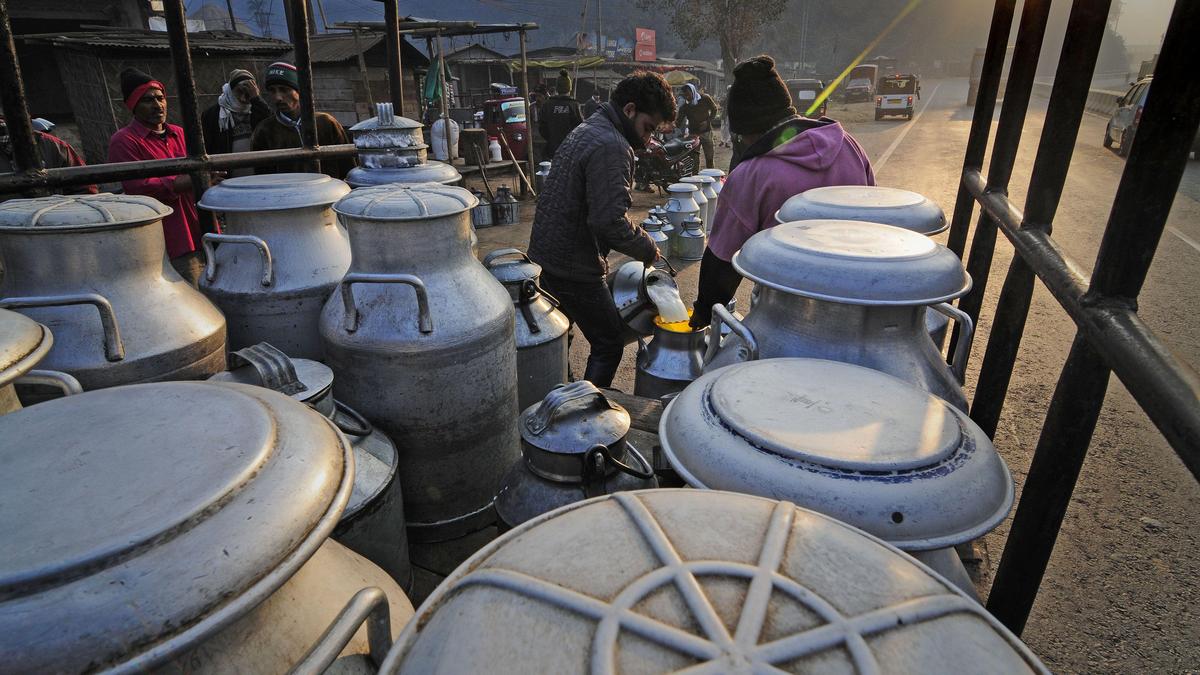
India’s dairy story is one of the country’s most remarkable economic achievements. A nation that once struggled with milk shortages is today the world’s largest milk producer, producing close to 248 million tonnes in 2024-25. Dairy supports the livelihoods of more than eight crore families, most of them small and marginal farmers, and contributes around 6 per cent to the economy.Yet, there is a paradox at the heart of this success. India produces more milk than any other country, but exports less than one per cent of its production. New Zealand, with a fraction of India’s milk output, earns considerably more from global dairy trade.This tells us something important: the next phase of India’s dairy growth cannot be measured only in litres. It has to be measured in value, quality and trust.From production to productivityThe defining characteristic of Indian dairy is its fragmentation. Milk comes predominantly from millions of households keeping a small number of animals, often producing only a few litres a day. A large share of the country’s milk still moves through informal channels. Between the farm and the consumer are several stages of collection, transportation, chilling, processing and distribution.The challenge is that our supply chains have not always been able to provide the same level of consistency, quality assurance and traceability that global markets increasingly demand.The missing layer: a connected supply chainFor decades, India’s dairy infrastructure has been built around physical assets -collection centres, chilling plants, processing facilities and transportation networks. The next layer has to be digital.At the farm, digital records can help monitor milk production, animal health, nutrition and breeding. At the collection centre, technology can measure milk quality and enable pricing based on quality of Milk. During transportation, sensors can monitor temperature and movement. At the processing plant, digital records can connect incoming milk with batches and finished products.Quality will determine the next export opportunityFor international buyers, the question is no longer simply whether India has enough milk.They want to know where the milk came from, how it was handled, whether it was chilled within the required time, what controls were followed at the farm, and whether the product can meet increasingly stringent standards around residues and contaminants.Antibiotic residues, aflatoxin, microbial quality and cold-chain compliance are not merely technical issues. They can determine whether a product reaches a premium market or is rejected at the border.Turning fragmentation into an advantageIndia should not attempt to replicate the dairy models of countries built around large, highly concentrated farms. Our dairy economy has evolved differently, and there is value in that model.Millions of farmers create a distributed production network that is resilient and inclusive. The task is to connect that network with the infrastructure, standards and data systems required by modern food markets.The competitiveness questionIndia’s dairy opportunity is, therefore, not simply about producing another 10 or 20 million tonnes of milk.At Stellapps, we have spent more than a decade working on this challenge by connecting farmers, milk collection, chilling, transportation and processing through digital systems. The experience has reinforced a simple lesson: technology creates the most value when it works with the realities of Indian dairy rather than trying to work around them.The next question is more consequential: Can we become one of the world’s most trusted dairy suppliers?India’s dairy story was built on scale.Its next chapter must be built on productivity, traceability and trust.The author is CEO, Stellapps TechnologiesPublished on August 23, 2026