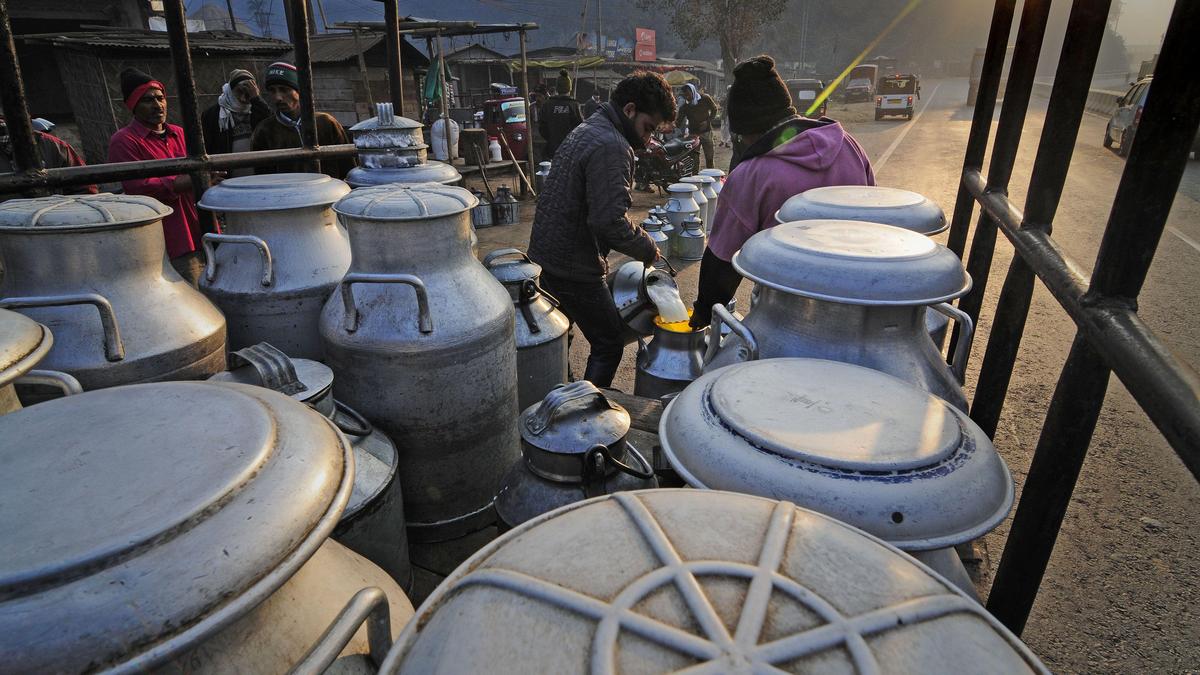
India is set to strengthen its position as the world’s largest milk producer in 2026, with cow’s milk production forecast to rise to 105.4 million tonnes (mt) — up from 103.2 mt in 2025, according to the latest Dairy: World Markets and Trade report by the United States Department of Agriculture (USDA). The increase comes alongside a gradual expansion in the country’s dairy herd, with the number of cows in milk expected to reach 62.5 million head, the highest among all countries tracked by the agency.The report estimates domestic fluid milk consumption at 93 mt in 2026, reflecting the country’s continued reliance on a large domestic market to absorb rising output. India is second only to the European Union in total milk production.India is also expected to register steady gains across processed dairy products. Butter production is projected to increase to 7.44 mt in 2026 from 7.19 mt a year earlier, while domestic consumption is forecast to climb to 7.39 mt.India remains the world’s largest butter producer by a wide margin, ahead of the EU and New Zealand.Non-fat dry milk output to riseProduction of non-fat dry milk is also forecast to edge higher to 790,000 tonnes in 2026 from 770,000 tonnes in 2025, with domestic consumption nearly matching production at 779,000 tonnes.Globally, the dairy industry is witnessing stronger momentum in export-oriented products. The USDA expects US butter exports to surge 40 per cent in 2026, while EU butter exports are projected to rise 10 per cent as processors channel available milk towards higher-value dairy products. New Zealand is also forecast to post record milk production of 22.5 mt, supported by improved farm profitability.Notably, despite India’s growing presence in overseas dairy markets through co-operative major Amul’s international expansion, the USDA report does not discuss India’s dairy export prospects or outline any expectations for export growth. Instead, the report largely portrays India as a domestic consumption-driven market, with rising milk production being absorbed by expanding local demand rather than international trade.Published on July 29, 2026
India retains global dairy lead as milk output rises
India is set to maintain its global dairy leadership, with cow's milk production projected to reach 105.4 million tonnes in 2026.
333 words~2 min read