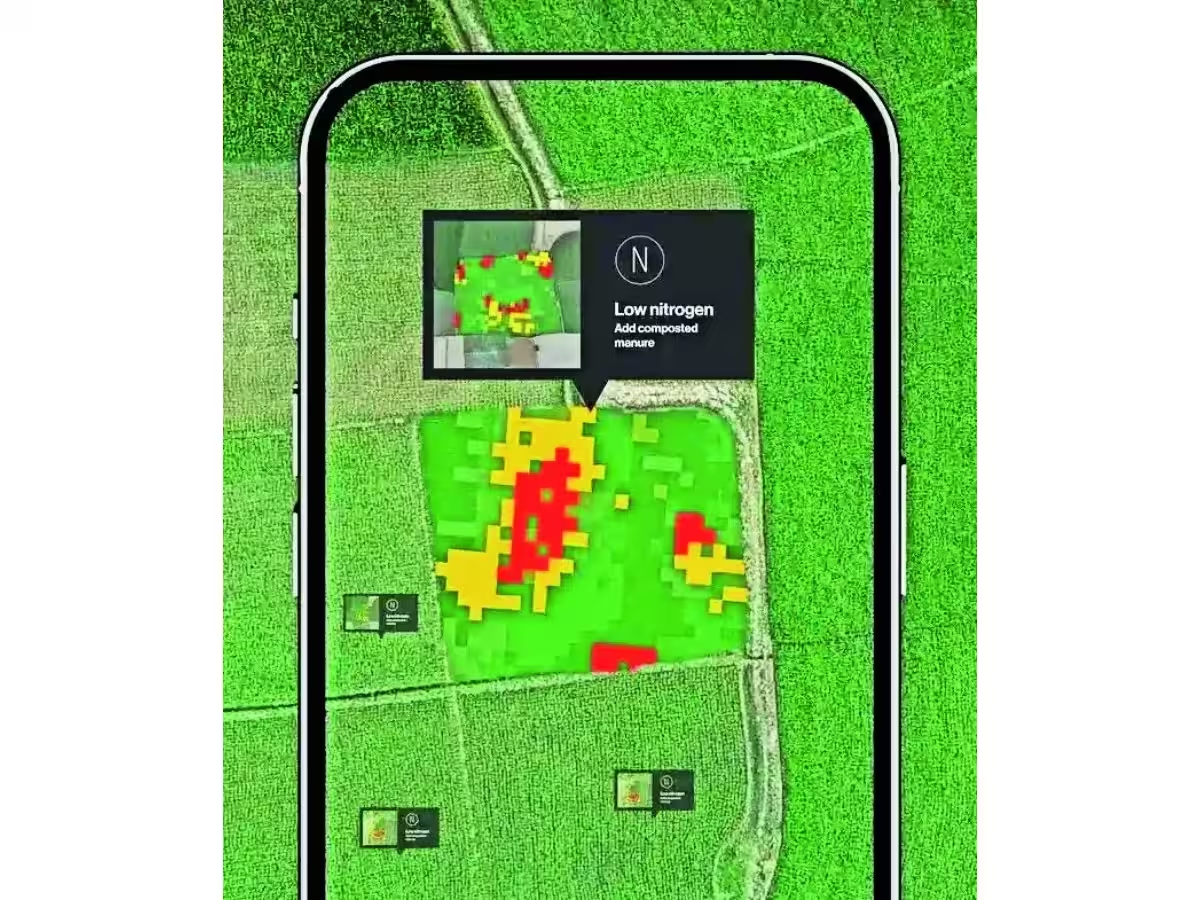
India’s dairy revolution has been one of its greatest agricultural success stories, which turned India from a milk-shortage country to one of the world’s largest milk producers back in the 70s. Today, India contributes nearly 25 per cent of global milk volumes, producing roughly 240 million tonnes annually. Under White Revolution 2.0, the Indian government aims to increase milk procurement by dairy cooperatives by 50 per cent over five years from 2024-25 to 2028-29. This renewed focus has helped the Indian dairy sector enter a new growth phase, which calls for greater focus on improving milk productivity, animal health, milk quality and farm profitability — areas where scientific dairy nutrition and quality feed will play a decisive role.More than 50 per cent of India’s population consumes dairy every day. As consumers in India consciously prioritise protein in their diet, consumption of milk and milk-based processed products are increasingly a part of diet preferences. Every dairy product begins its journey at a dairy farm and through value addition ends up on your table.CRISIL expects the organised dairy sector to continue its strong upward trajectory at 13-15 per cent revenue growth this year, even as milk prices are projected to rise due to higher production costs and anticipated gap between higher demand for processed products and milk supply. India’s cattle population remains relatively stable at 300+ million, while average milk productivity per animal remains considerably lower than global benchmarks. This reinforces the fact that future demand can only be met by ensuring optimal animal health and nutrition, herd life productivity, and modern animal farm management systems which are primarily determined by climatic changes. In addition to increasing production, it is also critical to have the right quality of milk by controlling mycotoxin residue levels within permissible limits in dry or green fodder and compound feed. As maize is a key ingredient in animal feed, aligning with FSSAI moisture and aflatoxin norms for human maize consumption and integrating them into mandi operations will also enhance transparency and enforce quality-linked pricing.India’s dairy ecosystem is run by approximately 80 millions of smallholder farmers, with an average herd size of 3-4 animals. While this has empowered rural households, it also means access to nutrition-based feed and modern farm management knowledge remains a challenge. At the heart of this lies the often-overlooked aspect of balanced nutrition with protein, energy and fibre for the herd. These challenges not just limit the economic returns and income potential for small holder farmers, but also limit our capability to achieve full potential for milk production that exists in India.Smart FeedFeed is the most powerful productivity tool available to dairy farmers. Compound feed is designed to provide balanced nutrition to animals not just for milking cows, but right from the birth of the calf and as the animal transitions through various stages of lifecycle, there are different products that are designed accordingly. By tailoring nutrition to different stages of the lifecycle and incorporating scientifically developed additive & eubiotic solutions, farmers can improve nutrient utilisation, energy supply, and support digestive and gut health.Farm TechModern dairy farms generate significant amounts of data — from feed ingredients to herd performance. This helps farmers apply scientific nutrition with greater precision and consistency based on data. Modern milk quality testing equipment, digital advisory platforms and data-driven herd monitoring and management systems help farmers detect health issues, optimise breeding cycles and make informed decisions based on real-time insights.Technology can deliver impact when paired with farmer capability-building. Scientific nutrition creates value when farmers have practical knowledge and trusted advisory services, and confidence to adopt new practices. Strengthening collaboration between government, cooperatives, research institutions and industry will be critical to accelerate adoption of modern feeding and farm management practices at scale. By combining science-led nutrition with smarter farm technologies, India can build a dairy sector that delivers higher productivity, improved farmer livelihoods and a more resilient food system for generations to come.The author is President, Cargill India & Vice President, Cargill Animal Nutrition & Health, IndiaPublished on July 11, 2026
India’s next white revolution will be powered by smarter feed and farm technology
India's dairy sector is set to thrive with advanced feed and farm technologies, boosting productivity and farmer livelihoods.
670 words~3 min read