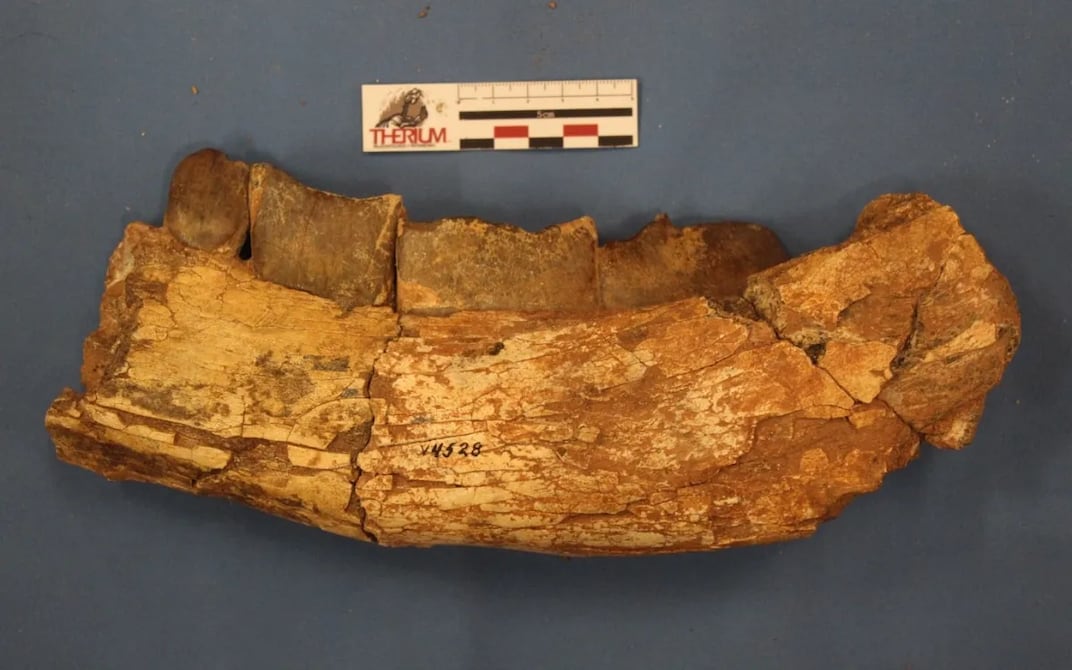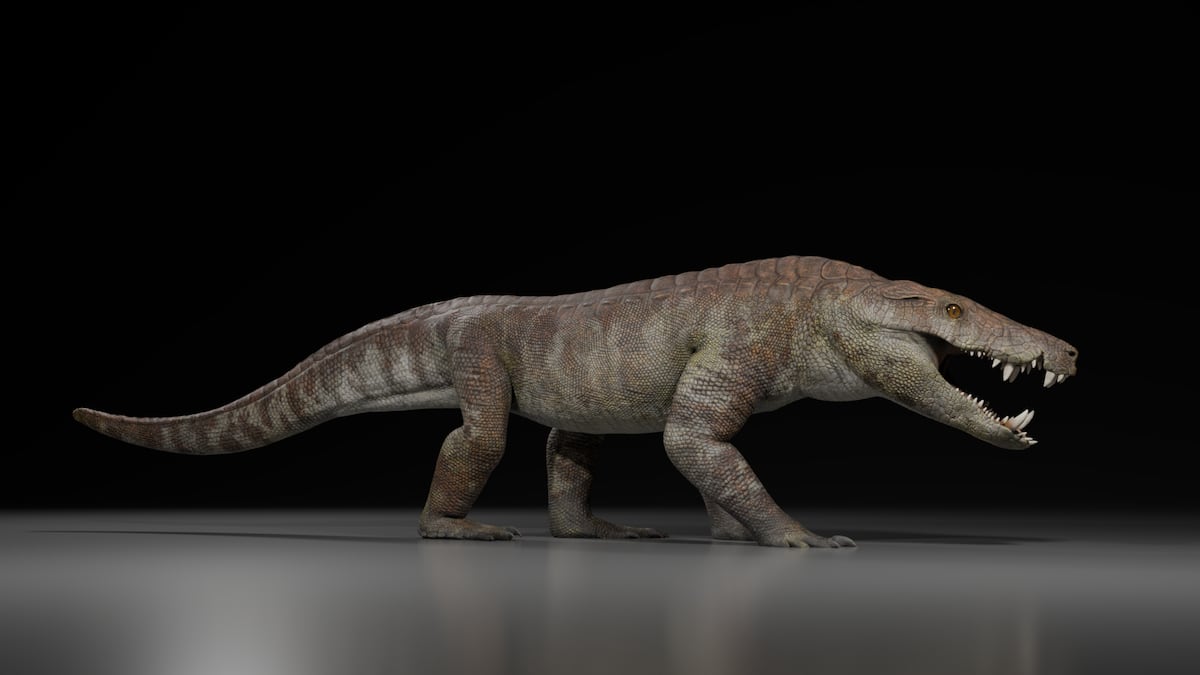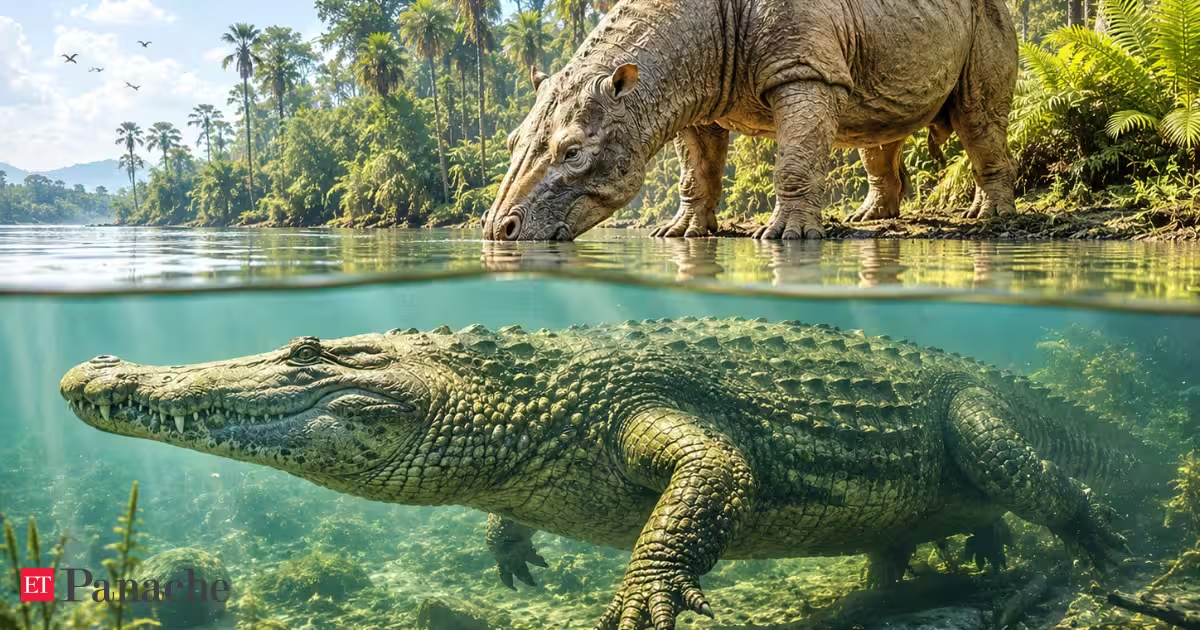
Imagine standing beside a tropical wetland and seeing a crocodilian stretching more than six metres from snout to tail waiting beneath the surface. Now imagine that the mammals wandering down to drink were themselves approaching the weight of a small car. That was roughly the situation in what is now Colombia around 12 million years ago. New fossil evidence from the famous La Venta assemblage suggests Purussaurus neivensis, a gigantic relative of modern caimans, was attacking some of the largest herbivorous mammals sharing its environment. The findings provide rare physical evidence of how predator and prey interacted in one of prehistoric South America's most extraordinary ecosystems.Fossil Bones Preserve Evidence of an AttackThe study, published on August 17 in the Journal of Vertebrate Paleontology, examined four fossils belonging to three species of large ungulates from the Middle Miocene La Venta assemblage in Colombia. Researchers found distinctive damage on bones belonging to Pericotoxodon platignathus, Xenastrapotherium kraglievichi and Granastrapotherium snorki. The evidence included deep punctures, pits and substantial deformation of the bone.A partial Pericotoxodon skull contained a large circular puncture, while part of a femur displayed several semicircular punctures and smaller pits. Two jaws belonging to astrapotheres an extinct group of large South American mammals also carried multiple puncture marks. These were not insignificant animals. Estimates reported alongside the research put one Pericotoxodon individual at roughly 982 kilograms, while the studied Xenastrapotherium and Granastrapotherium specimens were estimated at about 1,687 and 1,822 kilograms respectively.The Evidence Points to PurussaurusSo what was powerful enough to leave such damage? The researchers identify Purussaurus as the most likely culprit. The conclusion is based on several clues, including the dimensions and shapes of the punctures and the severe deformation of the cortical bone. A large puncture in the Pericotoxodon skull measured about 29.2 millimetres across, closely matching the dimensions of Purussaurus teeth recovered from La Venta.The researchers examined 22 isolated teeth attributed to the giant crocodilian. Their basal diameters ranged from 19.6 to 43.7 millimetres. Purussaurus neivensis was also the largest crocodilian known from the La Venta ecosystem. Earlier research has estimated that a fully grown individual could reach approximately 6.18 metres in length.A Bite Built for Enormous PreyThe damage also offers a glimpse of just how formidable the predator's jaws could be. For the largest puncture on the Pericotoxodon skull, researchers calculated that roughly 80,284 newtons of force per tooth would have been required to penetrate the bone. The calculation represents the force associated with that puncture rather than a direct measurement of the animal's complete bite force.There is another striking clue: where some of the wounds occurred. Several were concentrated around the skull and jaws. Modern crocodilians frequently attack large prey around the head, neck and facial regions, and researchers say similarities between modern crocodile bite traces and the La Venta fossils can help reconstruct the behaviour of their prehistoric relatives.Colombia Was Once Home to an Extraordinary EcosystemToday's landscape gives little indication of what La Venta was like during the Middle Miocene. Around 12 million years ago, the region contained rivers, floodplains and extensive wetlands. Its fossil record includes 156 identified vertebrate species and nine crocodyliforms, making it one of the richest windows into prehistoric tropical South America.Large mammals shared this landscape with enormous reptiles, creating an ecosystem in which some of the most important predators were not mammals at all. Previous studies had already suggested that Purussaurus attacked substantial prey. A 2020 paper, for example, documented bite marks on the leg bone of a ground sloth from prehistoric wetlands in what is now Peru, with the evidence pointing towards an attack by a young or subadult Purussaurus.Fossils Reveal a Predator in ActionA giant skull or tooth can tell palaeontologists how impressive an extinct predator looked. Bite marks can reveal something far more intimate: what that animal actually did. The Colombian fossils strengthen the case that Purussaurus was not merely enormous. It was capable of attacking some of the biggest mammals available in its environment. Millions of years later, the victims' damaged bones still preserve traces of those encounters — effectively freezing moments from a prehistoric food chain in stone.
10 million years ago, this 23-foot crocodile ruled prehistoric Colombia; its fossilised victims reveal a brutal secret
In Colombia, researchers uncovered fossilized bones indicating that Purussaurus neivensis, an enormous caiman relative, engaged in predation of sizeable mammals. The evidence of puncture marks left on prey that weighed close to 2,000 kilograms points to its immense jaw strength and predatory prowess. This discovery enhances our understanding of the complex interactions in a biodiverse prehistoric ecosystem of South America.
684 words~3 min read