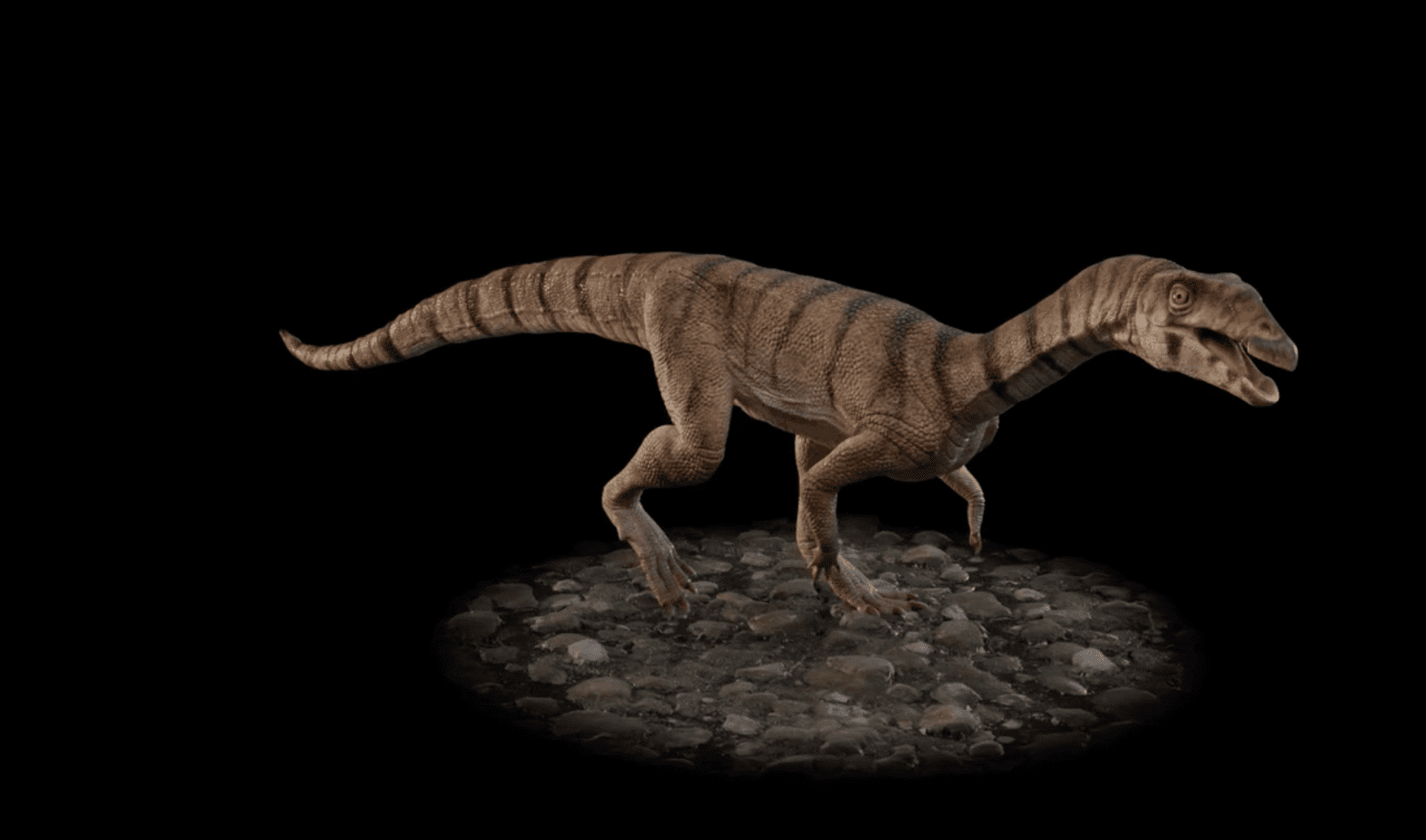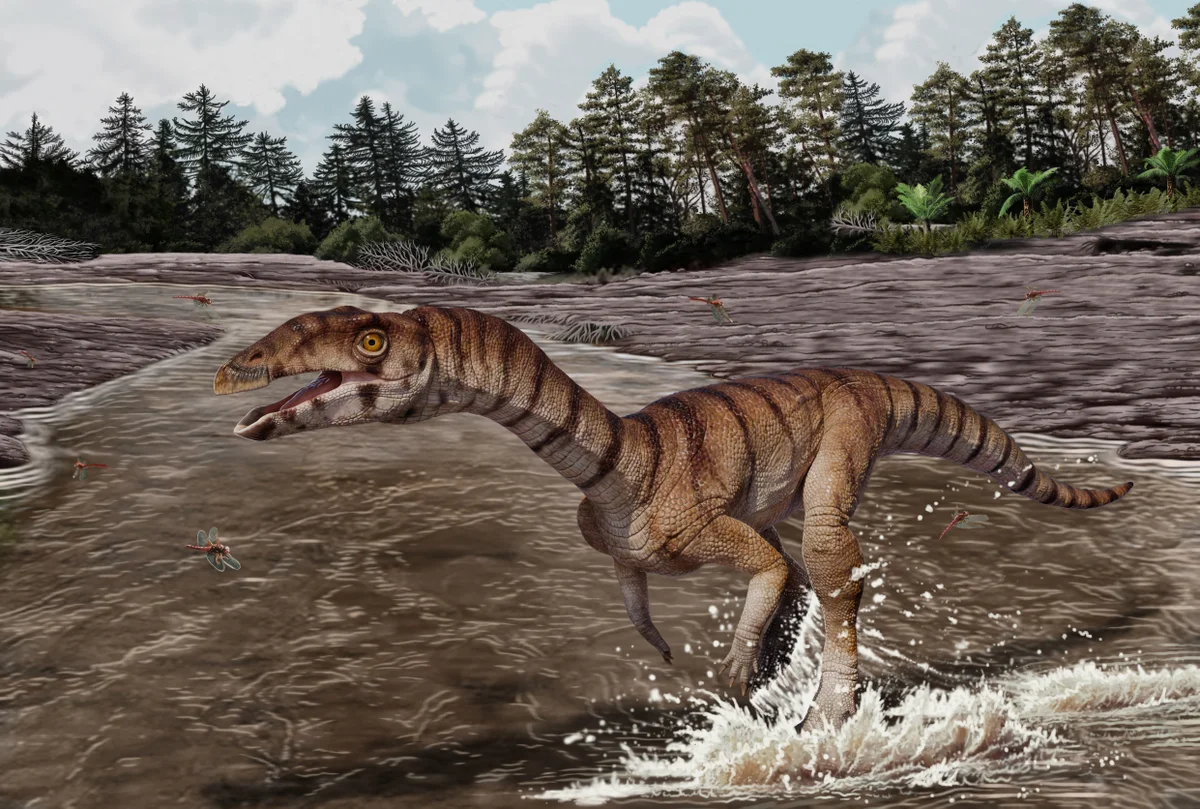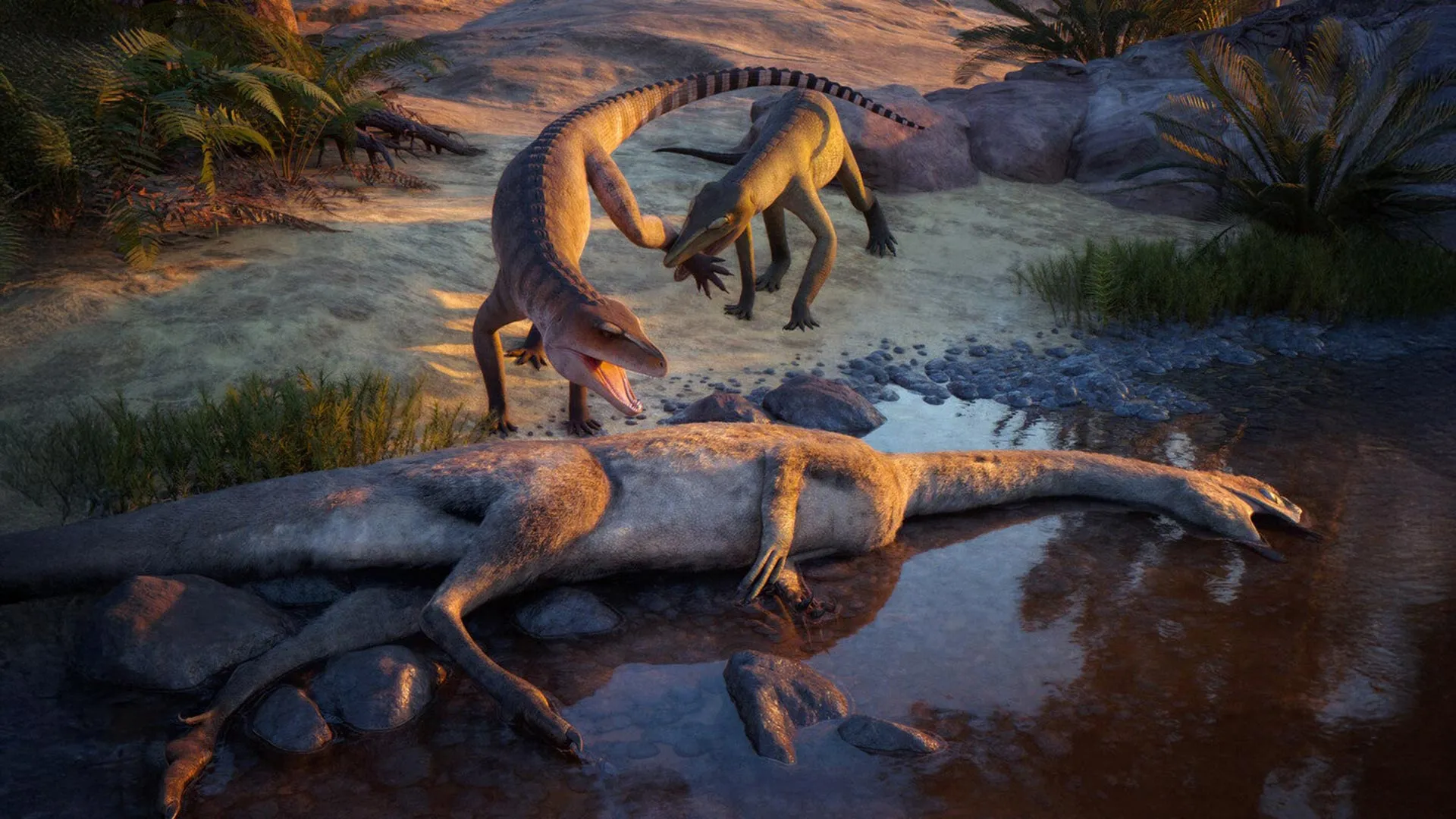
About 210 million years ago, two early relatives of modern crocodiles stood near each other among the low ferns of a humid riverbank in what is now northern New Mexico. Each animal was roughly the size of a jackal, but their bodies suggest they were adapted to hunt in different ways.
One was Hesperosuchus agilis, a fast land predator with a long snout, powerful hind legs, and smaller, more slender front limbs. It likely searched for prey along rivers and streams.
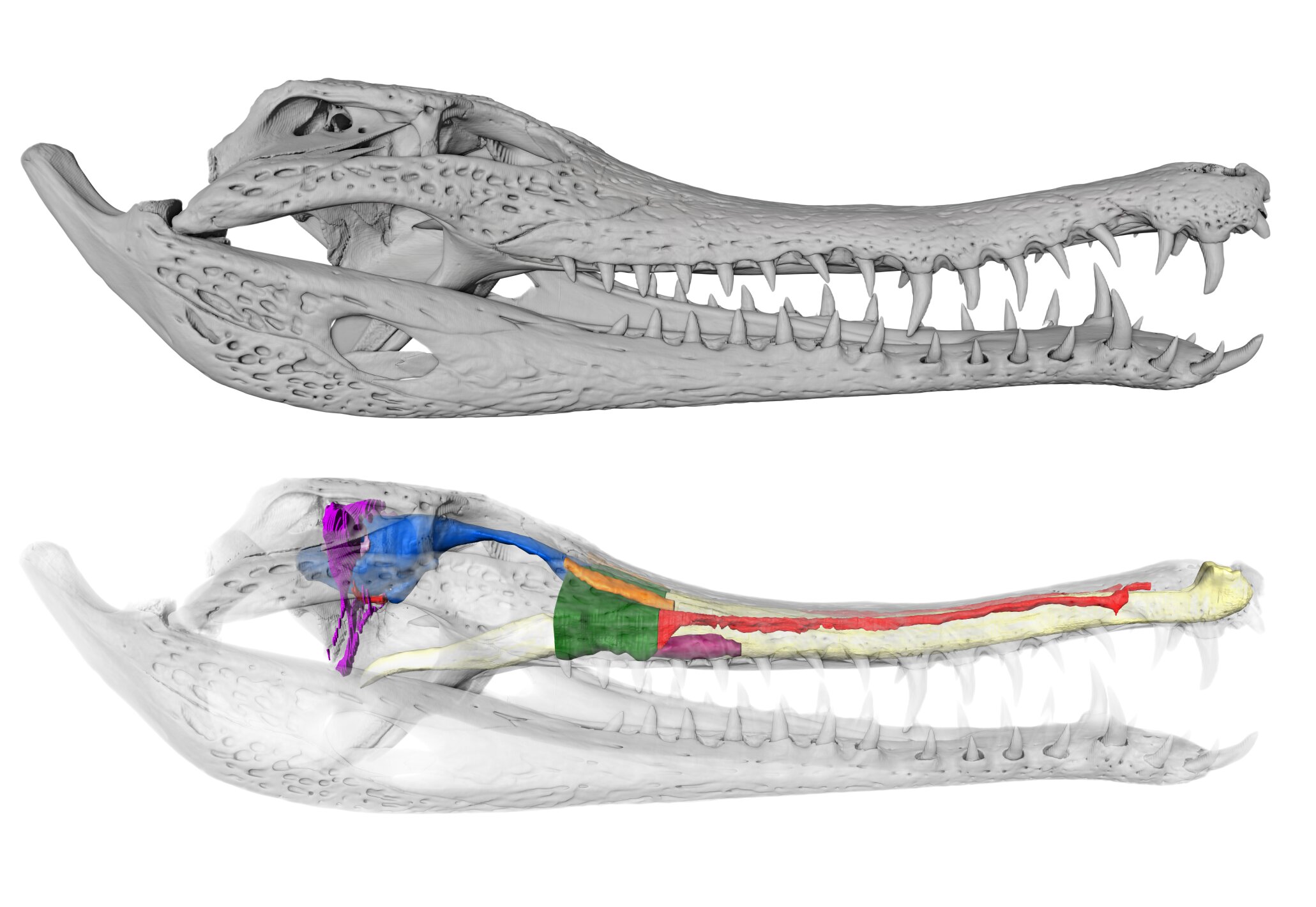
The second animal had a noticeably different head. Its snout was shorter, its skull was more strongly reinforced, and its enlarged jaw muscles would have helped it snap down on larger prey.
Neither animal escaped the sudden event that followed. Researchers believe both died at the same time, possibly during a flash flood or mudslide. Their remains were buried together, and favorable chemical conditions preserved their bones through the "Age of Reptiles," the later rise of mammals, and their eventual excavation in large blocks of rock now housed at the Peabody Museum of Natural History at Yale.
A New Species Emerges From an Old Fossil