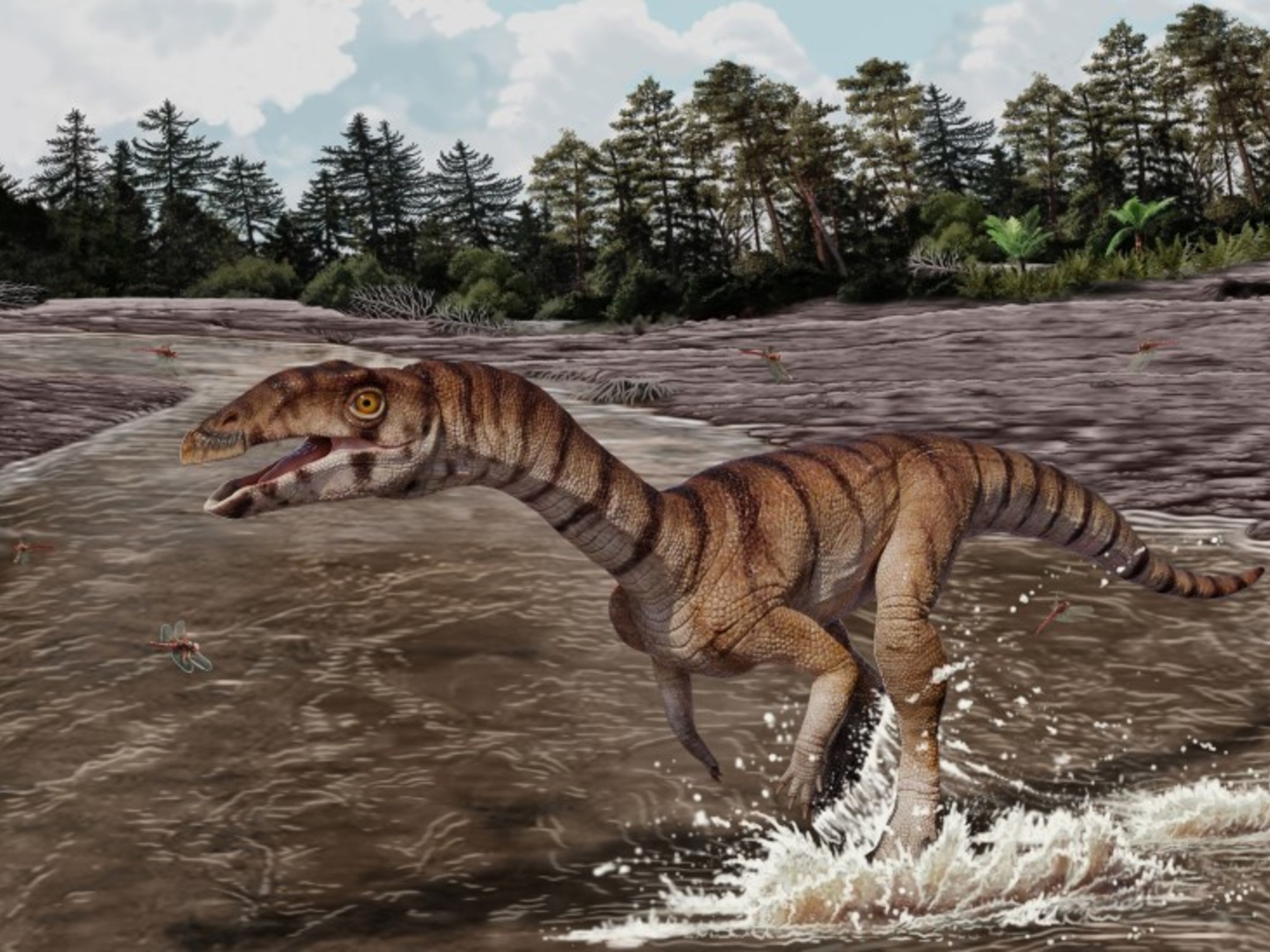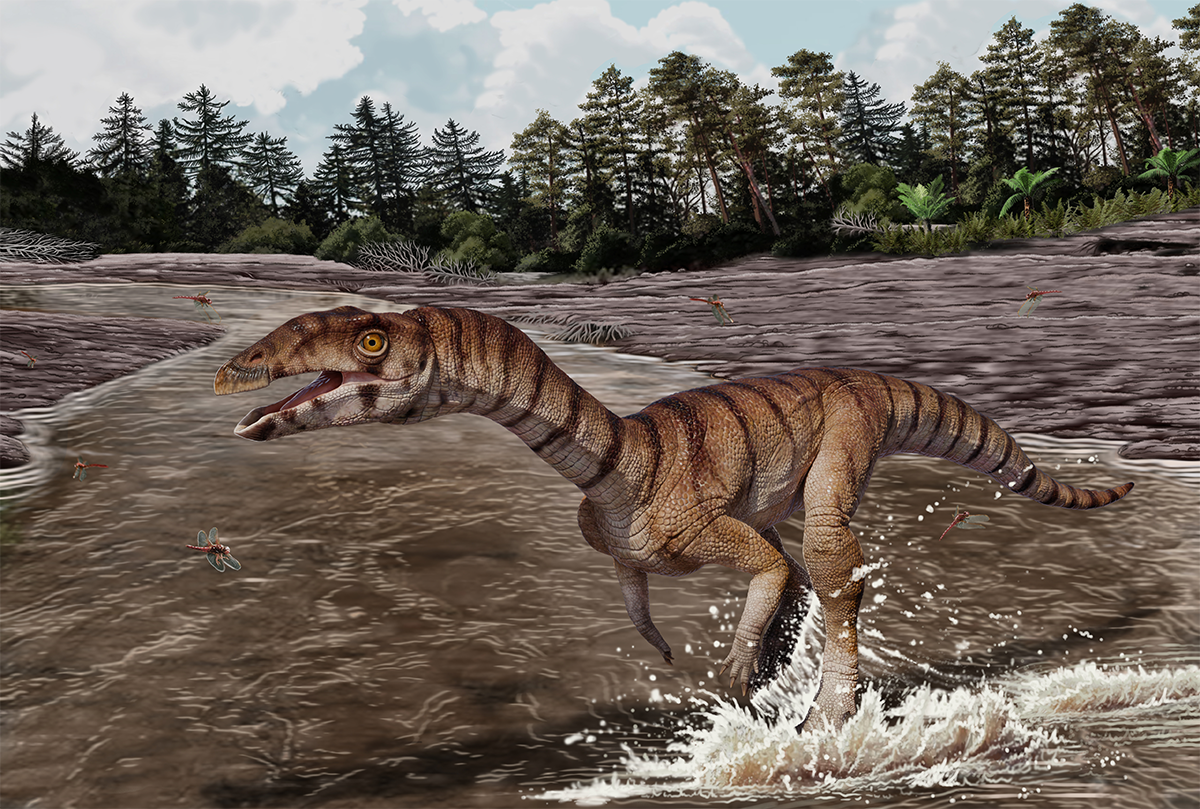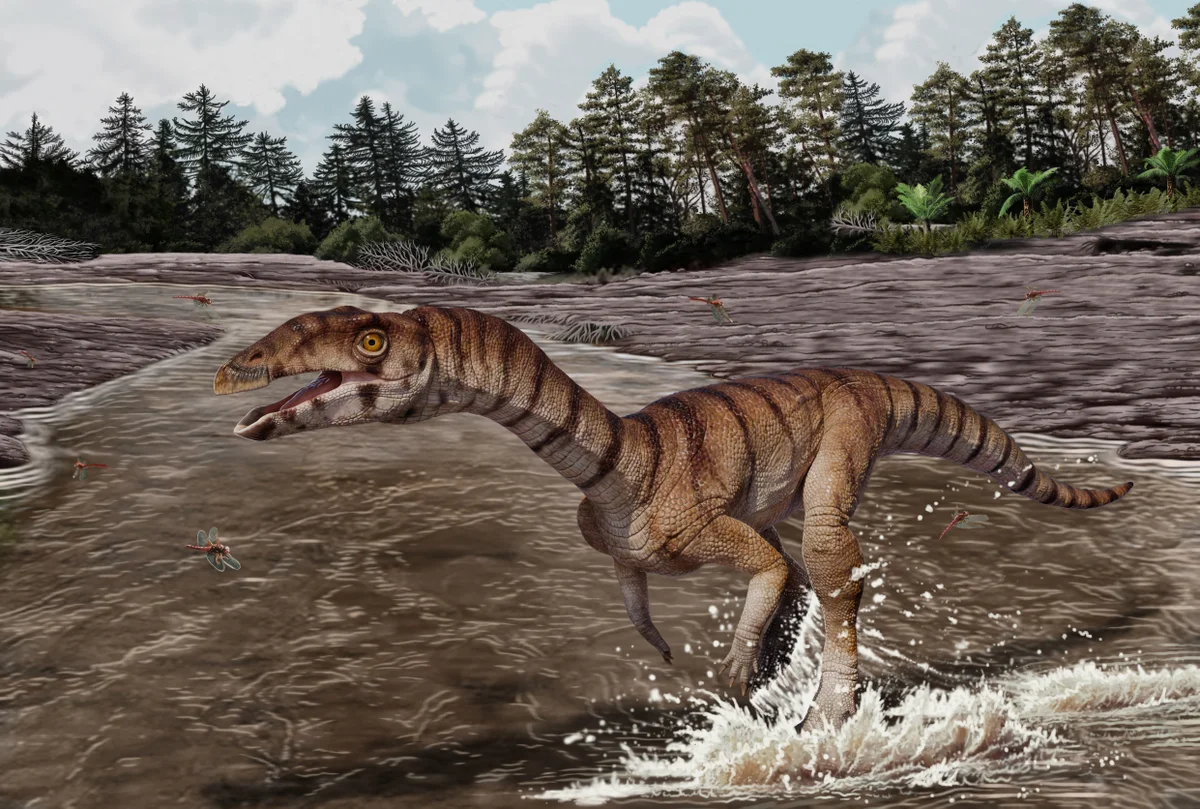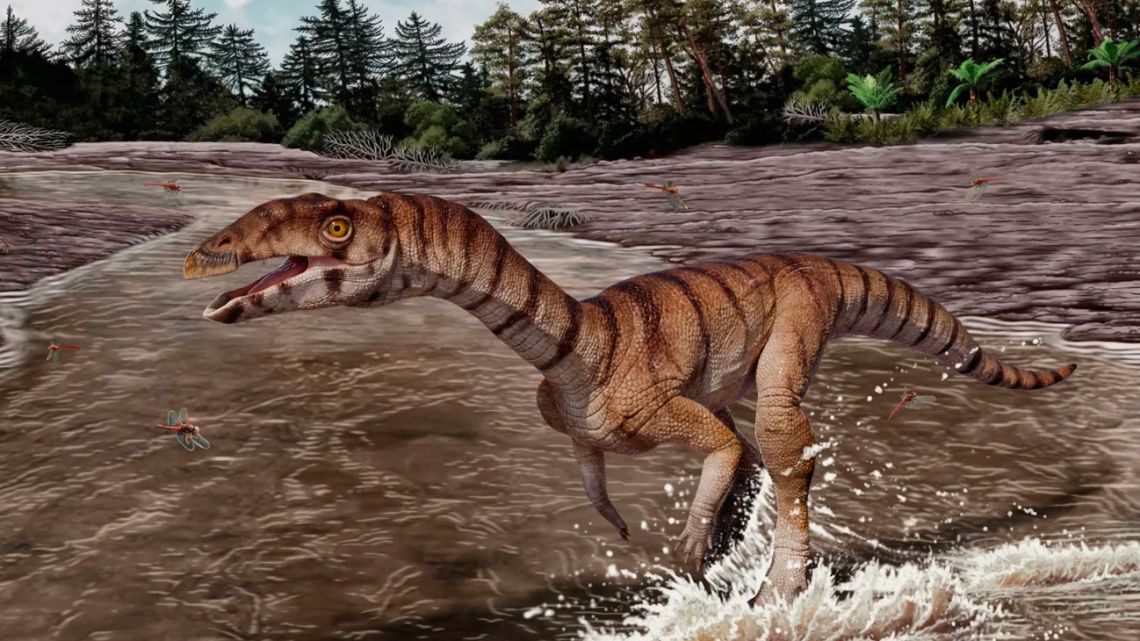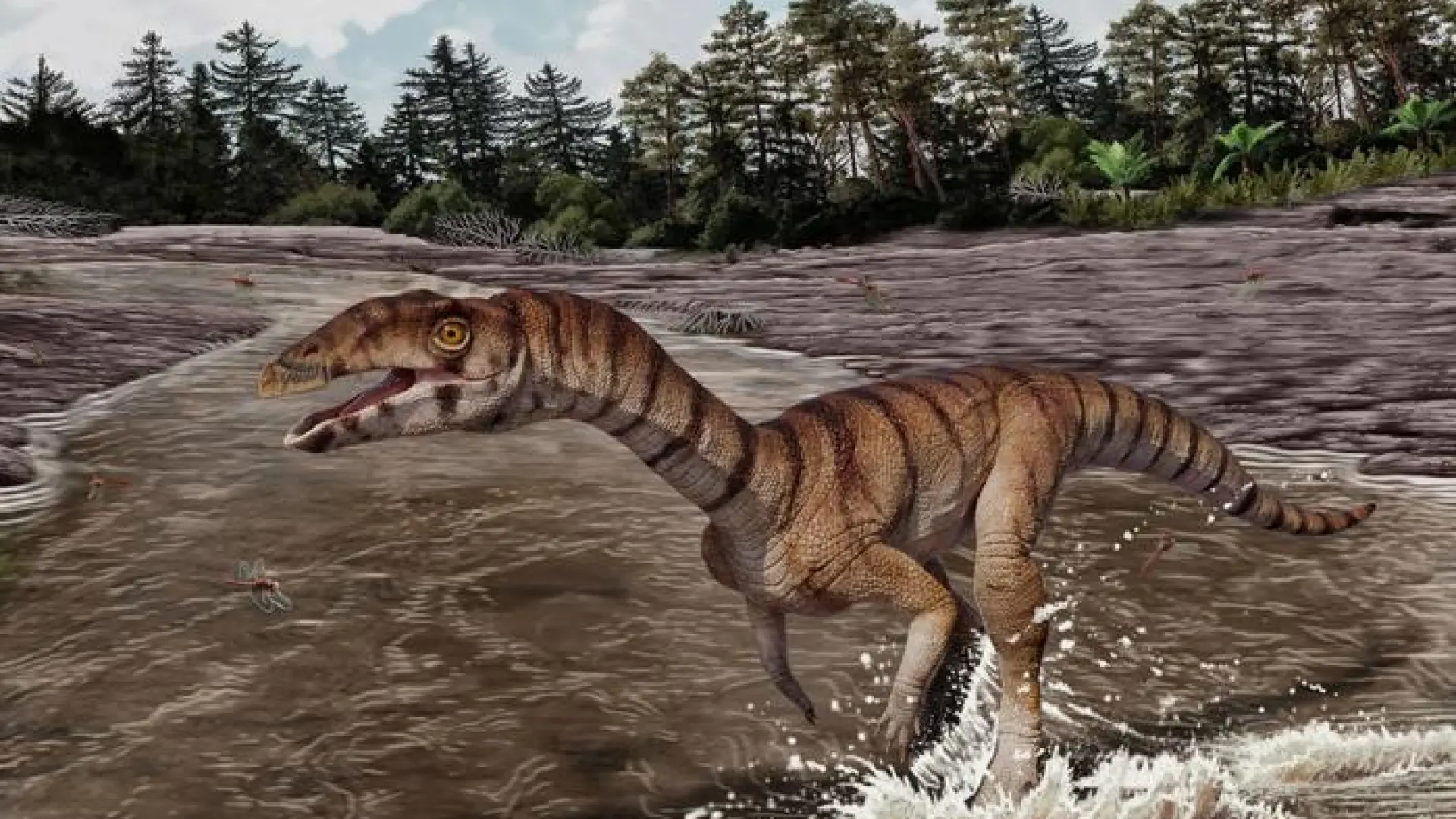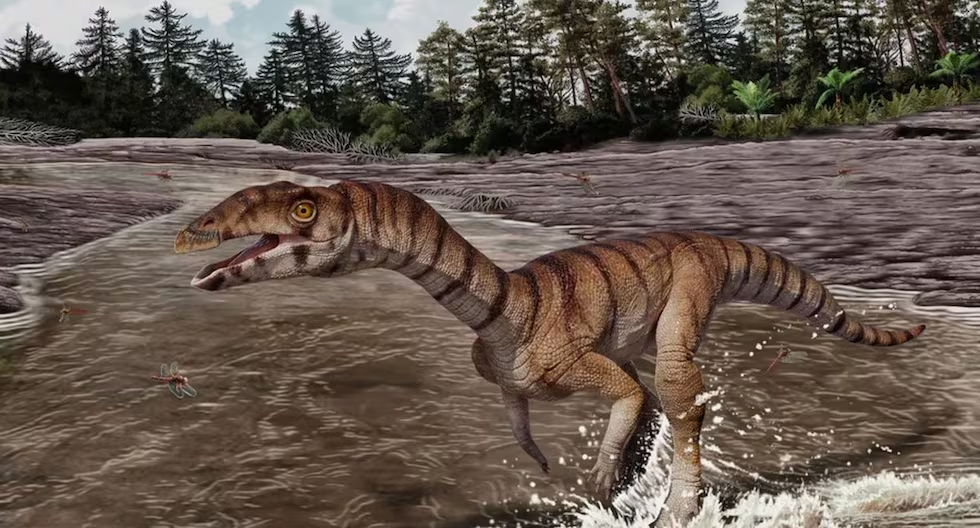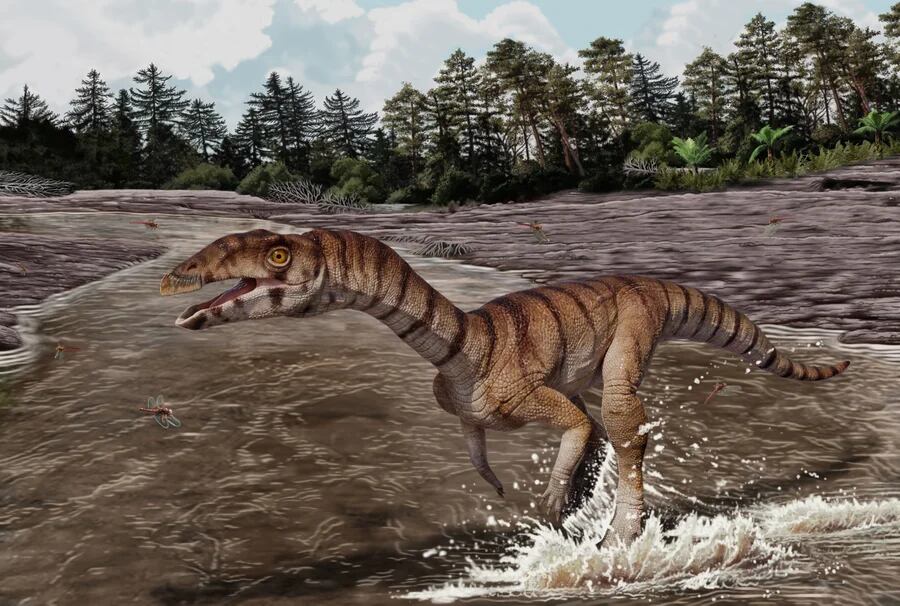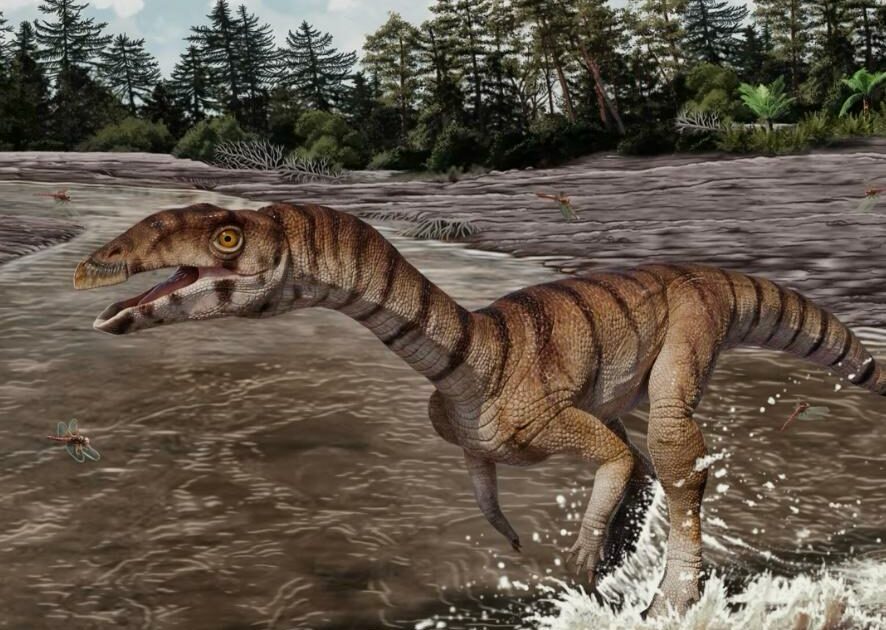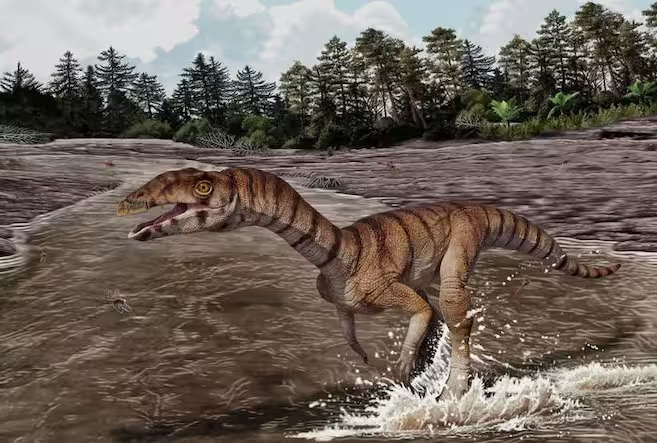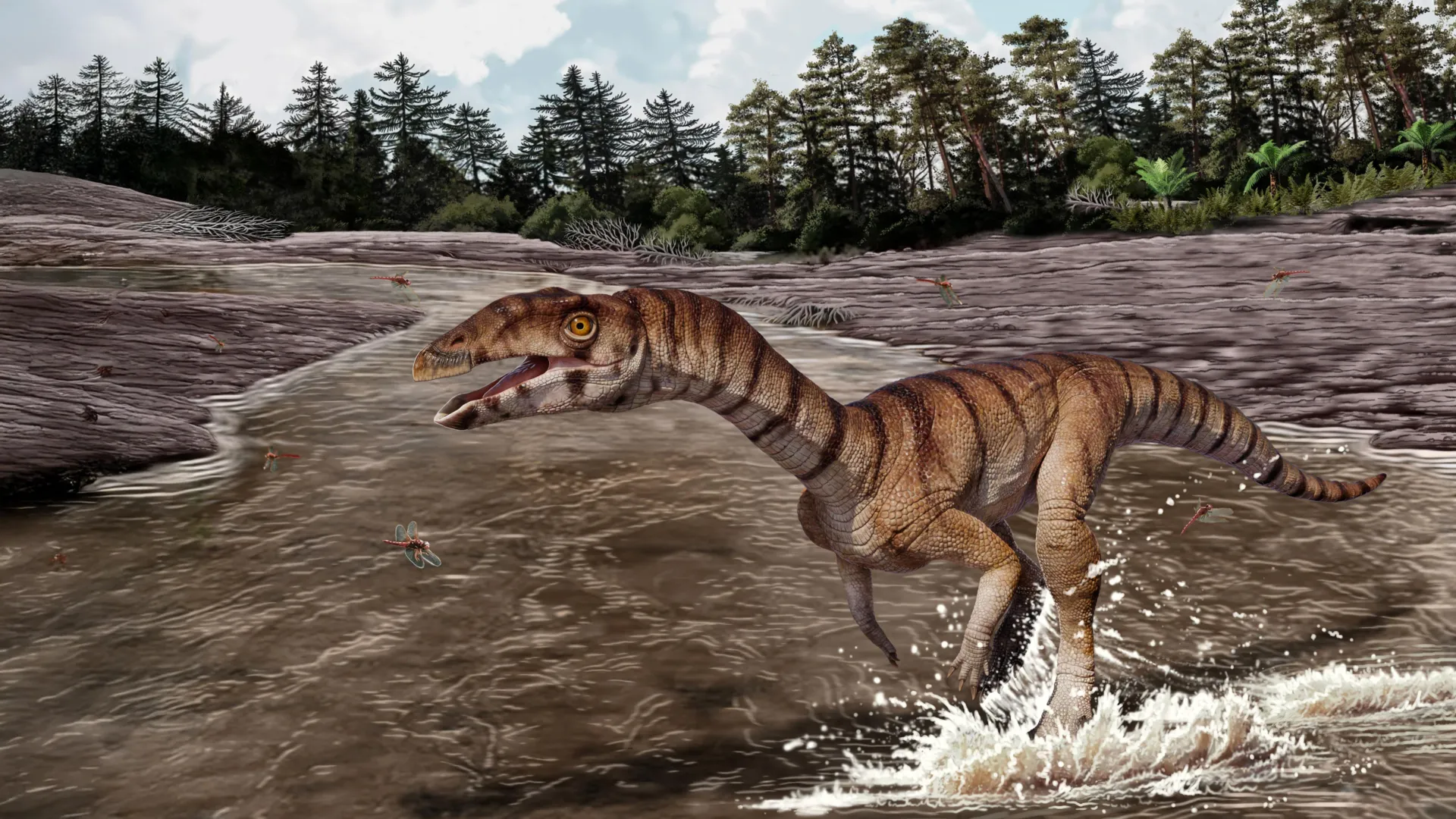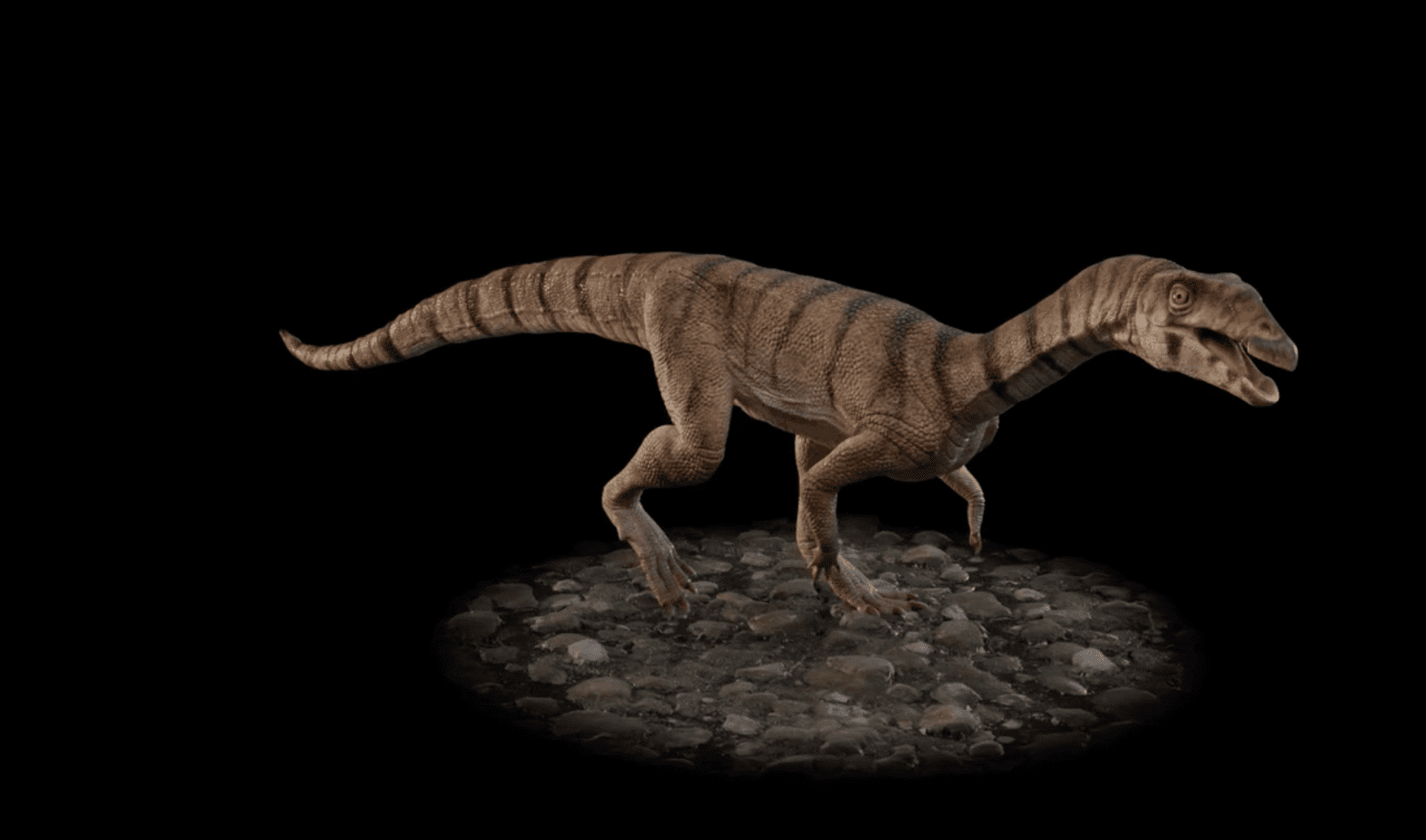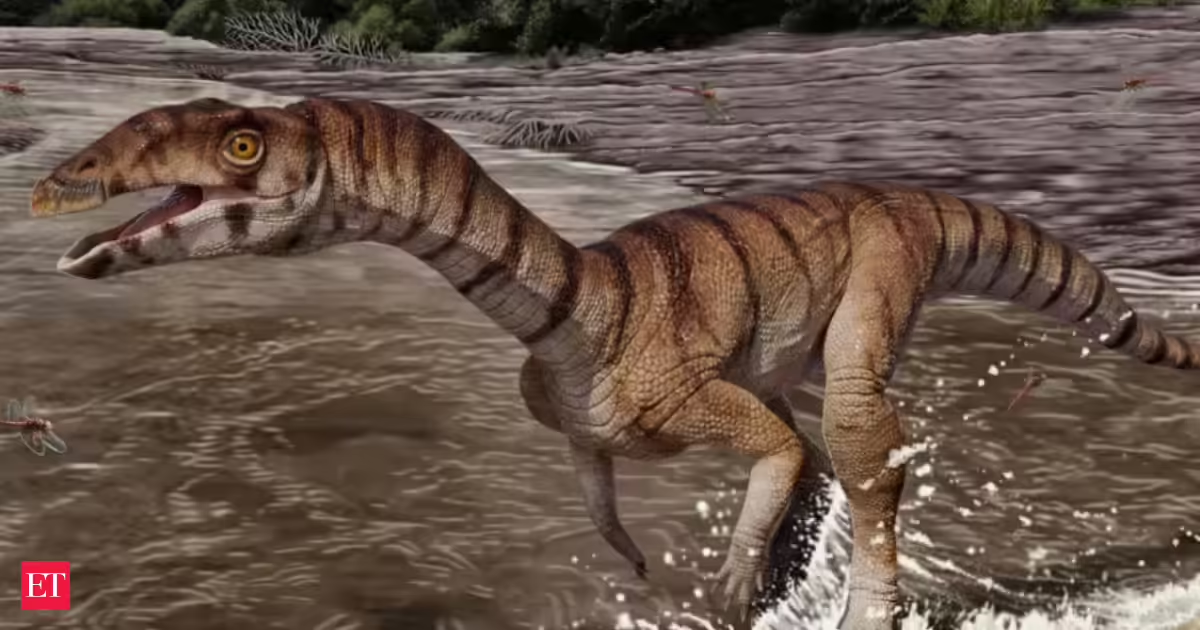
SynopsisA newly named 'witch croc,' Labrujasuchus expectatus, roamed the American Southwest 212 million years ago, predating similar dinosaur forms by over 100 million years. This beaked, bipedal relative of crocodiles showcases convergent evolution, demonstrating that dinosaur-like body plans emerged much earlier in reptilian history, challenging conventional understanding of prehistoric life.Image Credits: Jorge Gonzalez/ NHMLAC Dinosaur Institute| An artist's reconstruction of Labrujasuchus expectatus, that lived 212 million years ago during the Late Triassic. Imagine a small, fast animal running on two legs across the American Southwest, its arms held close to its body and a toothless beak where its snout should be. You might think of a dinosaur. You would be wrong.That animal was, in fact, related to crocodiles. It lived 212 million years ago, over 100 million years before any dinosaur assumed that form. And it just got a name: Labrujasuchus expectatus, or, informally, the “witch croc.”It is named for the old Spanish name of the New Mexico site where the fossils were found, Ranchos de los Brujos, or Ranch of the Witches. Today, called Ghost Ranch, the same rough landscape that made artist Georgia O'Keeffe famous with paintings of its red-and-yellow badlands. It is also one of the most important fossil sites of the Triassic period in North America.Labrujasuchus is a member of a small family called Shuvosauridae, beaked, bipedal crocodile relatives that lived in the southern United States from around 235 to 201 million years ago, according to Turner et al. (2026), in the Journal of Vertebrate Paleontology. The study was led by Dr. Alan Turner, a professor of anatomical sciences at Stony Brook University, and a team from the Natural History Museum of Los Angeles County.A crocodile that kind of behaves like an ostrichLabrujasuchus has two legs, tiny arms, a toothless beak, and is almost exactly shaped like a group of Cretaceous dinosaurs called ornithomimosaurs. Picture it as a prehistoric ostrich. The two lineages are not remotely close. One's on the crocodile side of the family tree. The other is on the dinosaur side. But they independently hit upon the same body plan, separated by more than 100 million years.Scientists call this convergent evolution. Two completely unrelated animals, under similar ecological pressures, arrive at the same answer.Image Credits: Jorge Gonzalez/ NHMLAC Dinosaur Institute| The "witch croc": despite being a distant relative of modern crocodiles, Labrujasuchus expectatus sported a toothless beak and walked on two legs, a body plan we typically associate with dinosaurs, not crocodiles.The reason Labrujasuchus is so important is that the crocodile branch got there first, by a very long shot. The two-legged, beaked body plan we associate with dinosaurs was already field-tested and working in the Triassic, long before dinosaurs took over the landscape.Not just this fossil, the Triassic did this a lotThis was not an accident of evolution. The pattern recurs again and again. According to Stocker et al. (2016) in Current Biology, the dome-shaped skull typical of pachycephalosaur dinosaurs was also independently evolved by Triassic crocodile relatives, more than 100 million years later. The researchers found that many of the body plans we think of as distinctly “dinosaurian” were actually first developed by non-dinosaurian reptiles during the Triassic.The Triassic was truly a giant evolutionary laboratory. Back then, dinosaurs were still a small, unimportant group. It was the dominant reptiles, the proto-crocodiles and their relatives, who were really experimenting. They were experimenting with bipedalism, beaks, armored bodies, tree-dwelling habits, and aquatic tank-like forms. Nature kept trying the same designs over and over again because some shapes just work.Twenty years in the makingLabrujasuchus bones were first collected in 2006 from the Hayden Quarry at Ghost Ranch, as part of an ongoing collaboration between NHMLAC and Ghost Ranch that continues to this day. It took the team nearly two decades of careful preparation and analysis to formally name it a new species.Expectatus, the species name, says it all for that patience. In Latin, it means “expected” or “awaited.” The team was certain that there had to be a transitional shuvosaur between the two known species from the region, one older and one younger. The witch croc was the missing link they’d been quietly searching for.Image Credits: James Napoli| Dr. Alan Turner of Stony Brook University holds the femur of Labrujasuchus expectatus, the very bone that helped confirm this as a distinct new species. Why it matters to the rest of usThat sounds like a story only a paleontologist would love. But the bigger takeaway is surprisingly universal: evolution isn’t as creative as we think. There are only so many things a fast-moving, medium-sized, beaked animal can do well. Nature keeps reinventing the same handful of answers over wildly different time scales and family trees.The desert Southwest in America’s own backyard keeps producing fossils that turn conventional wisdom on its head. The witch croc is just the latest reminder that prehistory was weirder, way more interesting than anything in the textbooks.Read More News onRead More News on
Scientists just found a "fake dinosaur" that walked on two legs like a dinosaur 212 million years ago
A groundbreaking discovery reveals Labrujasuchus expectatus, the 'witch croc', a bipedal, beaked ancestor of crocodiles that walked on two legs over 200 million years ago, highlighting patterns of convergent evolution in prehistoric reptiles.
821 words~4 min read