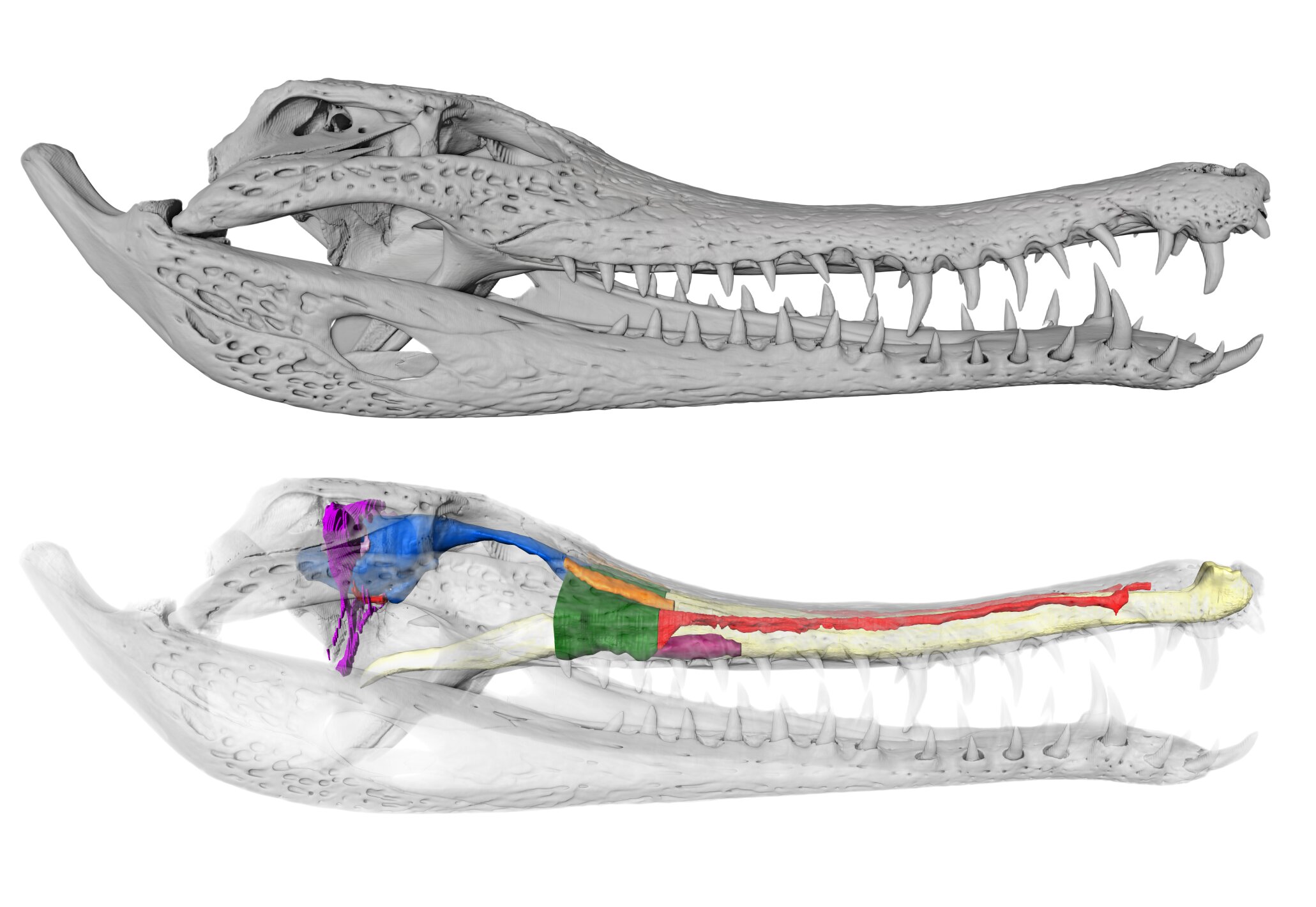
Computed tomography reconstruction of the West African slender-snouted Mecistops cataphractus, showing the internal cranial anatomy. Credit: Paul Burke
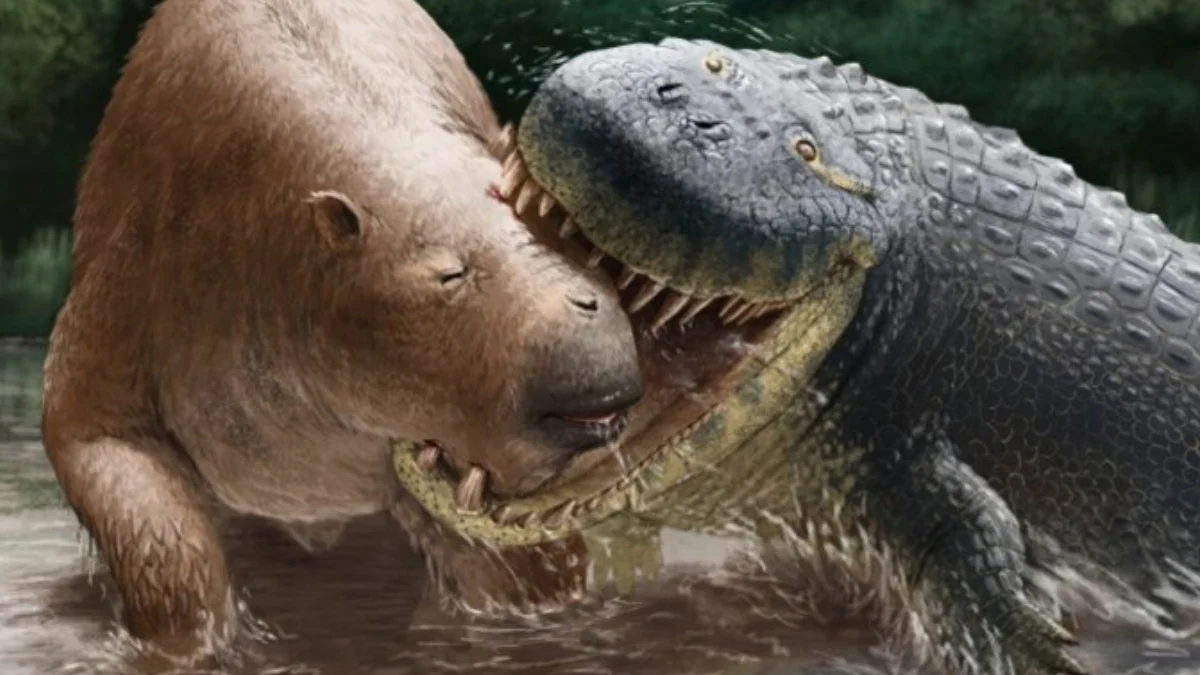
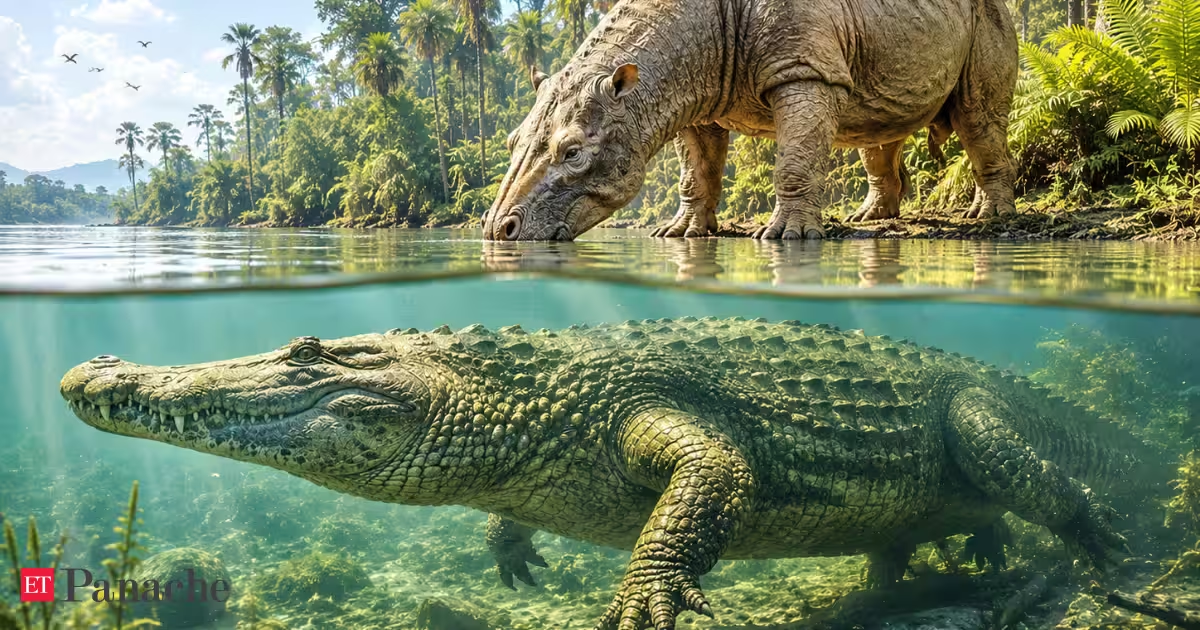
Although modern crocodiles, alligators, caimans and gharials are restricted to the tropics, their fossil record tells a very different story. Ancient crocodylians once inhabited much of the globe and exhibited a remarkable diversity of skull shapes and ecological adaptations.
In a new study, researchers used high-resolution computed tomography (CT) scans to reconstruct the endocranial anatomy of both living crocodylians and their extinct relatives. The findings provide new insight into the evolution of one of Earth's most enduring vertebrate lineages and help resolve longstanding questions about the relationships of several extinct crocodile groups. The research is published in the Journal of Anatomy.
"Despite only being found in the tropics today, we have fossil crocodiles all across the world," says Paul M.J. Burke, a postdoctoral researcher at The Swedish Museum of Natural History. "If you name a country, there will probably be a fossil crocodile waiting to be uncovered."
Solving the puzzle of long-snouted crocodiles