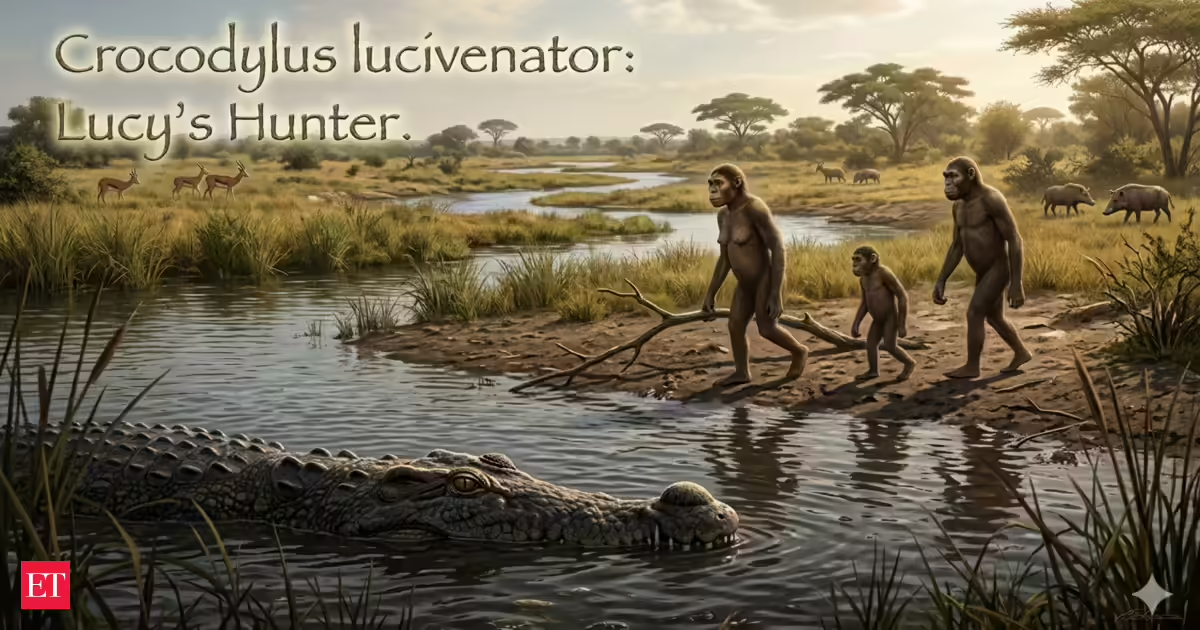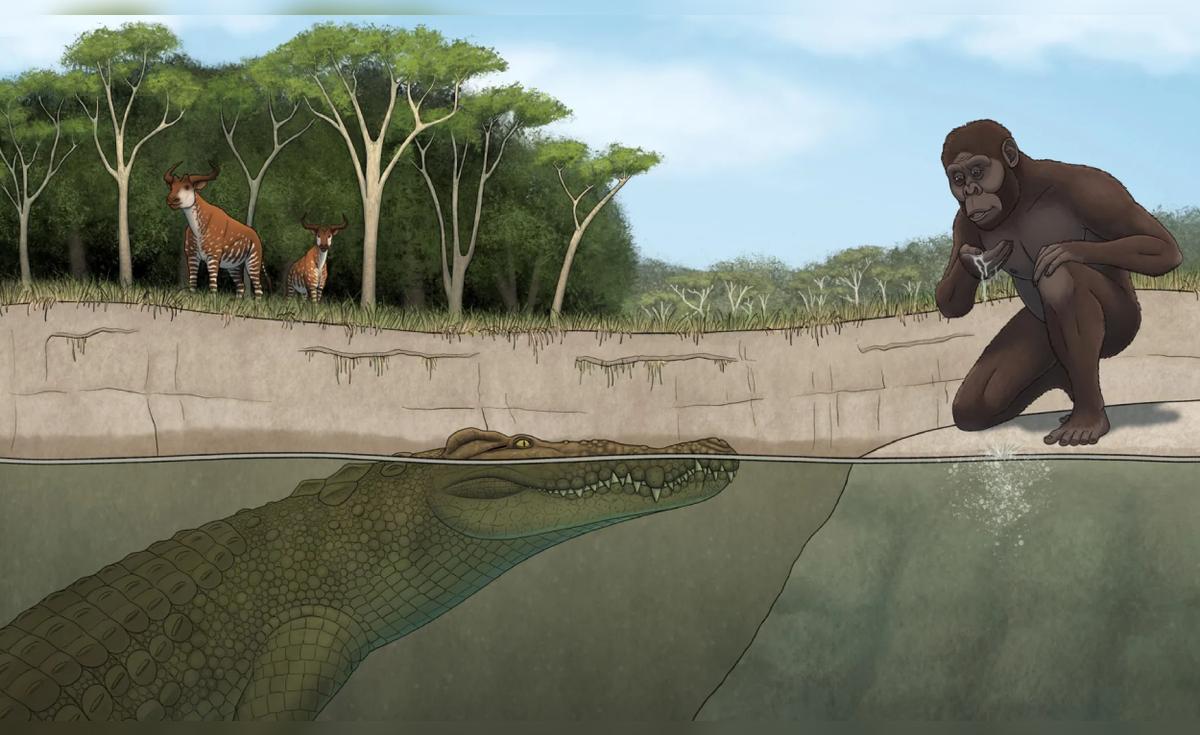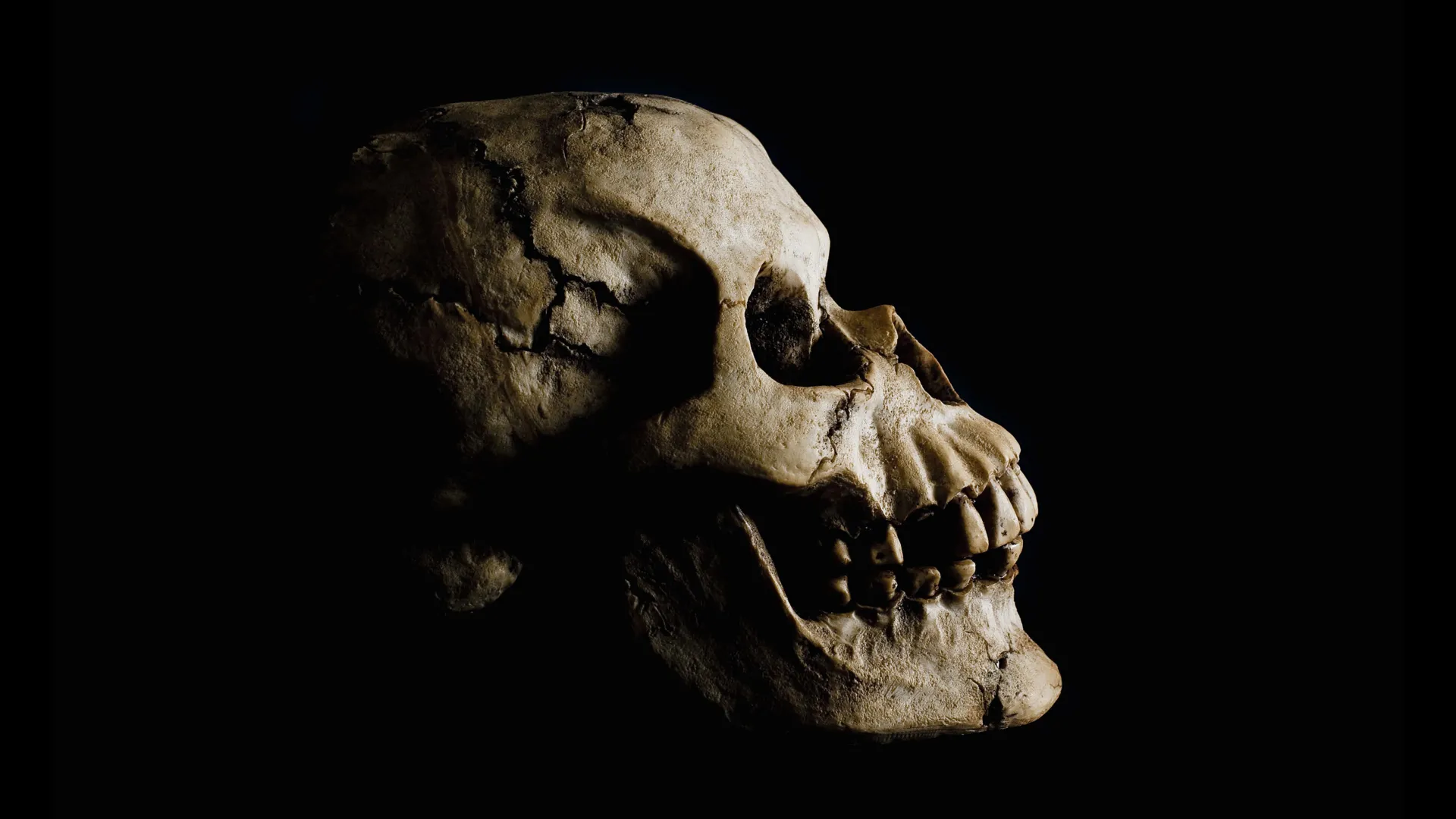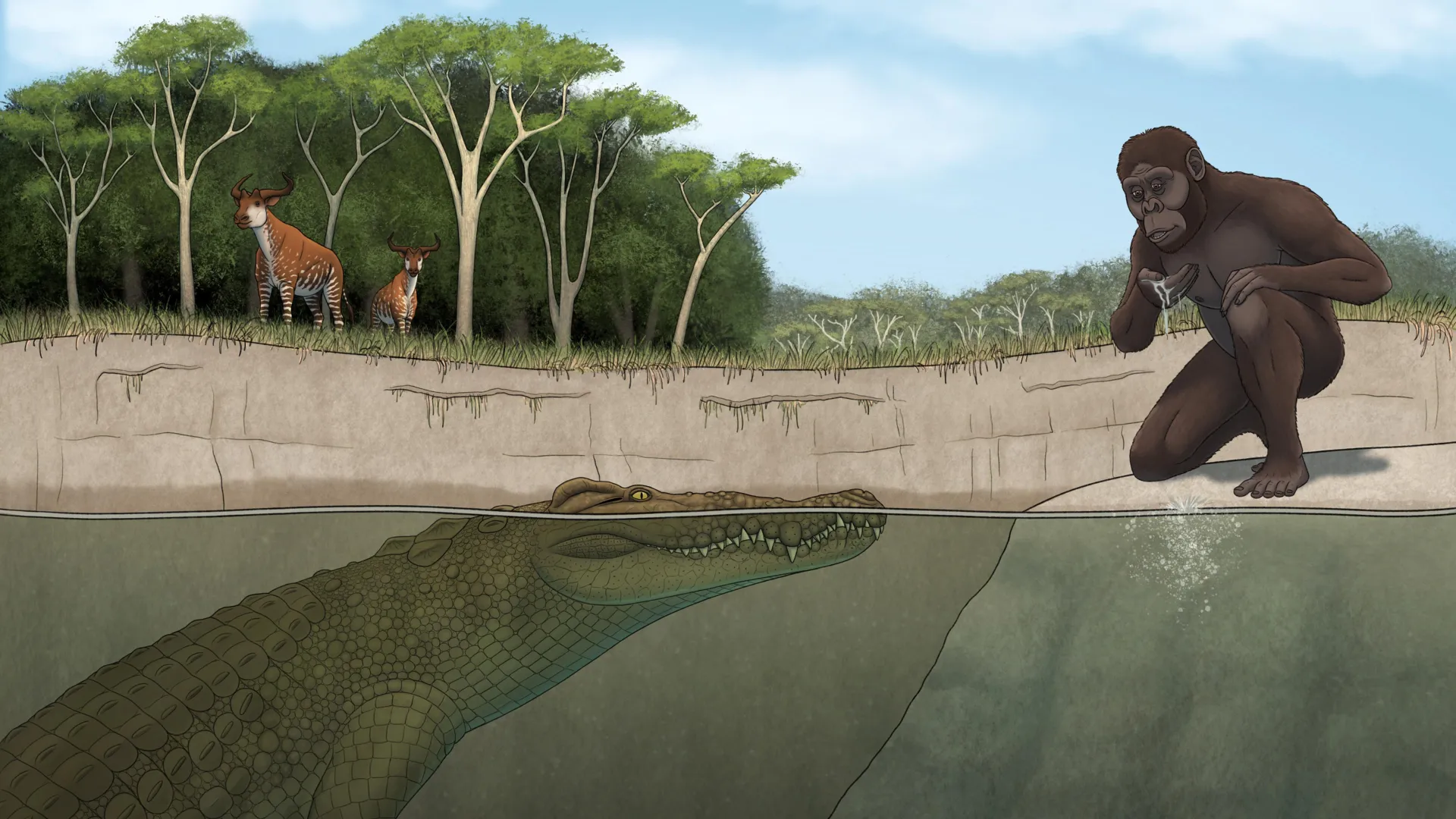
More than 3 million years ago, the famous early human ancestor Lucy and her relatives shared the landscape of East Africa with a formidable predator. Hidden in rivers and lakes, a massive crocodile with a distinctive hump on its snout likely posed one of the greatest dangers to these ancient hominins.
Now, a University of Iowa-led team has identified that reptile as a previously unknown species. In a study published in the Journal of Systematic Palaeontology, researchers formally describe the crocodile and name it Crocodylus lucivenator, meaning "Lucy's hunter."
A Crocodile From Lucy's Time
The name reflects the animal's place in history. The crocodile lived between 3.4 million and 3 million years ago in what is now Ethiopia, during the same period and in the same region inhabited by Lucy and her species, Australopithecus afarensis.
Discovered in 1974, Lucy became one of the most important fossil finds in human evolution. At the time, her skeleton was the oldest and most complete early human ancestor or relative ever discovered. The find also helped demonstrate that walking upright on two legs, known as bipedalism, evolved before larger brain size.