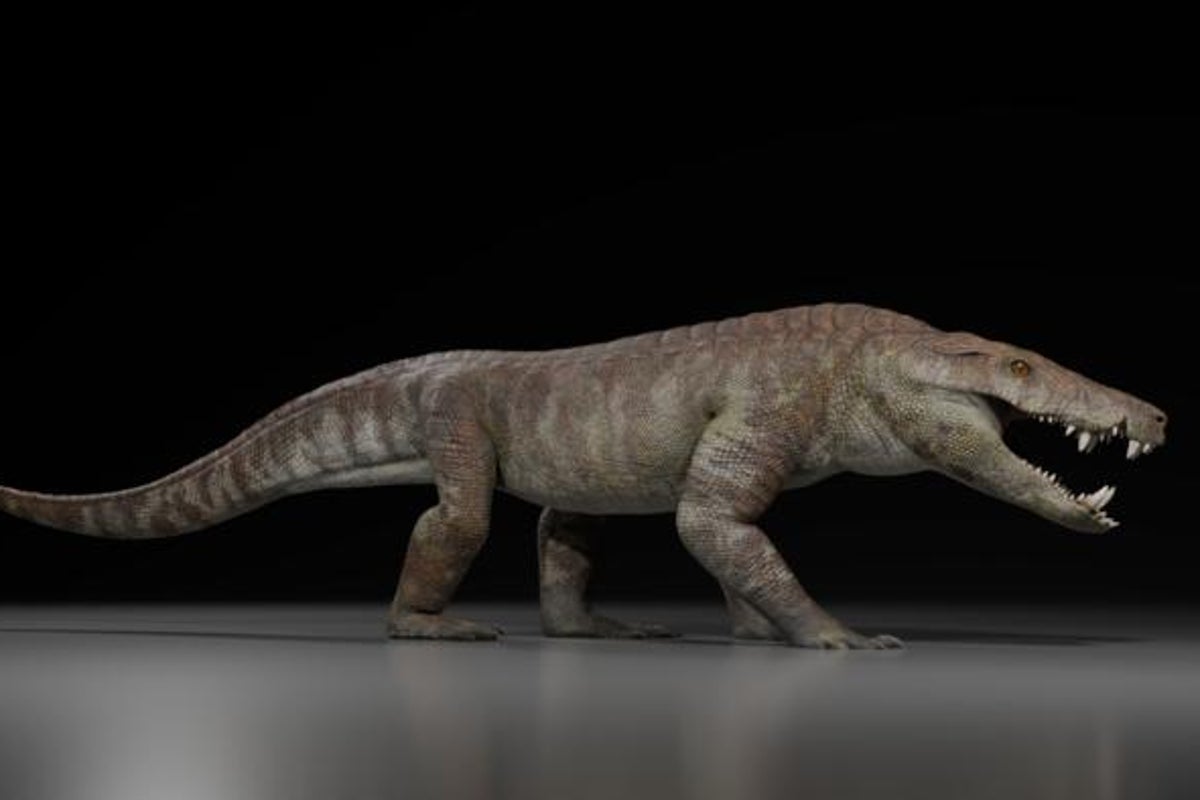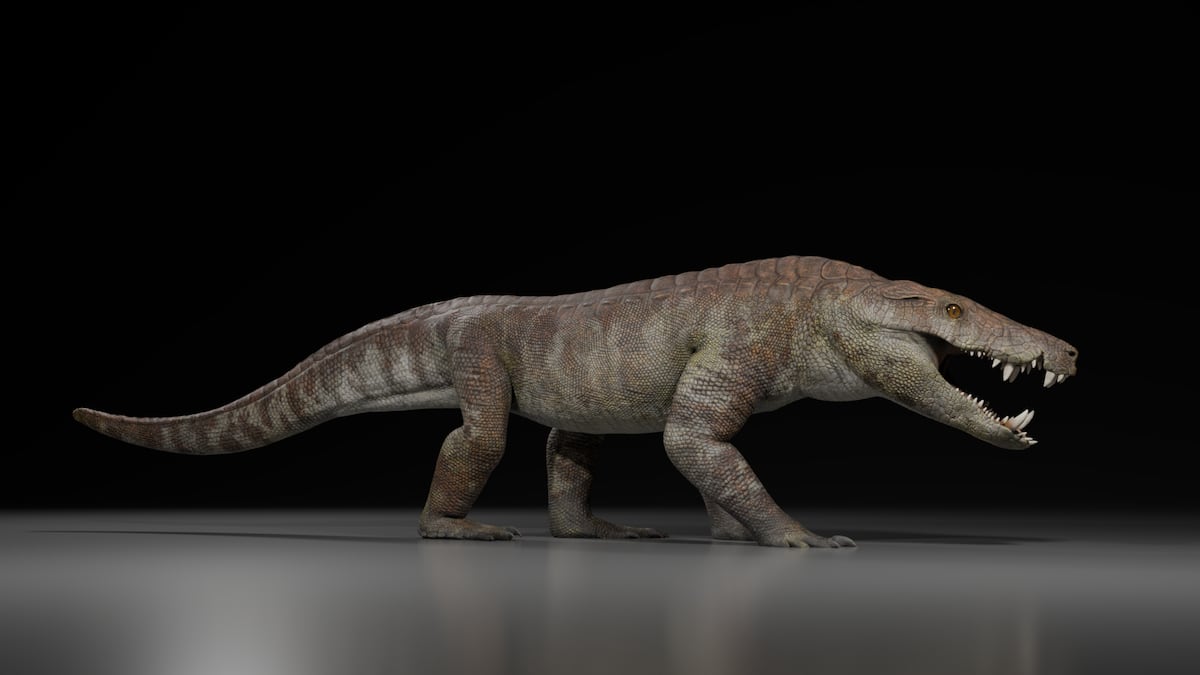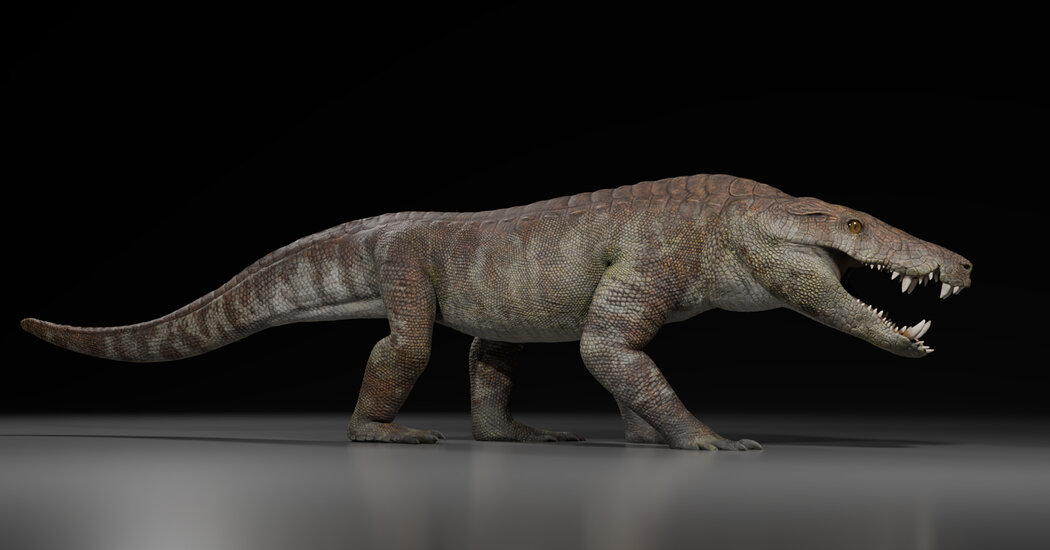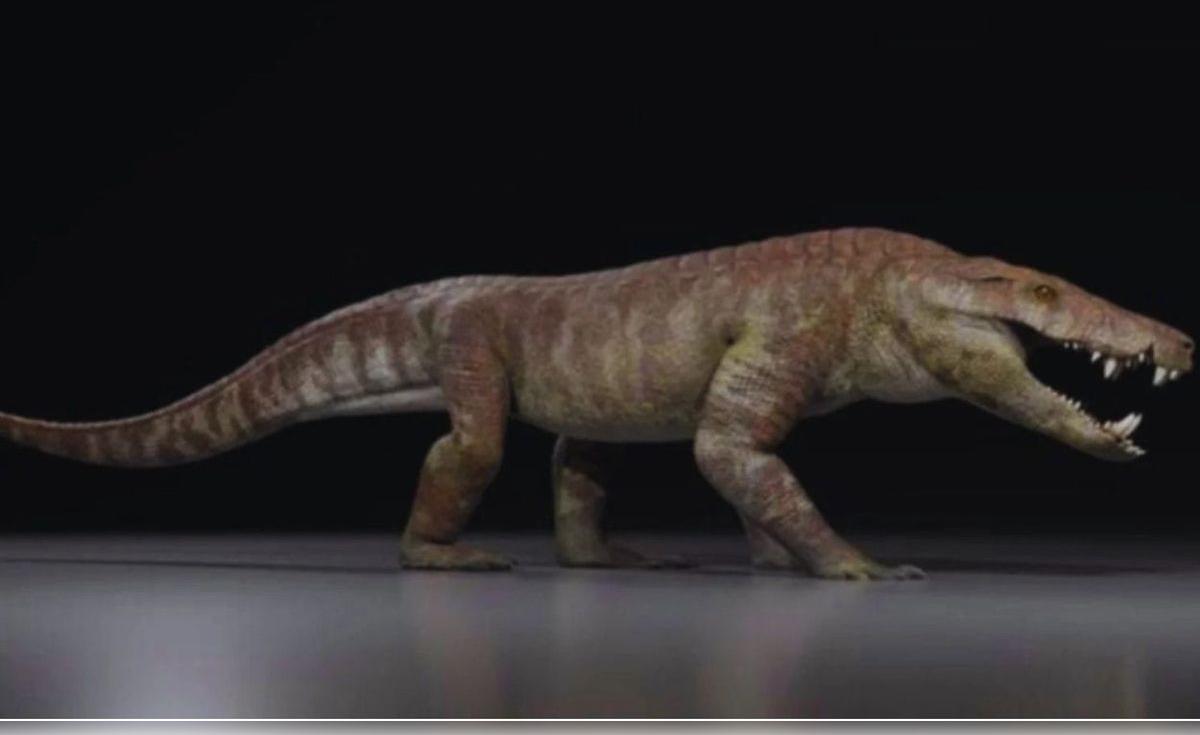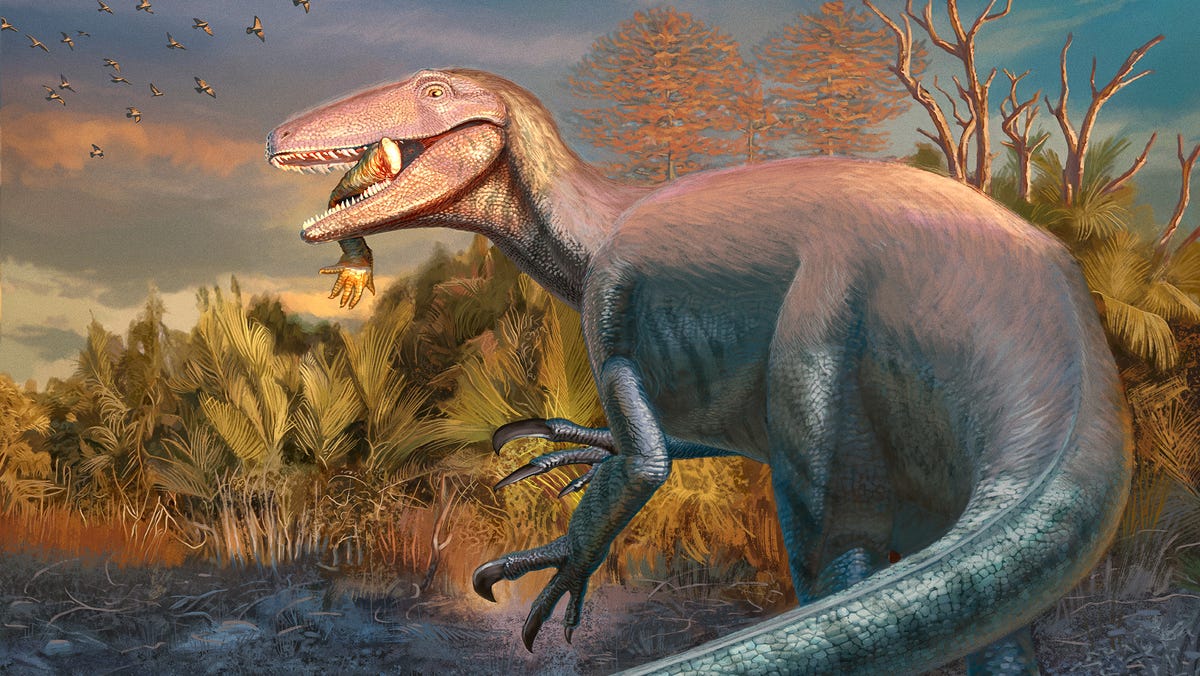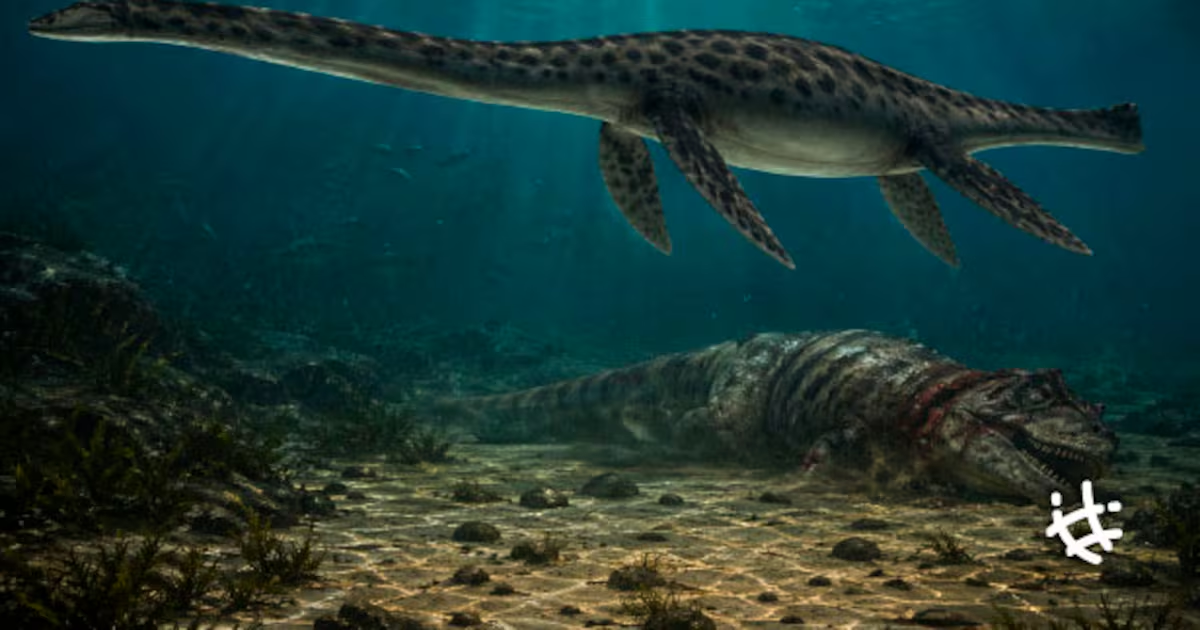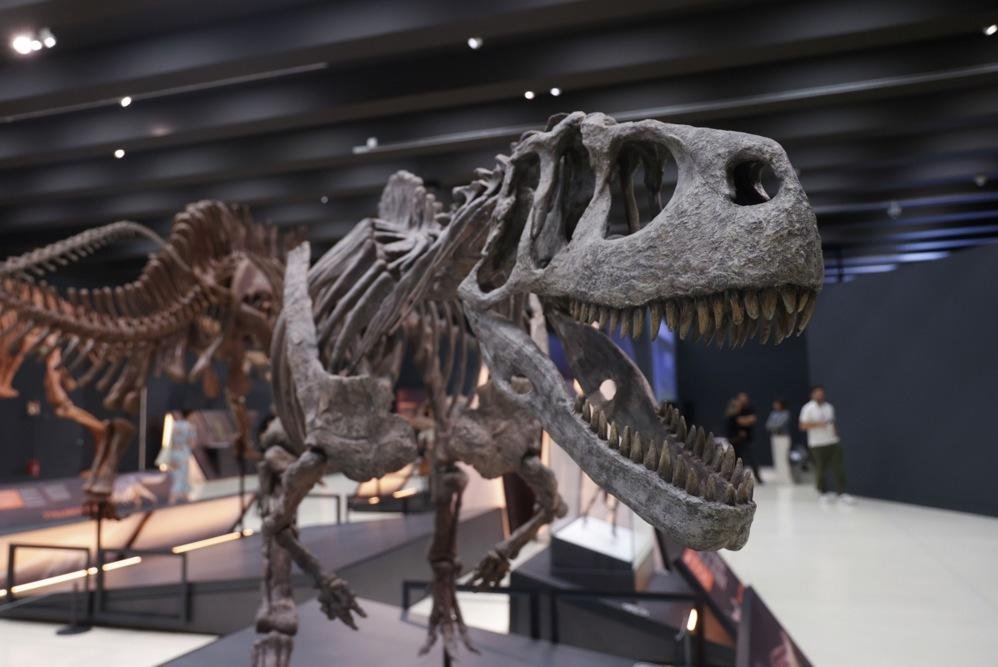
Aug. 29 (UPI) -- An interdisciplinary team of specialists from Argentina's National Scientific and Technical Research Council, or CONICET, discovered most of the skeleton -- including the skull and jaws -- of a large hypercarnivorous crocodile that lived in southern Argentina about 70 million years ago during the Late Cretaceous period.
Hypercarnivorous animals are those whose diet consists of more than 70% meat, and that include eagles, vultures, toothed whales, spiders and scorpions.
The discovery site, described Wednesday in the scientific journal PLOS One, is situated about 19 miles south of the town of El Calafate in Patagonia.
Researchers named the new species Kostensuchus atrox, combining "Kosten" -- the Aonikenk/Tehuelche word for Patagonian wind -- and "suchus" -- from the Greek Souchos, the crocodile-headed Egyptian god.
Related