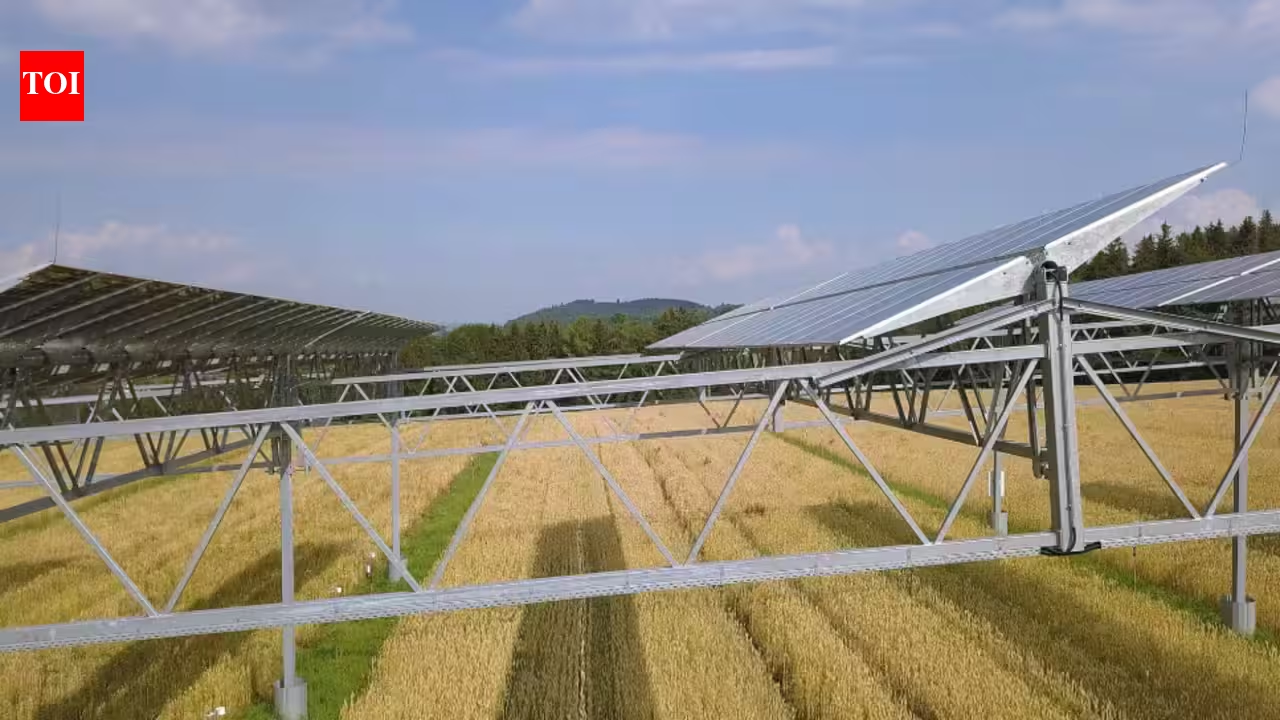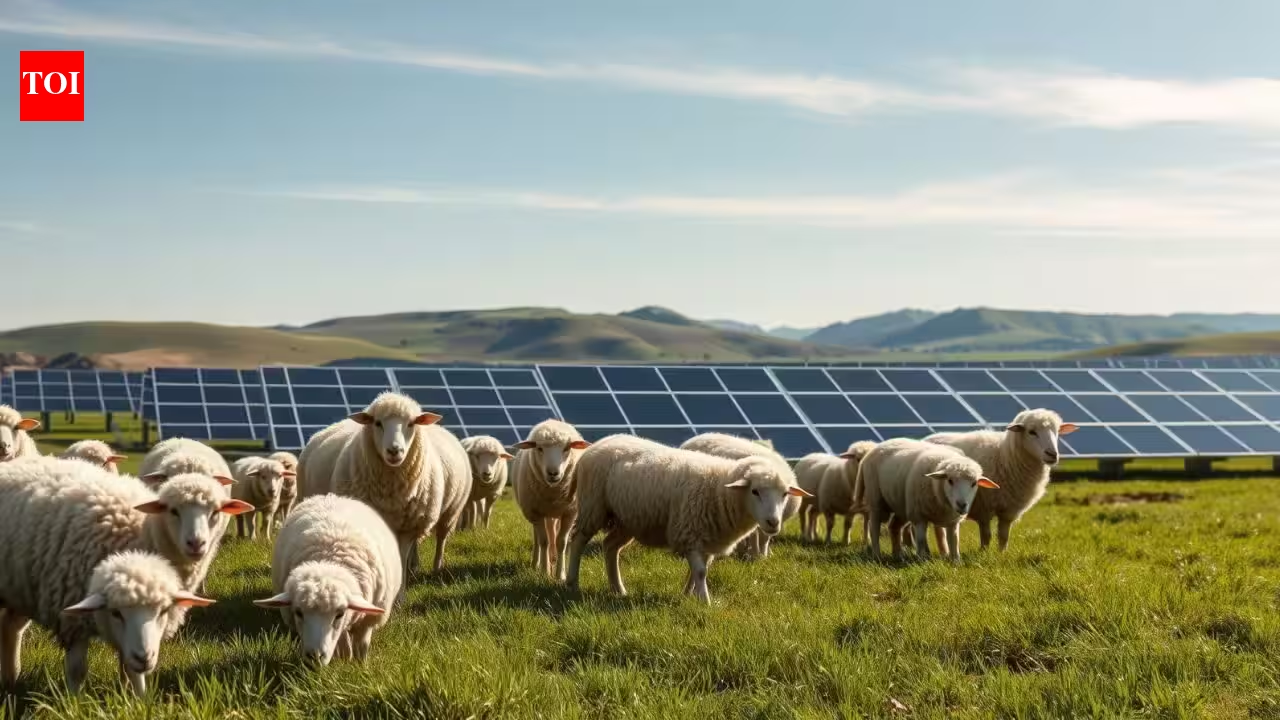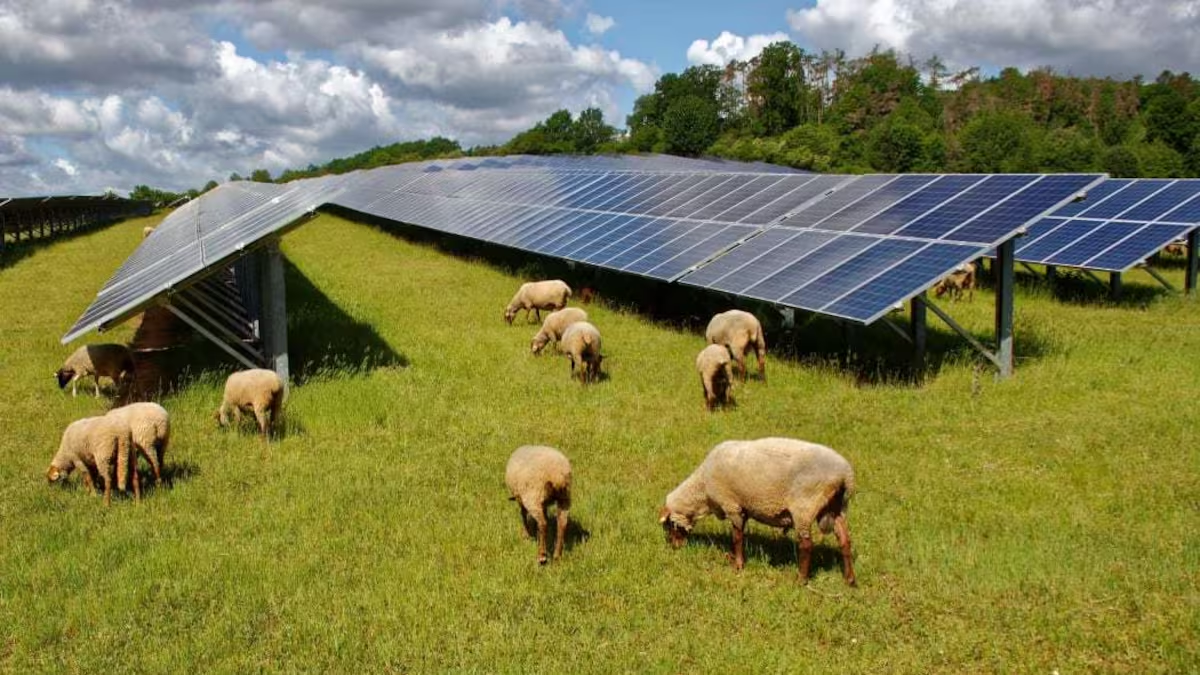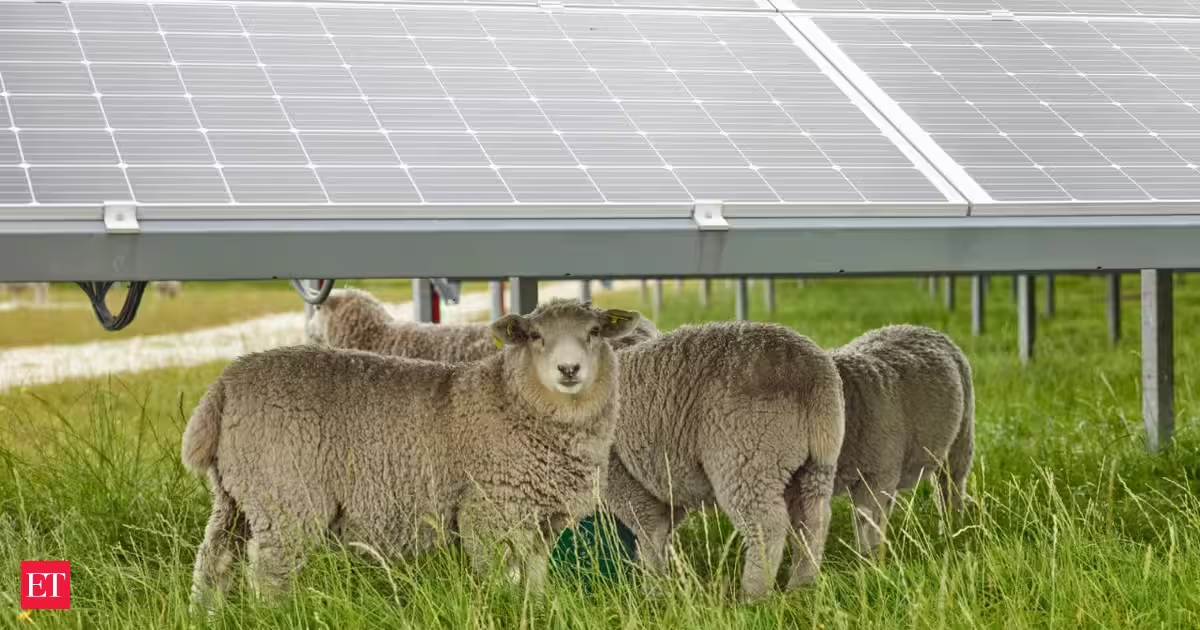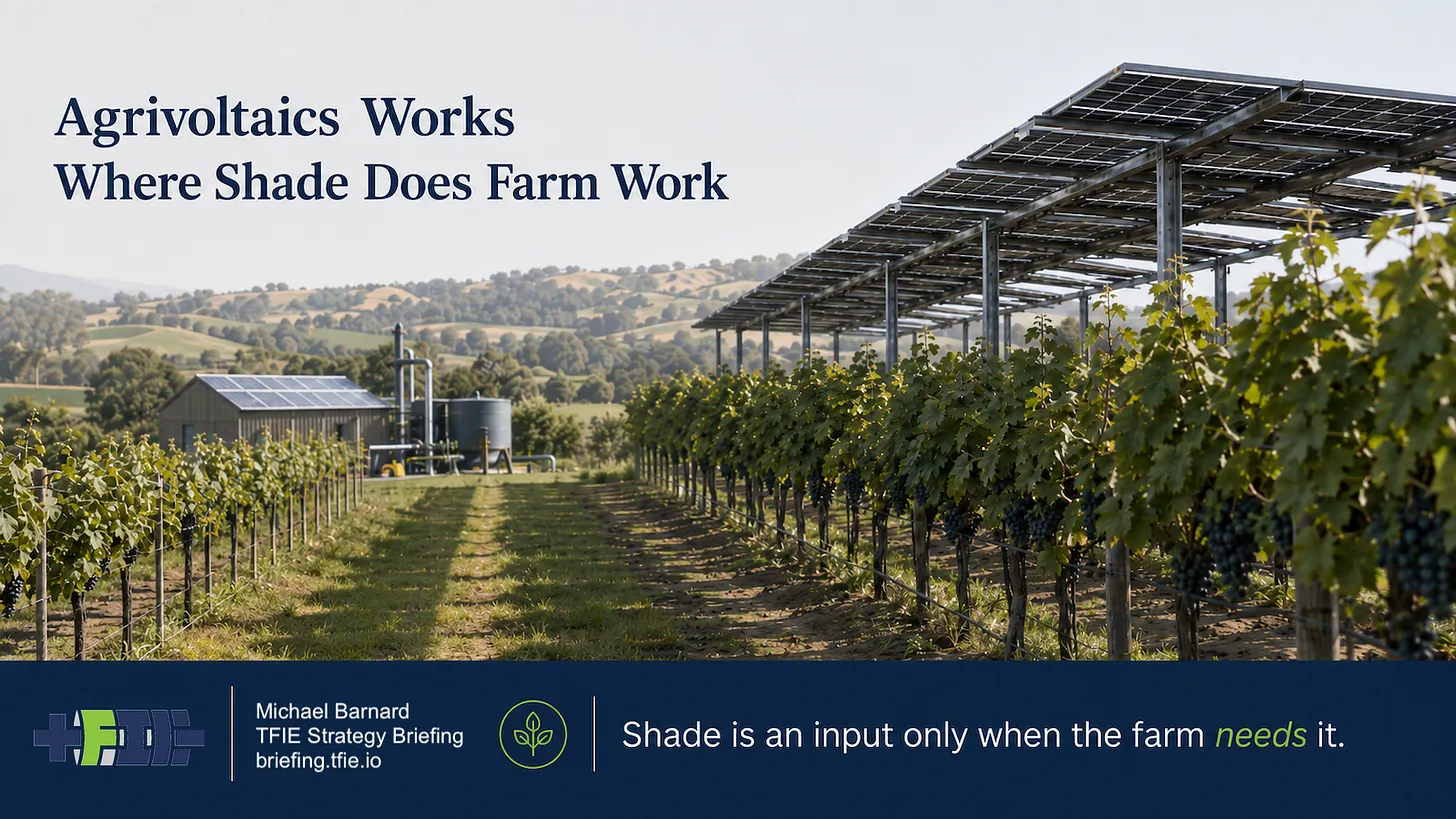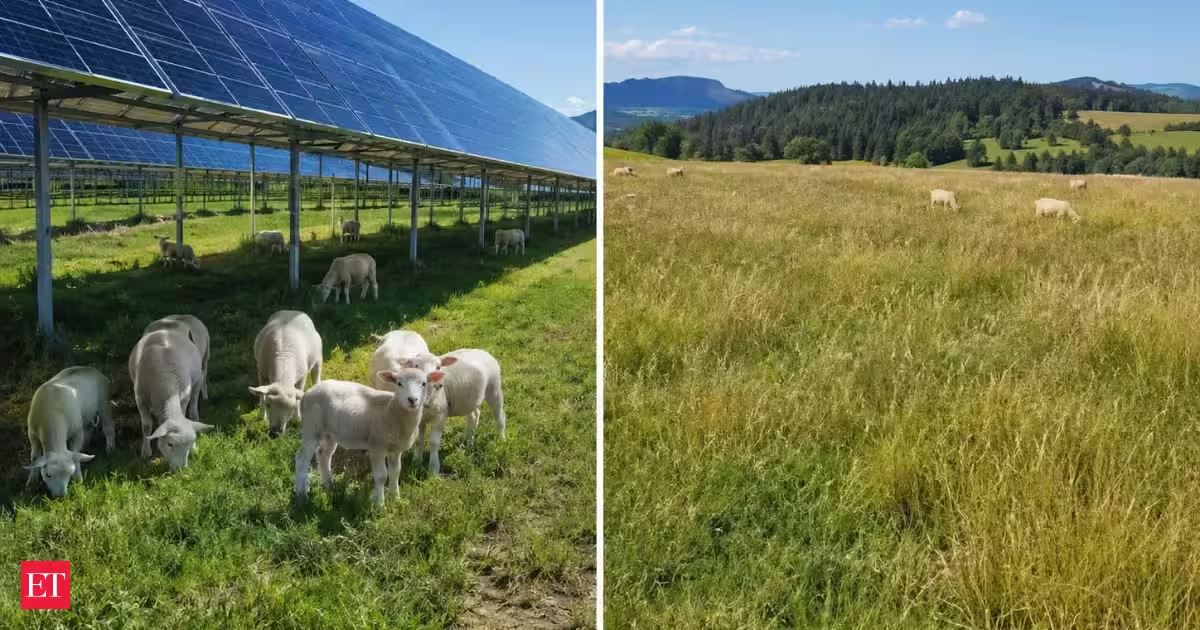
A 2021 study titled “Herbage Yield, Lamb Growth and Foraging Behavior in Agrivoltaic Production System,” conducted by Oregon State University and featured in the journal Frontiers in Sustainable Food Systems, reveals that solar power and conventional farming don't have to compete for the same land after all.Solar cell panels in an Oregon vineyard. Image credits: Wikimedia CommonsAccording to the research paper, pasture covered by solar panels showed 38% less grass production compared to uncovered pasture, while lamb gains were comparable to those in normal grazing areas. This case suggests the viability of a concept that allows land to serve as both an electricity source and grazing land. For readers familiar with the tension between green energy development and agricultural land conservation, it is among the clearest signs that both uses can coexist.Less grass but the same growth? Here's the catch Researcher Alyssa Andrew led the Oregon State team to follow lambs over two seasons on a research pasture partially shaded from the sun's rays by solar panels. The shaded sections would not be able to grow as much grass as the non-shaded sections due to the lack of sunlight on the ground. However, the grass that did grow was more nutritious, probably due to the reduced stress of the plants from the heat and reduced soil temperature under the panels.Thus, the lambs consumed less quantity, but more quality food, and the numbers worked out almost perfectly. However, liveweight gains for the two groups were not different in either year of the study. Statistics showed that the solar pasture yielded a weight gain of 120 grams per day for weaned lambs as against 119 grams per day in the open pasture during the spring of 2019: a disparity the scientists considered to be insignificant. Productivity of land, as measured by liveweight gain per hectare, turned out to be greater under the solar panels at 1.5 kilograms per hectare per day versus 1.3 in the open pasture that. This observation was made by Serkan Ates, animal sciences professor at Oregon State University.The study's authors also pointed to a comfort benefit: the panels doubled as shade structures, letting the lambs avoid direct heat rather than expending energy cooling themselves down, which is evidence, though not the study's primary aim, that the animals were less heat-stressed under the panels.Why this is more than just a farm factThis is no simple cross-pollination between agriculture and clean-tech. It's a true solution to a real issue. Long before, due to the necessity of land, land was assumed to be indispensable to solar farms. And for years, it was presumed that one needed to be sacrificed for the other to win. There are other studies, including the above-mentioned research, on what is referred to as “agrivoltaics,” that indicate this is not the case.Sheep on a ranch in Oregon. Image credits: Wikimedia Commons It's already far larger than many people realise. According to the U.S. Department of Energy's Farmer's Guide to Going Solar, data gathered by NREL's InSPIRE project shows that, as of November 2023, sheep were grazing under solar sites in the United States representing more than 4,000 megawatts of generating capacity. The industry grew quickly in the years that followed: in 2024, the American Solar Grazing Association's first national census counted approximately 113,005 sheep grazing on roughly 129,000 acres across more than 500 solar sites nationwide.The part that no one's marketing.It would be an overstatement to call this a complete win for everyone. Solar grazing is effective for sheep because their height is suitable for typical panel arrays, but not as easily applicable to cattle that typically need taller and more expensive panels in order to not damage the setup. The availability of flock owners at solar sites (as well as payment models for graziers) is also a dynamic that needs to be ironed out across the states. But although lamb weight gain remained constant in the Oregon study, it was at one specific site, for one breed and under one climate. Results may be different depending on rainfall, height of panels, and type of pasture.Still, this is one of the rare cases where the numbers back up the enthusiasm. Solar panels and farmland don't have to be an either-or choice: when configured well, the same acreage can do two jobs at once, generating power overhead while growing a better pasture underneath.
In a 2021 Oregon study, lambs grazed beneath solar panels; shaded pasture produced 38% less grass, while lamb weight gains were similar
A 2021 study from Oregon State University reveals that solar panels can coexist with grazing land, producing less grass while maintaining lamb weight gains, suggesting agrivoltaics is a viable solution for land use efficiency.
725 words~3 min read