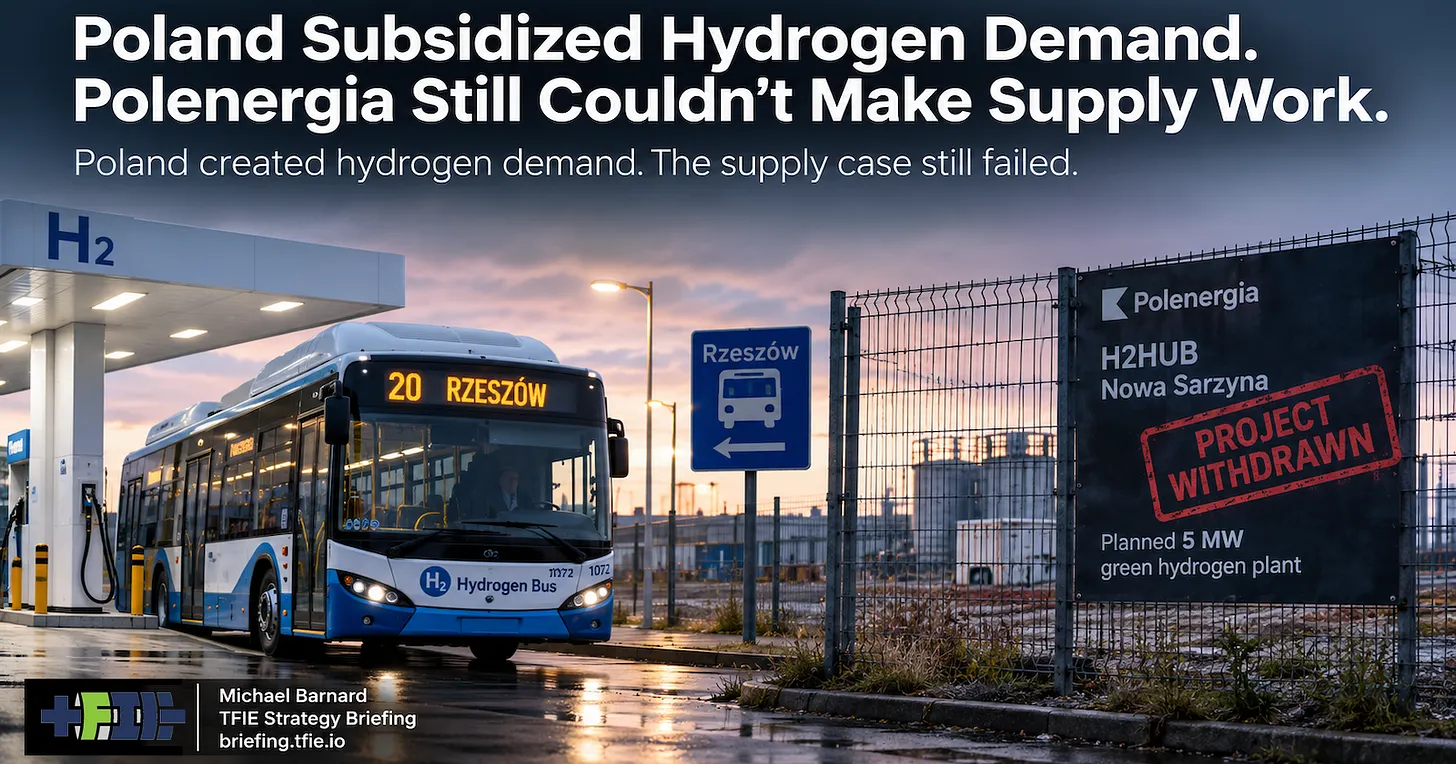
Poland succeeded in creating hydrogen-bus demand, but Polenergia still backed away from the local green-hydrogen supply intended to serve it.
Support CleanTechnica's work through a Substack subscription, on Patreon, or on Stripe. Help us produce all of the high-quality, original content we publish week after week despite the challenges of content-scraping AI, antisocial media, inflation, and other hurdles.
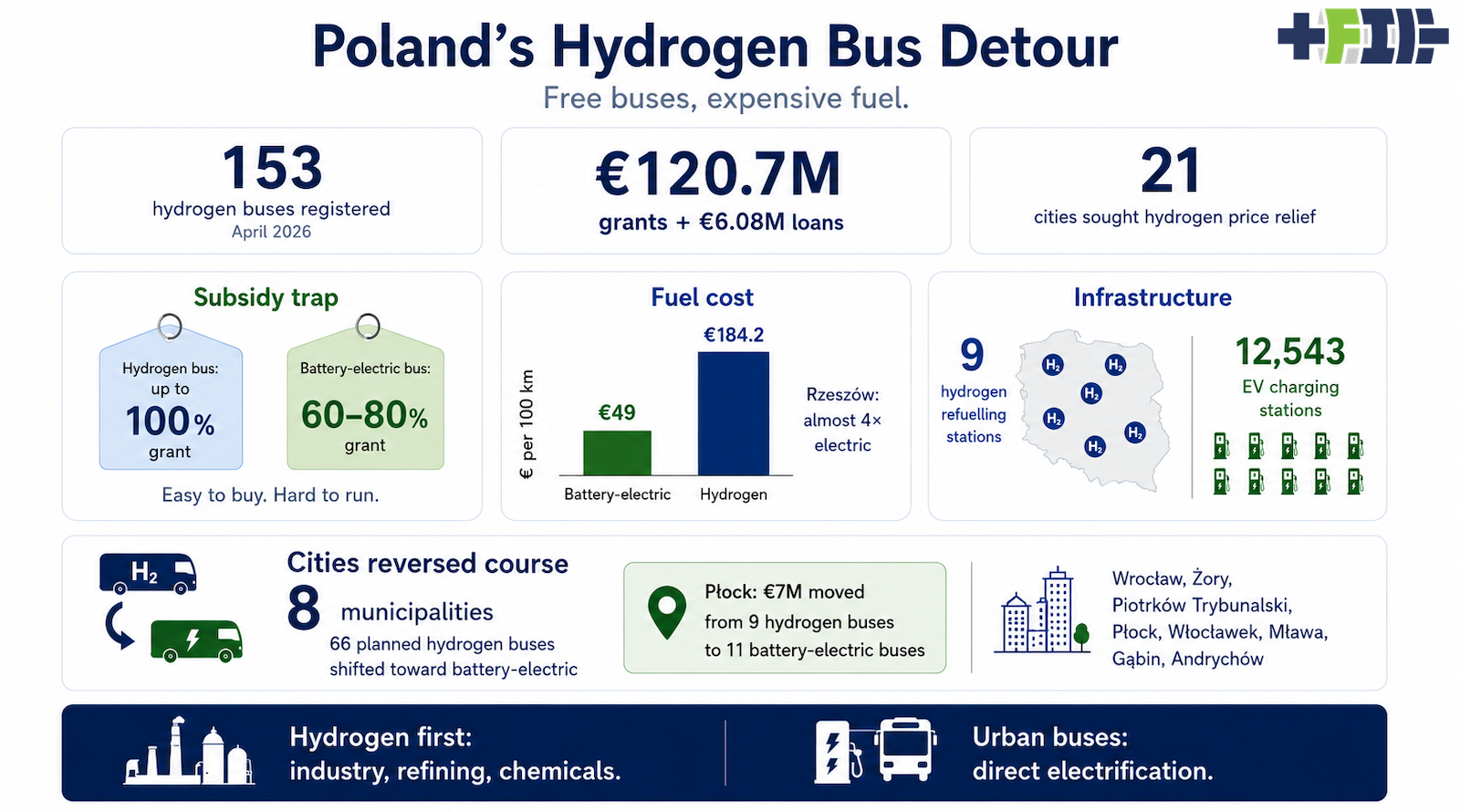
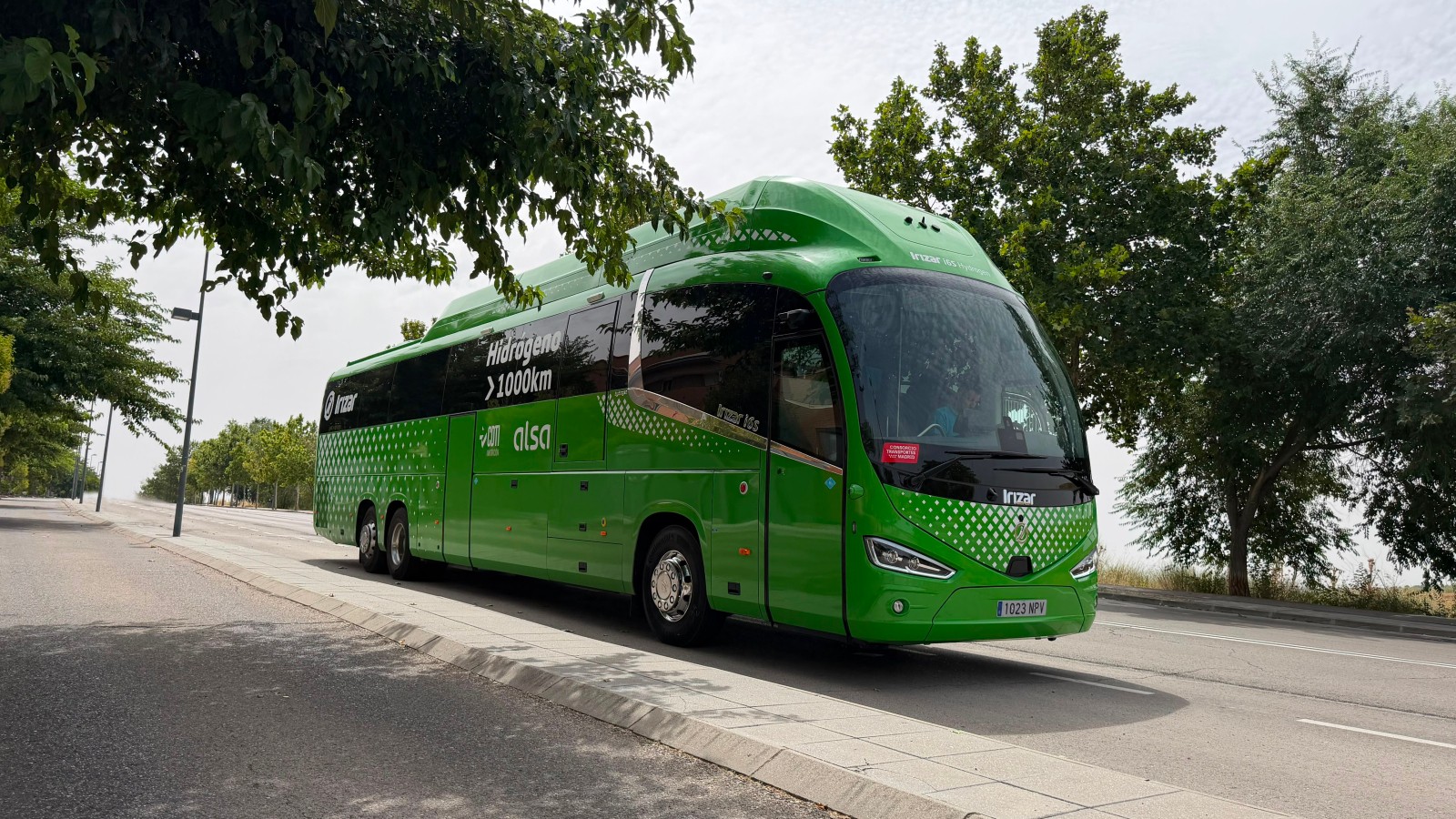
Poland did something hydrogen advocates have spent years saying governments need to do: it created real demand. Public subsidies helped put hydrogen buses into Polish cities, refueling infrastructure received support, and renewable-hydrogen projects were offered public money as well. By April 2026, Poland had 153 hydrogen buses registered, 140 already in service and another 107 contracted. This was no longer a handful of demonstrations waiting for a market to appear.
The industrial-policy logic behind Poland’s program was straightforward. Subsidized buses would create hydrogen demand. That demand would support refueling stations. Stations and customers would justify local hydrogen production. With enough production and infrastructure in place, a domestic low-carbon hydrogen industry could begin to emerge.