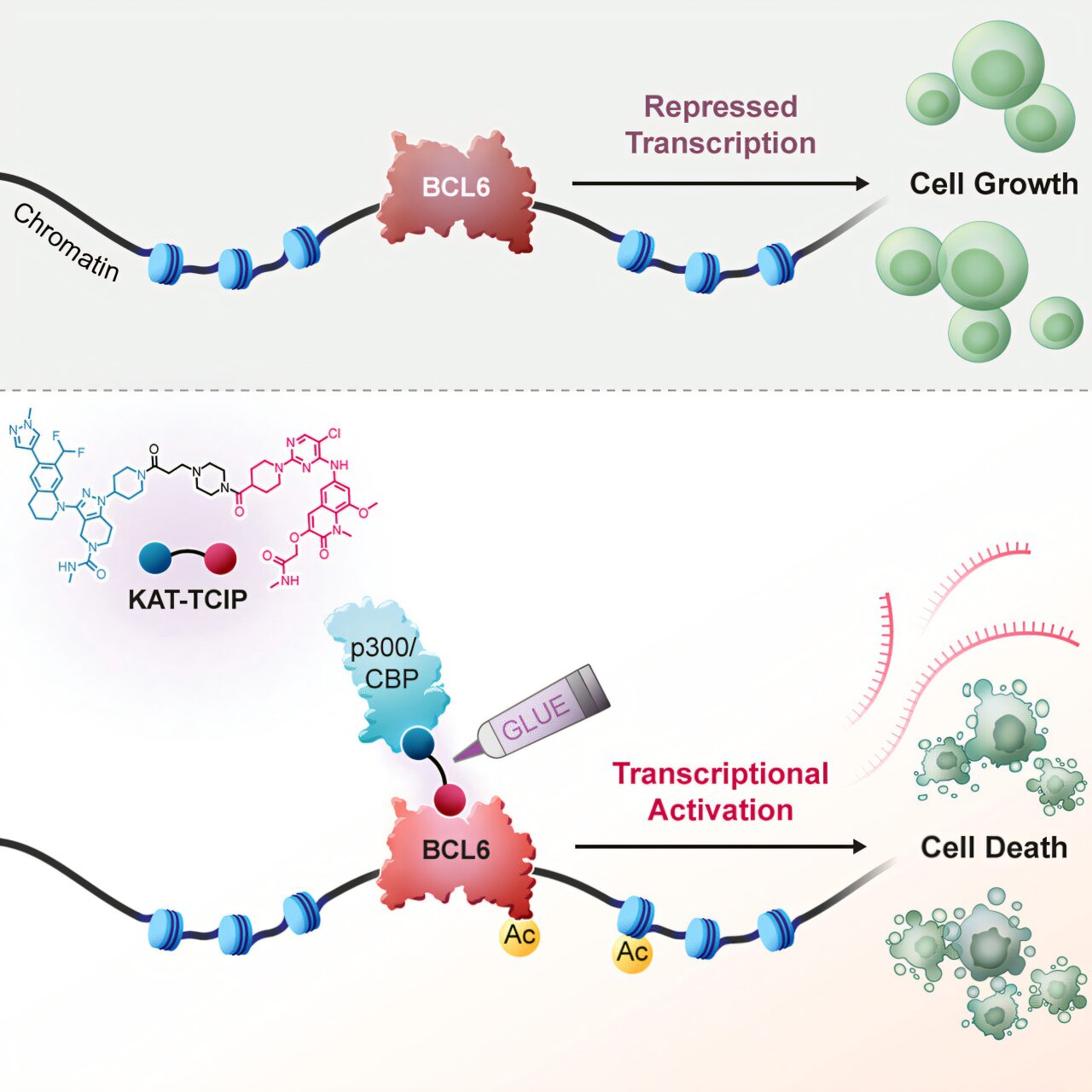
Graphical abstract. Credit: Cell (2026). DOI: 10.1016/j.cell.2026.06.037
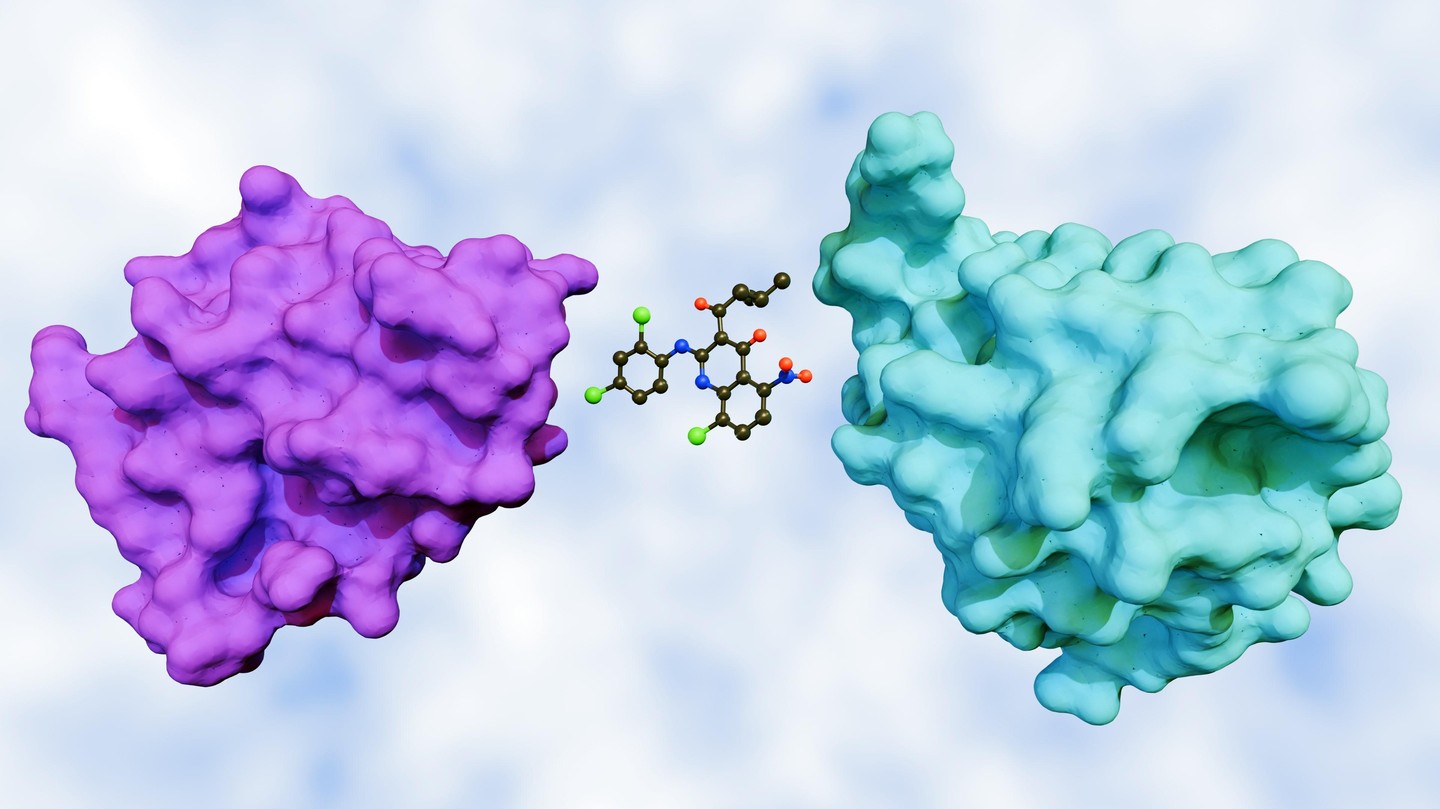
A two-headed molecule designed by Stanford Medicine researchers hijacks one of the most common protein drivers of B-cell lymphoma, flipping it from its role as a promoter of cell growth into an arbiter of cell death. In mice, a short course of twice-daily treatment eliminated aggressive lymphoma tumors within 11 days.
The approach builds on a strategy the researchers have been refining for several years: Rather than trying to block a cancer-causing protein, they engineer a small molecule that physically links the culprit with another molecule that switches on the cell's own self-destruct program. A similar approach may work for other types of cancers and autoimmune diseases, the researchers believe.
"We're trying to essentially fight cancer with its cause—taking the driving force of the cancer and then rewiring it to activate cell death mechanisms," said Gerald Crabtree, MD, the David Korn, MD, Professor in Pathology and a professor of developmental biology.
The work is published in the journal Cell.