People who take part in screening for colorectal cancer may have as much as a 43% lower risk of dying from the disease, according to new estimates published in JAMA Network Open by researchers at Karolinska Institutet and Umeå University in Sweden. These findings are based on up to 14 years of follow-up data from the Stockholm–Gotland screening program.
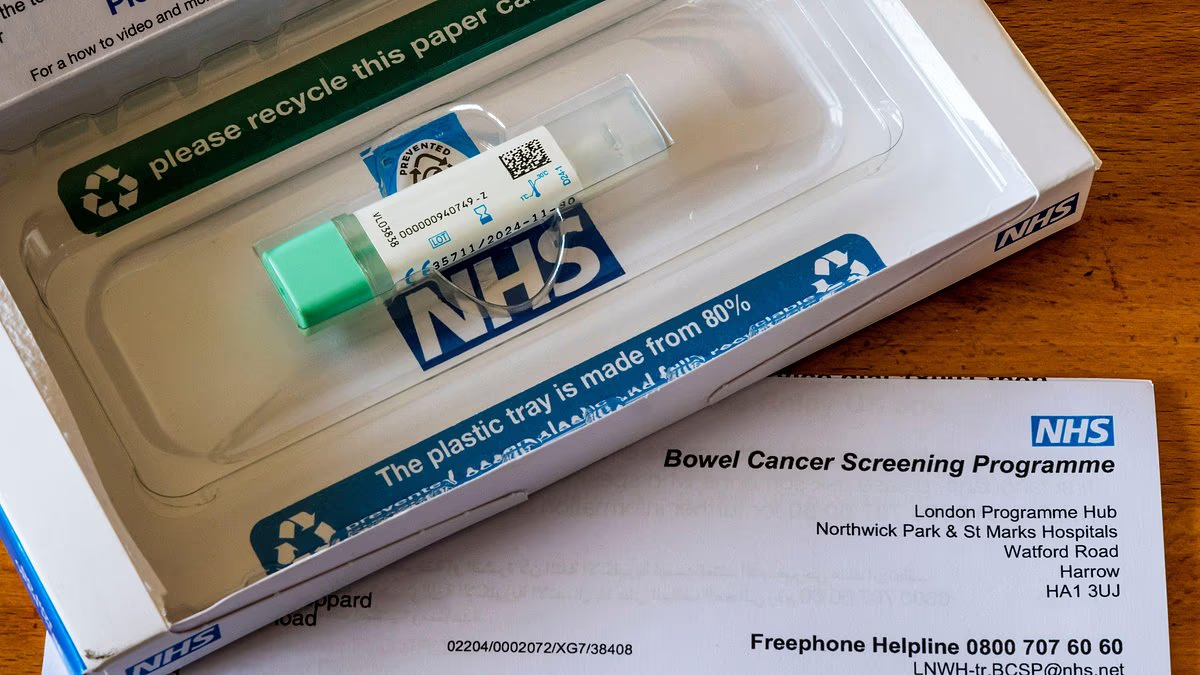
Colorectal cancer is one of the most common forms of cancer, with a favorable prognosis if detected early. Universal screening has been introduced throughout Sweden, meaning testing is offered to people ages 60–74 every two years. Participants are sent a screening kit to their home address and asked to provide a stool sample, which is analyzed for small amounts of blood that are not visible to the naked eye. If blood is detected, further investigation is offered, usually in the form of a colonoscopy.
New study shows greater effectiveness
Stockholm and Gotland were early adopters, introducing routine screening as early as 2008. Researchers at Karolinska Institutet and Umeå University have now followed these individuals for up to 14 years to investigate the impact of screening on mortality rates.
"A previous evaluation of the program showed that those who received an invitation to screening had a 14% lower risk of dying from the disease," says Johannes Blom, senior consultant and associate professor at the Department of Clinical Science and Education, Södersjukhuset, Karolinska Institutet, and the study's corresponding author. "We have now been able to show that mortality is significantly lower among those who actually take part in the screening."