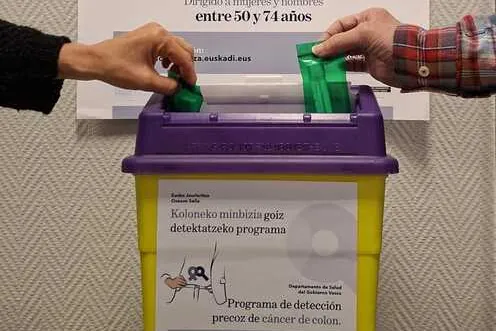
Screening for colon cancer using a simple test for hidden blood in faeces can save thousands of lives. That is the conclusion of one of the largest studies carried out to date in Spain, which finds that this programme of early detection is associated with a 50% reduction in mortality from colorectal cancer among people aged 50 to 69.
The research, published this Wednesday in "JAMA Network Open (source in Spanish)", tracked how the disease evolved over 21 years in a population of almost 2.2 million people in the Basque Country. The findings show that the fall in deaths began just three years after the screening programme was introduced and has been sustained ever since.
As well as cutting mortality, the programme has made it possible to detect 70.8% of tumours at stages I and II, when the chances of cure are far higher and treatment is less aggressive.
The study, led by Dr Luis Bujanda, examined mortality data recorded between 2004 and 2024. Over that period there were 438,134 deaths from all causes, of which 16,298 were linked to colorectal cancer.
In the age group covered by the screening programme, 50 to 69 years, the mortality rate fell from 39.7 to 19.8 deaths per 100,000 inhabitants, a decrease of 50.1%. In the population as a whole, mortality also dropped, from 32.8 to 23.1 deaths per 100,000 inhabitants.