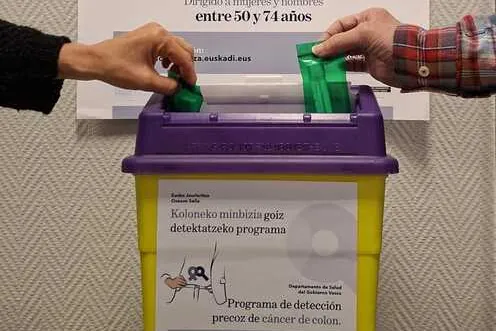
The U.S. Preventive Services Task Force recommends annual fecal immunochemical test screening starting at age 45 among average-risk adults to reduce the risk of death from colorectal cancer.In a retrospective population-based cohort study from Spain, fecal immunochemical test-based screening was linked to an ongoing decline in colorectal cancer mortality.Counterfactual analyses suggested a 41.7% relative reduction in mortality overall, a 46.2% relative reduction in those ages 50 to 69, and a 45.4% relative reduction in those ages 70 and older compared with projected trends without screening.
Fecal immunochemical test (FIT)-based screening was linked to an ongoing decline in colorectal cancer (CRC) mortality in a retrospective population-based cohort study from Spain.
From 2004 to 2024, age-standardized CRC mortality decreased from 32.8 to 23.1 deaths per 100,000 population, a reduction of 29.6% (P=0.002), reported Laura Izquierdo-Sanchez, PhD, of the University of Basque Country in San Sebastián, and colleagues in JAMA Network Open.
CRC mortality declined by 50.1% (from 39.7 to 19.8 deaths per 100,000 population) in individuals ages 50 to 69, and by 19.6% (from 165.4 to 132.9 deaths per 100,000 population) among those ages 70 and older, with evidence suggesting that substantial reductions occurred after 2009, when the biennial FIT-based screening program was launched.