People who participate in colorectal cancer screening may face as much as a 43 percent lower risk of dying from the disease, according to new estimates published in JAMA Network Open by researchers at Karolinska Institutet and Umeå University in Sweden. The findings draw on as many as 14 years of follow-up data from the Stockholm-Gotland screening program.
Colorectal cancer is among the most common cancers, but outcomes are generally favorable when the disease is found early. Sweden has introduced universal screening, with people aged 60-74 offered testing every two years.
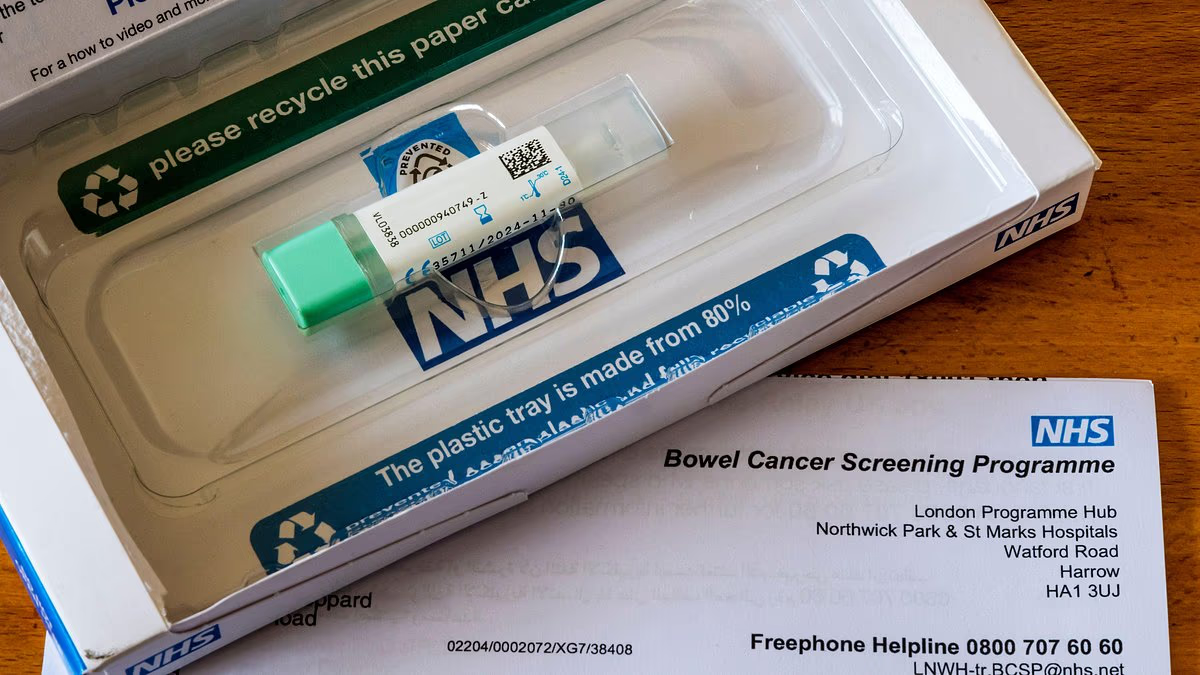
Participants receive a screening kit at home and are asked to provide a stool sample. The sample is checked for tiny amounts of blood that cannot be seen with the naked eye. If blood is found, additional testing is offered, most often a colonoscopy.
Long-Term Data Show a Larger Benefit
Stockholm and Gotland began routine colorectal cancer screening as early as 2008. Researchers from Karolinska Institutet and Umeå University have now tracked participants for up to 14 years to examine how screening may affect the risk of dying from the disease.