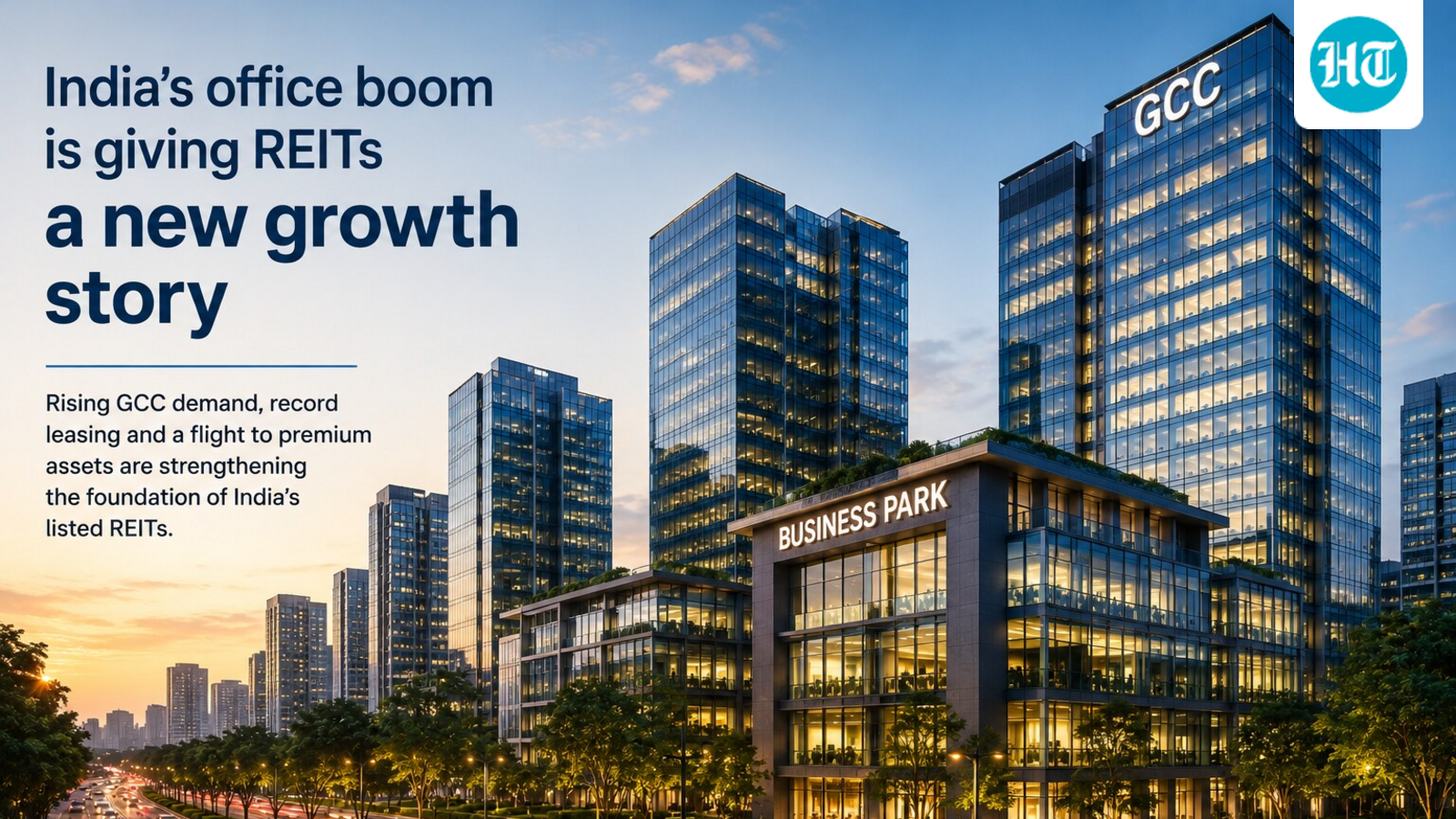
India's real estate market is increasingly showing two distinct trends. While the residential segment faces a more cautious environment amid affordability pressures and the risk of slowing sales velocity, commercial real estate is benefiting from robust leasing demand, falling vacancies and the rapid expansion of Global Capability Centres (GCCs).Ambit Capital expects the managed-office model to remain particularly attractive. The brokerage estimates the flex workspace segment could grow at more than 25% CAGR by CY27, compared with 6-7% growth for the broader office market. It prefers WeWork India and Smartworks, followed by IndiQube and Awfis, citing enterprise-led demand, higher occupancies and lower asset-liability management risk.The brokerage continues to favour a basket approach to REIT investing and has maintained BUY recommendations on Embassy REIT, Mindspace REIT and Brookfield India REIT.According to a report by the brokerage, gross office leasing rose 10% year-on-year to a record 45.5 million square feet in the first half of 2026, even from an already high base. The report points to a strong structural backdrop for office assets and listed REITs, with commercial leasing continuing to outpace expectations. Bengaluru and Hyderabad led the absorption, while pan-India vacancies fell to a five-year low of 14.7%. For Grade-A assets, vacancy levels were even lower at around 9%, underlining the premium being placed on quality office space.The biggest structural driver is the growing role of GCCs, which accounted for 43% of gross leasing in the first half of 2026, compared with roughly 33% before the pandemic. Nearly 200 new GCCs entered India between 2024 and 2025, while GCCs now account for around half of active space requirements, supported by BFSI offshoring and manufacturing-linked technology and R&D demand.The strength is also visible across flexible workspace operators. According to the report, organised flex-space companies reported average revenue growth of around 34% year-on-year in the first quarter of FY27, led by roughly 30% growth in leasing revenue. WeWork India and Smartworks benefited from stronger operating leverage, while IndiQube maintained steady margins. Awfis, however, emerged as an outlier after a large client exit hurt occupancy and higher refurbishment and lease costs pressured profitability.For investors, the stronger commercial cycle is translating into a favourable outlook for REITs. The brokerage said declining Grade-A vacancies, longer lease tenures and greater pre-leasing visibility should support the asset class. Listed REITs currently offer estimated yields of about 5.4-6.7%, and the brokerage sees potential for an overall medium-term internal rate of return of 11-13%, combining annual distributions with expected capital appreciation.Tax changes could provide another tailwind. Under the proposed changes highlighted by Ambit Capital, REIT special purpose vehicles could move from the earlier effective tax structure of around 35% to roughly 29%, while dividend distributions would remain exempt for unitholders, potentially supporting future distributions.As residential affordability becomes a more important constraint on growth, the combination of tight office vacancies, GCC-led demand, rising rentals and potential tax benefits is strengthening the case for commercial real estate and REITs.
Indian realty market remains divided amid affordability pressures and GCC-led commercial demand
The commercial real estate sector in India is witnessing robust demand for leasing and a decline in vacancy rates. Global Capability Centres are significantly contributing to office space absorption. Furthermore, flexible workspace operators are experiencing impressive revenue growth annually. This commercial vitality is advantageous for Real Estate Investment Trusts, which are enjoying appealing yields. Anticipated tax reforms also bolster the optimistic outlook for commercial properties.
486 words~2 min read