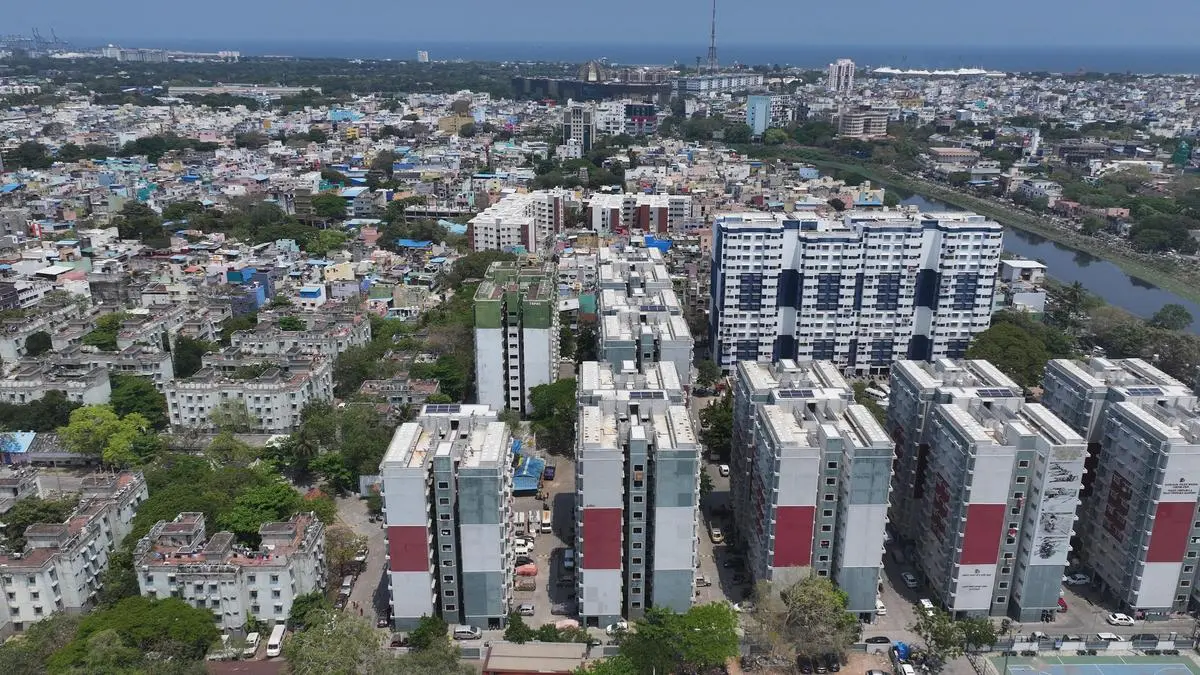
SynopsisIndia's real estate investment surged 23% to $4.33 billion in H1 2026, driven by robust domestic capital. Despite global headwinds, 54 deals marked a record half-year. Domestic players funded 64% of investments, offsetting a foreign capital dip. The office sector led with $2.3 billion, attracting significant domestic interest due to strong occupier demand and attractive yields. Experts anticipate foreign inflows to rise as uncertainties ease.iStockIndian real estate investment surged 23% to $4.33 billion in H1 2026MUMBAI: India's institutional real estate investment activity remained resilient in the first half of 2026 despite geopolitical uncertainty, currency volatility and inflationary pressures globally, with strong domestic capital helping offset a decline in foreign inflows and drive overall investment growth.Institutional investment volumes rose 23% year-on-year to $4.33 billion during January-June 2026, showed JLL India data. The period also recorded 54 transactions; the highest half-year deals count ever in the country's real estate market.Also Read: Adani or Sobha, India's biggest developers are heading to the national capital regionThe strong performance comes after a record $10.5 billion of institutional investments in the calendar year 2025. While global market conditions prompted investors to adopt more selective and risk-calibrated strategies in early 2026, transaction activity remained robust.Domestic institutional capital accounted for 64% of total institutional investment volumes, the highest share recorded to date, contributing $2.8 billion during the period. This helped counterbalance a 37% on-year decline in foreign institutional investment as overseas investors remained cautious amid global economic uncertainty, currency fluctuations and inflationary concerns.“The growth, led by domestic private equity players and REITs, underscores the growing depth of India's investment market. As geopolitical conditions stabilize, we expect foreign investors to increase their capital deployment in India's real estate market,” said Lata Pillai, Senior MD & Head of Capital Markets, India, JLL.Also Read: Delhi NCR's 'Ring of Opportunity' could open up a new era of affordable homesAccording to her, the combination of a stronger domestic institutional base and renewed foreign participation will drive higher capital flows and create a more balanced and resilient investment ecosystem.“The current environment has created opportunities for domestic investors to deploy capital selectively across high-quality assets. Strong occupier demand, improving asset performance and healthy fundamentals across key real estate segments continue to support investment activity. The depth and diversity of India's property market provide confidence to investors pursuing long-term value creation despite near-term global uncertainties,” said Saurabh Rathi, Co-head, Real Estate Funds, Motilal Oswal Alternates.Average deal sizes fell 40% to $80 million from $133 million in H1 2025, indicating investors preferred to spread capital across a larger number of transactions rather than concentrate exposure in a few large deals.According to JLL, equity investments accounted for 83% of total domestic capital deployment in the first half of the year, compared with a more balanced debt-equity mix before 2025. Domestic private equity funds and REITs together represented 72% of domestic institutional capital deployed during the period.The office sector emerged as the biggest recipient of institutional capital, reclaiming its traditional leadership position after residential assets led investment activity during the period. Office investments rose 34% on-year to $2.3 billion across 17 transactions, accounting for 54% of total institutional investment volumes.Domestic investors dominated office acquisitions, contributing 89% of total office investment volume. This was attributed to the sector's appeal to the continued expansion of India's Global Capability Centre ecosystem, stabilising return-to-office trends, attractive entry pricing and rental yields of 7.8-8%.Non-core assets accounted for 57% of total investment volumes during the six-month period, while Bengaluru and Chennai together attracted 34% of institutional capital flows, supported by large acquisitions.Looking ahead, experts are of the view that foreign investors should gradually increase capital deployment as geopolitical uncertainties ease and inflationary concerns moderate. Based on historical trends, where the first half typically accounts for about 50-52% of annual institutional investments, total capital flows could approach $8.5-9 billion by the end of 2026 if second-half momentum remains intact. Read More News on...moreless
India realty investment defies global volatility; institutional inflows rise 23% in H1
India's real estate investment surged 23% to $4.33 billion in H1 2026, driven by robust domestic capital. Despite global headwinds, 54 deals marked a record half-year. Domestic players funded 64% of investments, offsetting a foreign capital dip. The office sector led with $2.3 billion, attracting significant domestic interest due to strong occupier demand and attractive yields. Experts anticipate foreign inflows to rise as uncertainties ease.
647 words~3 min read