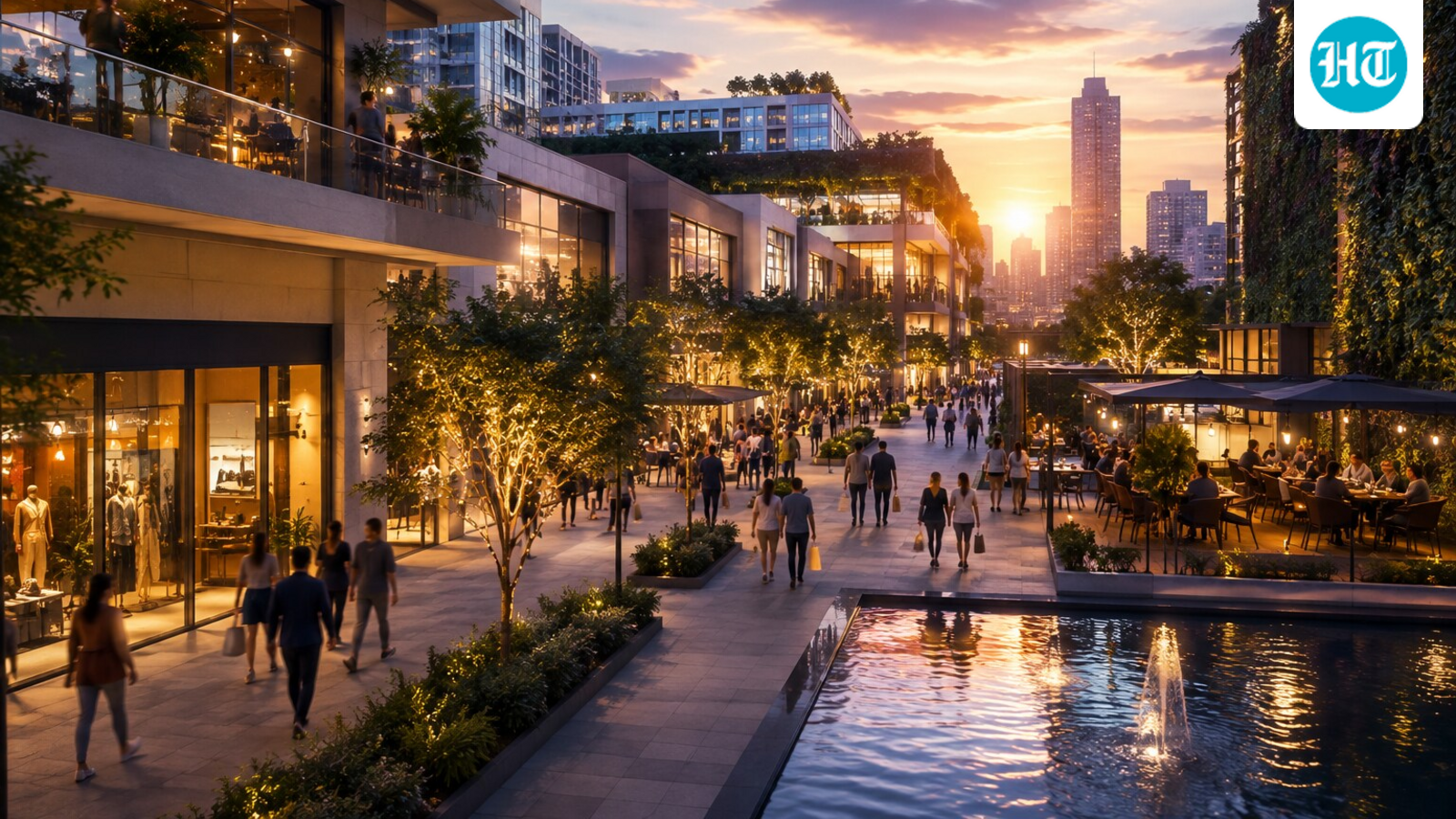
For years, India's REIT story has been closely associated with one asset: the office.Enhanced consumer engagement and experiential spaces are redefining retail properties, leading to newfound opportunities in India's REIT market.That is beginning to change.The rise of organised retail, premium consumption and experience-led shopping is opening another avenue for the listed real-estate market. Instead of thinking about REITs purely as a way to participate in India's office economy, investors are increasingly looking at how the country's changing consumption habits could reshape the assets held by these trusts.The shift is visible in the retail property itself.According to CBRE India's India Retail Market Outlook 2026, organised retail is expected to expand through a pipeline of investment-grade malls, while high streets are evolving into more sophisticated destinations for global and domestic brands. The report also highlights the growing importance of mixed-use and transit-linked developments designed around convenience and consumer experience.That is significant because the shopping centre of the future is unlikely to be simply a collection of stores.It increasingly needs to be a destination.Consumers may arrive to shop, but they may also come for food, entertainment, social experiences, wellness or simply to spend time. For retailers, that changes the value of physical space. A well-located property with the right tenant mix can become an extension of a brand's identity rather than merely a place to sell products.CBRE's research on India's retail market points to the growing importance of experiential flagship stores, Gen Z-focused formats and direct-to-consumer brands moving from digital-first businesses into physical locations.For REITs, this creates an interesting proposition.The economics of a retail asset depend on more than rent. Tenant quality, footfall, lease structures, location, asset design and the ability of a property to remain relevant to consumers all matter. A successful retail property can create an ecosystem in which strong brands attract consumers, consumers attract more brands and the resulting demand strengthens the underlying asset.But this also makes retail REIT exposure different from office REIT exposure.An office building is primarily driven by the needs of its occupiers. A retail destination is ultimately driven by the consumer. That makes the asset more closely connected to discretionary spending, brand expansion and changing lifestyle preferences.It also means the risks can be different.A fashionable retail destination today can lose relevance if its catchment changes, its tenant mix weakens or consumers migrate elsewhere. The rise of e-commerce has not eliminated physical retail, but it has raised the bar for what physical stores need to offer. The strongest properties are increasingly those that give consumers a reason to leave the screen and visit in person.This is where India's consumption story becomes relevant to the REIT market.A growing preference for organised retail, premium experiences and omnichannel shopping is encouraging brands to think differently about their physical footprint. CBRE's 2026 retail outlook notes that destination malls, evolving high streets and mixed-use developments are becoming important parts of this transformation.For investors, however, the lesson should not be that every retail property will benefit equally.The quality of the asset matters. So does its location, tenant mix, lease profile and ability to remain relevant as consumer behaviour changes.That makes retail an intriguing next chapter for India's REIT ecosystem.The office may have introduced Indian investors to the idea of owning a slice of institutional real estate. Retail could show them how closely property economics can be linked to something even more familiar: the way India shops, eats, entertains itself and spends.And that could make the next phase of India's REIT story less about buildings—and much more about the consumer inside them.Note to the reader: This article has been produced on behalf of the brand by HT Brand Studio and does not have journalistic/editorial involvement of Hindustan Times.
Beyond offices: how India’s consumption economy could reshape REITs
As India's consumption habits shift toward organized retail and experience-based shopping, the landscape of Real Estate Investment Trusts is transforming. | Real Estate News
614 words~3 min read