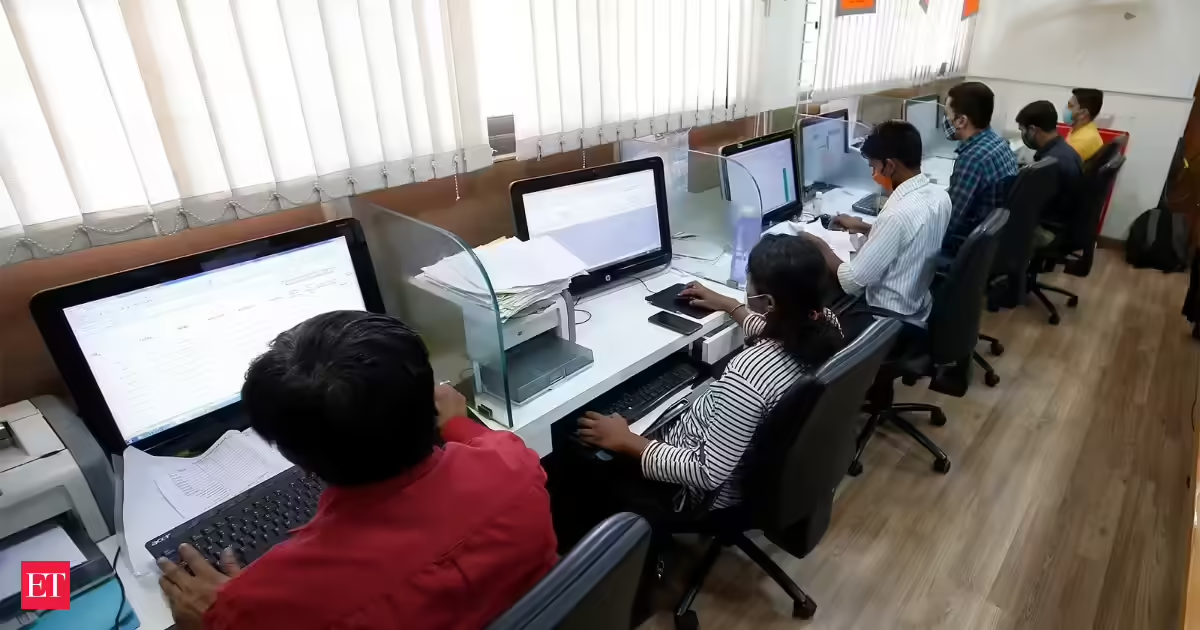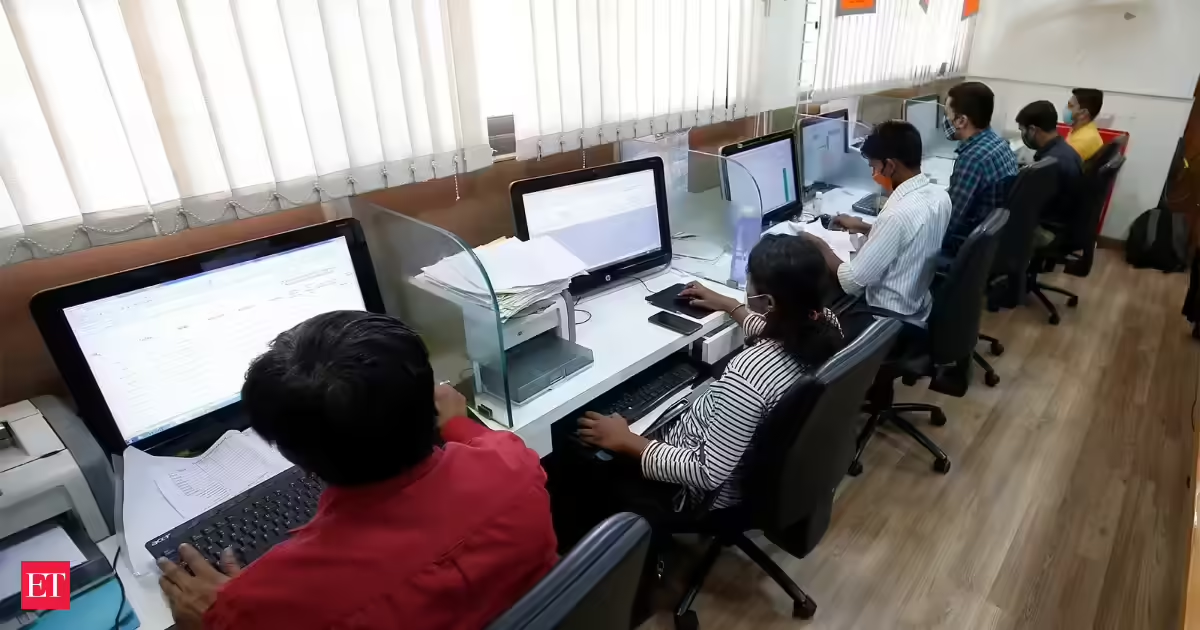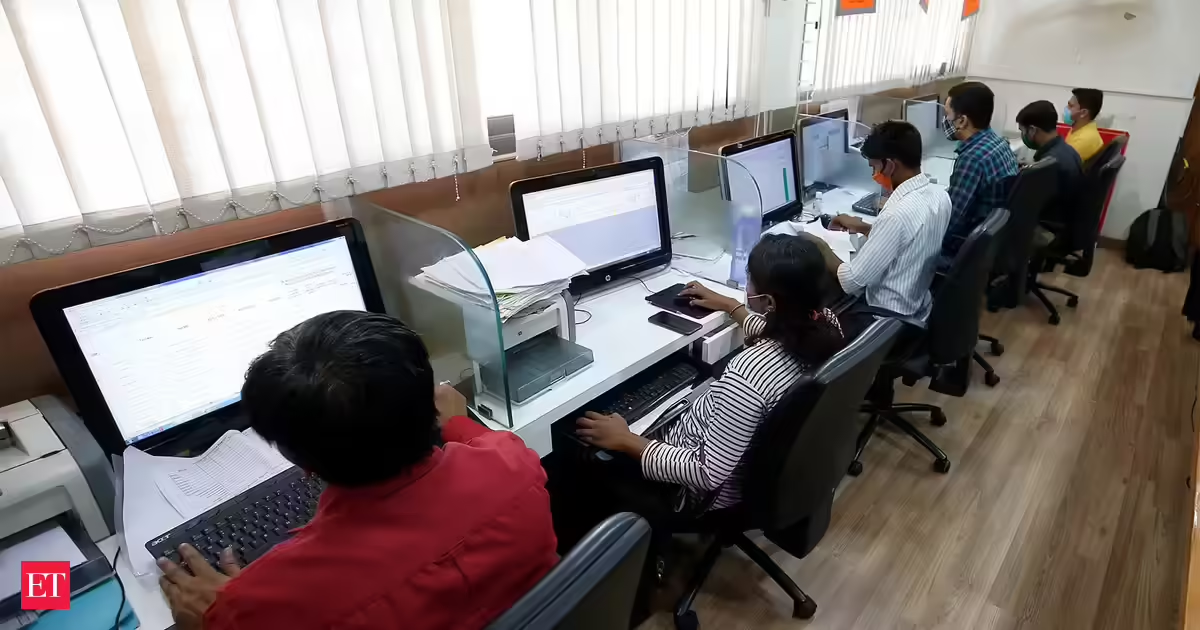
SynopsisIndia's office property market is set for strong growth. Leasing activity is expected to reach 85-90 million sq ft by 2026-27. Global capability centres and flexible workspaces will drive this expansion. Vacancy rates will remain stable, and rentals are predicted to increase. Geopolitical tensions may impact costs but not immediate demand.ANIRepresentative image Mumbai: India's office real estate market is expected to maintain its growth momentum over the next two years, with leasing activity projected to rise to 85-90 million sq ft in 2026-27, driven by sustained expansion of global capability centres (GCCs) and increasing adoption of flexible workspaces, according to India Ratings and Research (Ind-Ra).The ratings agency expects office absorption to rise more than 10% year-on-year to 79-80 million sq ft in 2025-26 and grow a further 12%-14% to 85-90 million sq ft in 2026-27. Vacancy levels are likely to remain range-bound at 12%-18%, while rentals could increase 4%-6% year-on-year in 2026-27.The outlook comes amid rising geopolitical tensions in the Middle East and concerns around the Strait of Hormuz, although Ind-Ra said the resulting volatility is unlikely to materially affect occupier demand in the near term.Instead, the agency expects the more visible transmission channels to be higher crude prices, rupee volatility, imported inflation, hedging costs and construction-cost pressures, which could delay capital deployment and execution of under-construction projects."The operating outlook therefore remains stable, but the investment outlook could turn cautious," the report said, adding that completed Grade-A assets, REIT portfolios and core GCC-led micro-markets are likely to remain more resilient than under-construction and leveraged developments."As funding, currency, and construction-cost volatility increases, execution discipline, capital structure, and asset quality will drive sharper credit differentiation across office CRE portfolios, beyond headline leasing alone", says Aditya Aggarwal, Associate Director, Corporate Ratings, Ind-Ra.The agency expects demand momentum to remain intact, supported by GCC expansion and enterprise-led adoption of flexible office formats. Leasing demand is becoming increasingly diversified, with occupiers spanning technology; banking, financial services and insurance; engineering, research and development; engineering/manufacturing; consulting; e-commerce; and domestic enterprises.However, large multinational occupiers could adopt a more cautious approach by phasing campus commitments, delaying discretionary expansion or opting for flex and managed office formats until budget visibility improves. This may lead to higher quarterly volatility in leasing activity without altering the medium-term demand trajectory, Ind-Ra said.GCCs are expected to account for 45%-50% of overall office demand, while flex leasing could contribute 25%-35% in 2026-27. Pune continues to remain a major flex market, with flexible workspace operators accounting for more than 50% of leasing activity in recent quarters.On the supply side, developers are continuing to prioritise completions and pre-commitments over speculative construction. Ind-Ra expects total office stock to increase to around 1,507 million sq ft by March 2027 from around 1,391 million sq ft in March 2026, while the under-construction share remains controlled at 15%-16%.The agency said completed, leased and REIT-grade assets are likely to remain the preferred destination for capital. REITs continue to enjoy 90%-92% occupancy, 23-25 million sq ft of annual leasing, 15%-40% re-leasing spreads and a calibrated pipeline of around 25 million sq ft that is largely pre-leased.While the disruption from global volatility is unlikely to derail India's office property cycle, it could widen the gap between institutional Grade-A assets and weaker, supply-heavy micro-markets, the agency said.Read More News on...moreless
India's office leasing to remain resilient, to hit 85-90 million sq ft in 2026-27
India's office property market is set for strong growth. Leasing activity is expected to reach 85-90 million sq ft by 2026-27. Global capability centres and flexible workspaces will drive this expansion. Vacancy rates will remain stable, and rentals are predicted to increase. Geopolitical tensions may impact costs but not immediate demand.
544 words~2 min read