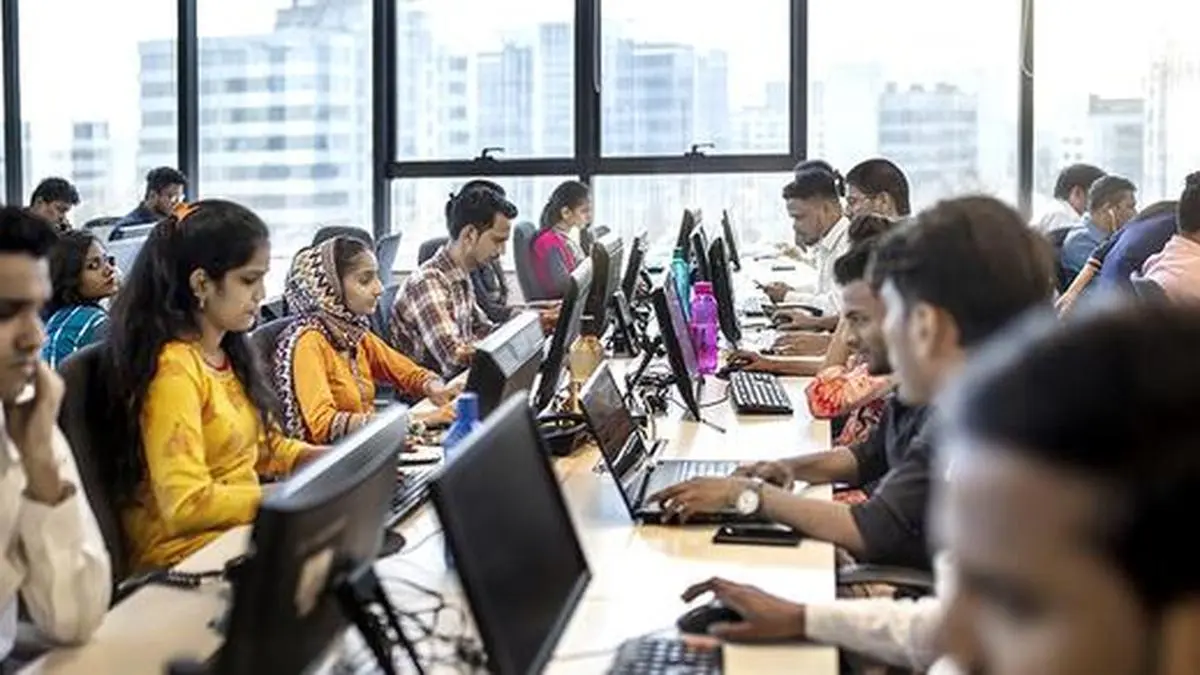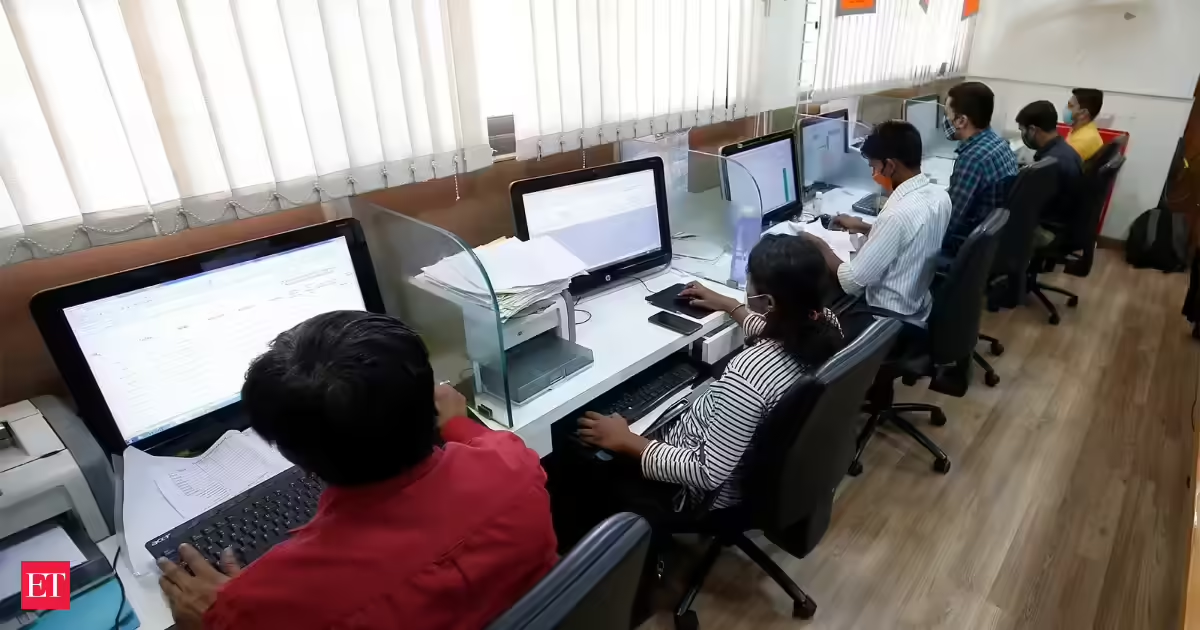
Mumbai: Sustained expansion of Global Capability Centres (GCCs), steady occupier demand across sectors and growing adoption of flexible workspaces has helped India’s office market maintain its growth momentum in the first half of 2026.Gross leasing across the country’s top seven cities rose 6% year-on-year to 35.7 million sq ft, despite moderation in the April-June quarter amid global trade disruptions and economic uncertainties, showed data from Colliers India.Also Read: PE firms, mid-market companies drive India’s new GCC waveDuring the second quarter, Grade A office space uptake declined 2% from a year ago to 17.4 million sq ft. Bengaluru and Hyderabad together accounted for more than half of the quarterly office demand, while flex space operators contributed over one-fourth of total leasing during the quarter.“India’s established credibility as the most preferred GCC destination continues to support occupier expansion across most markets. This along with anticipation of stability in West Asia reinforces growth expectations in the second half of the year and could potentially push overall office demand past 70 million sq ft once again in 2026,” said Arpit Mehrotra, MD, Office Services, India, Colliers.Bengaluru remained the country’s largest office market during the first half of the year, recording 10.5 million sq ft of leasing and accounting for 29% of total demand. Hyderabad followed with about 7.2 million sq ft of leasing, representing around one-fifth of overall absorption and registering a 47% annual increase. Delhi NCR, Mumbai and Chennai each recorded leasing activity in the range of 4-5 million sq ft during the six-month period.On a quarterly basis, office demand moderated in some markets. Mumbai and Pune witnessed a 25-30% on-year decline in space uptake during Q2 2026 as occupiers adopted a more cautious approach.In Mumbai, the share of large transactions of 100,000 sq ft and above dropped from around 41% in Q1 2026 to 13% in Q2 2026. Pune saw the share of large transactions decline from around 63% to 38% during the same period.Also Read: The great $100-billion tech shift: GCCs tighten grip on India’s talent market“Bengaluru & Hyderabad have cumulatively accounted for almost half of the office space demand in H1 2026. Both these cities have witnessed strong GCC space uptake across diverse demand segments. Given the established track record of these two cities in attracting MNCs owing to their core strengths, talent availability and cost arbitrage, Bengaluru & Hyderabad are well positioned to support the growing demand for office spaces in India even during challenging periods,” said Vimal Nadar, National Director and Head of Research, Colliers India.According to him, GCCs are likely to account for 40-50% of the Grade A office space uptake in 2026.Leasing in conventional office spaces remained resilient at 27.1 million sq ft during H1 2026, almost at par with the corresponding period of 2025. Technology companies leased 10.6 million sq ft, while BFSI firms accounted for 6.0 million sq ft, together contributing over 60% of conventional office demand. During Q2 2026, the technology sector drove 43% of conventional leasing, followed by BFSI firms with a 13% share.Leasing by flex space operators witnessed a 32% year-on-year rise, reaching 8.6 million sq ft during H1 2026, the highest-ever half-yearly flex space demand. Bengaluru and Delhi NCR led flex space uptake, each accounting for 20-25% share during the period, while demand in Delhi NCR and Hyderabad more than doubled on an annual basis.The three markets of Bengaluru, Delhi NCR and Hyderabad together contributed nearly two-thirds of the total space uptake by flex operators in H1 2026. During Q2 2026, flex space leasing touched 4.6 million sq ft, over 90% higher than the average quarterly flex space demand of the last five years.On the supply side, new Grade A office completions totalled 22.5 million sq ft during H1 2026, a 9% decline year-on-year. Bengaluru led supply additions with 8.7 million sq ft and a 39% share of the total, while Delhi NCR and Mumbai accounted for 15-20% share each. Mumbai recorded 3.6 million sq ft of new supply during the first half of the year, an 80% increase driven by additions in Navi Mumbai, Powai and Thane.Vacancy levels remained largely range bound at around 15% at the India level, while average rentals increased by up to 5% in select high-activity micro markets during the quarter.
GCC demand, flex workspaces keep India's office leasing on growth path in H1
India's office market is thriving, with a 6% year-on-year surge in leasing to 35.7 million sq ft in the first half of 2026. Global Capability Centres and steady demand from sectors like technology and BFSI are driving this growth. Bengaluru and Hyderabad lead the charge, showcasing robust expansion despite global economic headwinds. Flexible workspaces are also seeing unprecedented demand, signaling a dynamic and resilient market.
706 words~3 min read