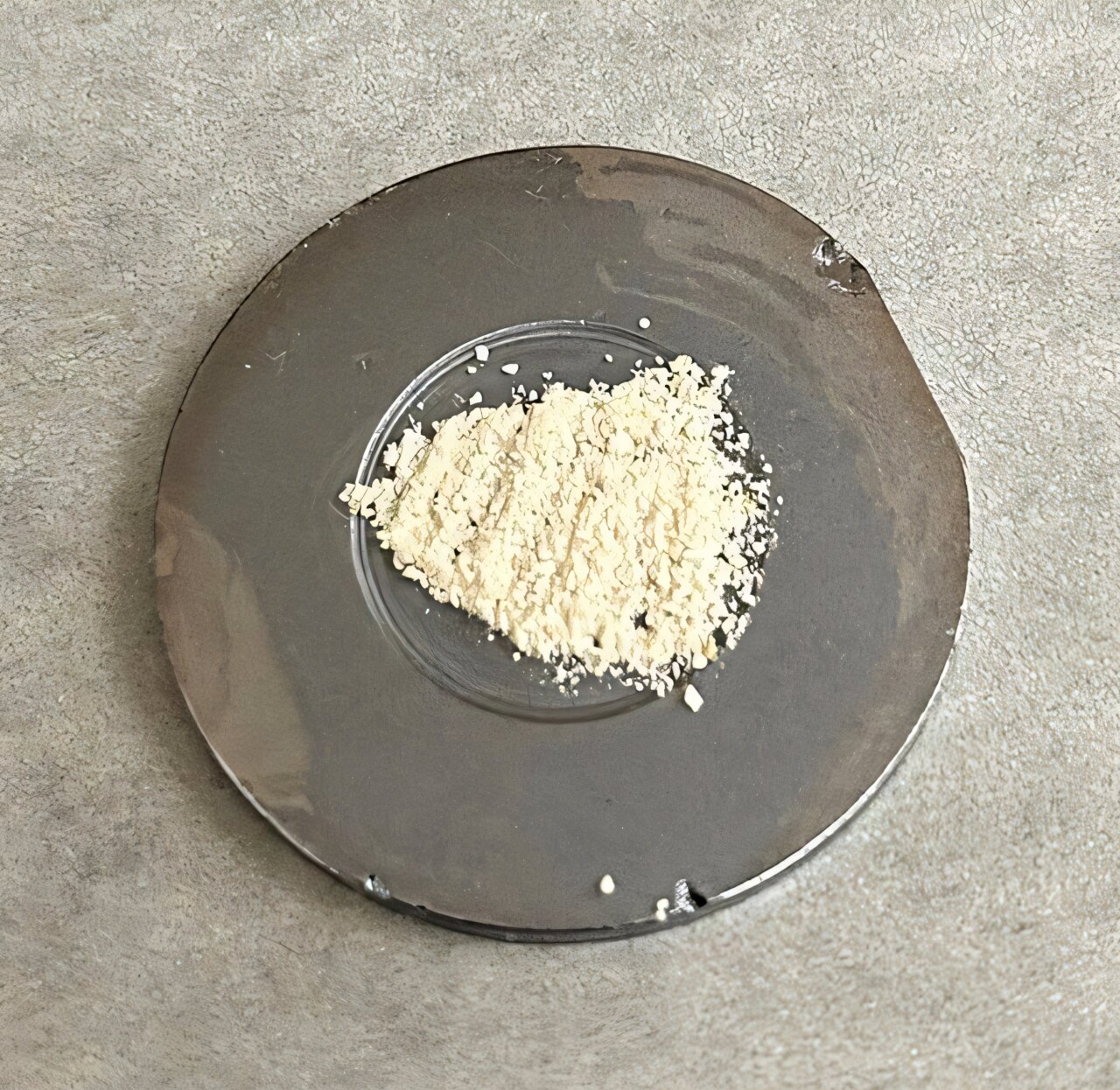
This magnesium chloride salt was extracted from seawater using bismuth electrodes and a reversible electric field. Credit: ACS Energy Letters (2026). DOI: 10.1021/acsenergylett.6c01659
Magnesium supplements are gaining popularity to treat conditions such as insomnia, migraines and constipation. Most magnesium salts are extracted from rocks by crushing and heating them, which requires a lot of energy. Now, researchers reporting in ACS Energy Letters have developed bismuth electrodes that selectively pull magnesium ions from seawater, another abundant source of the element. They say their electrochemical approach could be more sustainable and less expensive than current methods.
While minerals in rocks contain large amounts of magnesium, this element is also present in the oceans, where it is the second most abundant cation after sodium. "We have traditionally thought of seawater as something to desalinate and protect, but it is an enormous reservoir of valuable resources," says David Kim, the first author of the study. "Seawater represents an essentially limitless yet underutilized reservoir for such resources."
Historically, extracting magnesium from seawater required chemical additives to precipitate and remove the metal. Scientists have instead experimented with electric fields to pull magnesium salts out of seawater. But thus far, these electrochemical methods have relied on expensive membranes to effectively convert the magnesium ions into a form that can be separated from the large amount of sodium ions in seawater.