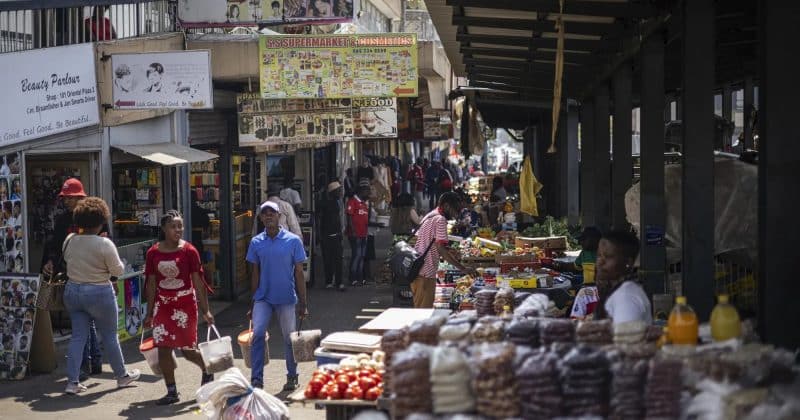
South Africa’s removal from the Financial Action Task Force (FATF) greylist on October 24 last year was a major institutional achievement. It followed 32 months of hard work to address 22 action items covering weaknesses in the country’s ability to prevent, detect, investigate and prosecute money laundering and terrorist financing. However, the celebration always needed an asterisk. The FATF expressly said South Africa should continue working with it and the Eastern and Southern Africa Anti-Money Laundering Group to sustain the improvements. The Treasury also warned that successful investigations, prosecutions and sanctions would be tested in the next mutual evaluation, which runs from mid-2026 to October 2027.Some analysts already worry that the margin for error for South Africa is small. The central question is therefore not whether one controversy — the upheaval at the Public Investment Corporation (PIC), or the revelations before the Madlanga commission — may return South Africa to the greylist. The FATF does not list countries merely because scandals occur.The real question is still whether the state can demonstrate that its institutions can respond effectively, independently and consistently when financial crime, corruption and political interference are alleged. Despite other reform initiatives, a watchful eye must still be kept on potential greylist risks.Whenever shocks such as the PIC turmoil or the Madlanga commission disclosures emerge as a source of anxiety — as they have recently — the debate again veers towards the greylist. The FATF could see the governance crisis at the PIC as a high-risk indicator of institutional instability. It will need to assess whether the political reshuffle at the PIC restores market integrity. The relevant FATF concern is not the existence of an internal dispute itself. It is whether necessary fiduciary and regulatory changes are now allowed to run their course and bolster confidence by delivering more reassuring outcomes.The Madlanga commission raises an even more direct issue. The failure of the Investigating Directorate Against Corruption (Idac) to do its job properly has created another serious challenge. The FATF is unlikely to see Idac as an effective law enforcement body but as an unstable agency compromised by internal dissention and structural manipulation. In restructuring Idac, South Africa now needs to show that a stable, untainted investigative framework is indeed being put in place and will be proven to workThere are also new and evolving risks. The FATF’s standards are not static. Its latest round of evaluations is more risk-based, places greater emphasis on actual results and operates on a shorter six-year cycle. It is also focusing more closely on crypto assets, cyber-enabled fraud, stablecoins, new payment technologies and the financing of proliferation. In this sense, the bar does rise not arbitrarily but because criminals continuously adapt their methods.History also shows that removal from the greylist is not permanent. Pakistan was removed from FATF monitoring in February 2015, returned to increased monitoring in June 2018 and was removed again in October 2022. Panama was removed in February 2016 but returned in June 2019. Albania was removed in February 2015 and returned in February 2020. Ethiopia was removed in October 2014 and returned in February 2017.What, then, must South Africa do?First, it must be seen to protect the operational independence and capability of the institutions responsible for financial intelligence, investigation, prosecution, regulation and asset forfeiture. Leadership instability, political interference and the loss of specialist skills can quickly reverse greylist gains that took several years to build and must not be jeopardised. Second, the country must convert laws and action plans into measurable outcomes. The government should regularly publish credible data on serious and complex money laundering investigations, prosecutions, convictions, sanctions, asset freezes, confiscations and cross-border recoveries. The FATF’s new evaluation methodology is explicitly focused on whether national systems deliver effective results, rather than merely having adequate laws on paper.Third, the Madlanga commission and PIC processes must become demonstrations of accountability and reform. South Africa needs to convince global watchdogs that the country’s institutional credibility is being permanently repaired. And while institutional transparency is essential, public spectacle cannot substitute for courtroom results.Staying off the greylist must continue to be handled as a crucial “work-in-progress”. South Africa’s exit from the greylist in 2025 was proof that co-ordinated reform was possible. The task now is to make those reforms durable and irreversible, especially when powerful interests are tested. Irreversibility of reform is another building block of the policy certainty that investor confidence in South Africa badly needs.• Parsons is a professor at the North West University Business School and an extraordinary professor at the University of the Western CapeBusiness Day
RAYMOND PARSONS | SA must not drift back into the FATF’s sights
Madlanga commission and PIC crises underscore the need for lasting accountability
757 words~3 min read