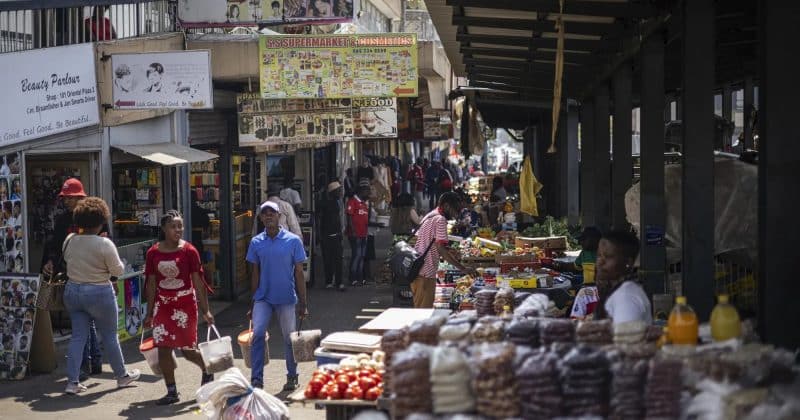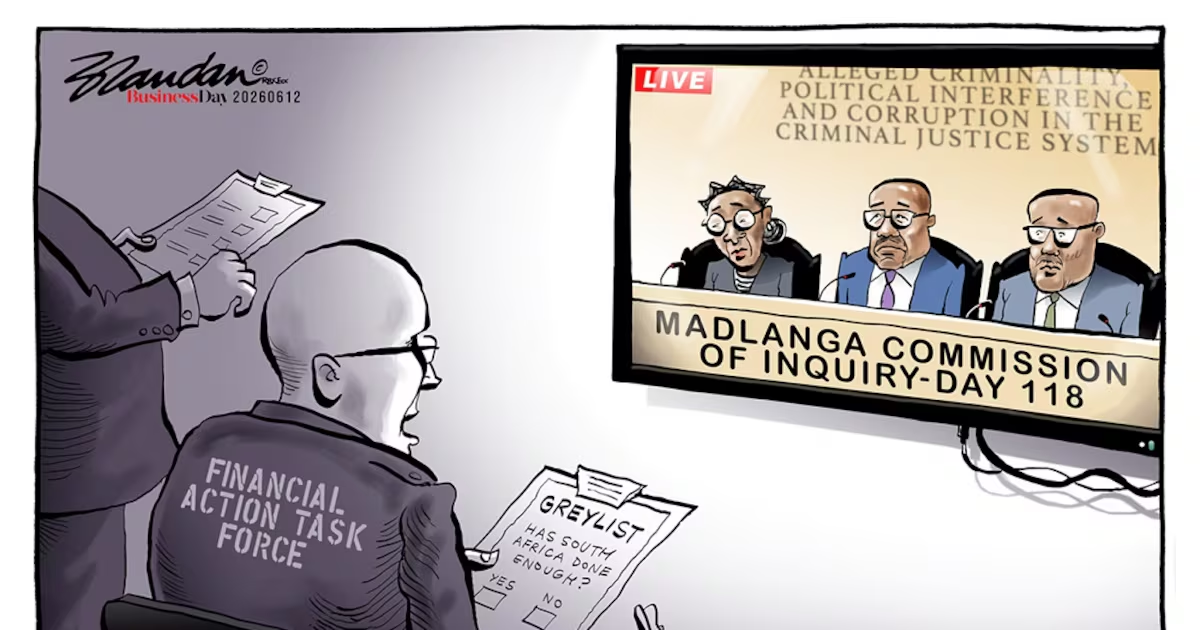
South Africa escaped the Financial Action Task Force (FATF) greylist on October 24 2025, after being placed on it in February 2023, but the country is not out of the woods and needs to demonstrate that it has the ability to prosecute and stop illicit financial flows. A new report commissioned from our advisory firm finds that illicit economic activity in South Africa has ballooned to the point where it is beginning to rival aspects of the regulated formal economy. International regulators may therefore conclude that South Africa cannot effectively enforce its anti-money laundering laws, exposing the country to renewed scrutiny by the FATF.The report estimated the scale of the illicit economy in terms of its cost to the tax system, which is conservatively put at least at R84.6bn every year. That is equal to about 1% of GDP, 3.9% of government revenue, 3.3% of public spending and about 23% of the annual budget deficit. Put differently, that is the amount of tax the illicit economy would have contributed if it were regulated and taxed ― giving a good sense of the scale that economy has assumed.The extent of that scale gives rise to six specific risks to the integrity of South Africa’s financial system and its anti-money laundering controls.The first is that the illicit economy has given rise to vast criminal revenues that must be laundered. Illegal mining, cigarette smuggling, counterfeit goods, fuel theft, drug trafficking and illicit alcohol generate large amounts of cash. Criminal groups must introduce that money into the legitimate economy through businesses, property, banks, professional intermediaries and cross-border transactions.As the illicit economy expands, the volume of money laundering expands with it. South Africa could therefore appear to have an anti-money laundering system that is being overwhelmed by the scale of criminal proceeds.The second is that numerous front companies have been established to disguise the criminal ownership of enterprises in the country. Illicit operators can establish apparently legitimate transport companies, wholesalers, exporters, mining contractors, security firms and retailers. These companies may mix criminal revenue with lawful income, submit false invoices or move money between related entities.The FATF places considerable importance on the ability of authorities to identify the real individuals who own and control companies. If criminals can hide behind shell companies, trusts, nominees or politically connected partners, South Africa could again be judged deficient in beneficial ownership transparency.The third is that illegal trade has established conduits through which illegal money can be moved. Criminal networks can shift money across borders by falsifying the price, quantity or description of imports and exports. A company might overstate the value of imported machinery, understate the value of exported minerals or create invoices for goods that were never supplied.This converts criminal revenue into apparently legitimate commercial payments. Weak customs controls and poor international information sharing make such trade-based money laundering difficult to detect.The fourth is that corruption threatens to neutralise law enforcement systems. Large illicit industries often depend on compromised police officers, customs officials, border personnel, regulators and politicians. Bribes can prevent inspections, make evidence disappear, disclose planned raids or protect criminal businesses from prosecution.This matters because the FATF evaluates whether investigations, prosecutions and asset confiscations produce meaningful results. A country may have strong laws, but if corruption prevents those laws from being enforced, the system is ineffective.The fifth is that criminal money can enter politics and shape policy. Illicit profits can be used to finance political campaigns, patronage networks, local power brokers or individual officials. This gives criminal groups influence over appointments, procurement decisions and enforcement priorities.The danger is that the people responsible for combating money laundering may become politically constrained from pursuing the networks that generate it. The illicit economy then develops protection within the state itself.The sixth is that weak prosecutions and confiscations reveal ineffective enforcement of South Africa’s criminal statutes and international obligations. Authorities may identify suspicious transactions without successfully prosecuting the people behind them or confiscating their assets. The FATF wants countries to demonstrate that money laundering investigations correspond with the country’s actual risk profile and that criminal proceeds are regularly recovered.If illegal industries generate billions while relatively few organisers are convicted and little wealth is seized, reviewers may conclude that South Africa’s reforms exist mainly on paper. The FATF specifically monitors whether countries can sustain the institutional capacity and political commitment behind their reforms.The central risk is therefore a gap between formal compliance and practical effectiveness. South Africa may have improved its laws, reporting requirements and institutions, but a growing illicit economy could demonstrate that criminal networks still move money, conceal ownership, corrupt officials and preserve their assets with limited consequences.That would provide the basis for a future FATF finding that South Africa again has strategic weaknesses in combating money laundering, even though those weaknesses would arise from enforcement failure rather than the absence of laws.Mahlobo and Cronje run the advisory firm Frans Cronje Private Clients. The firm was commissioned to research the likely broader implications of unregulated economic activity in South Africa and to advise the business community accordingly.Business Day
BHEKI MAHLOBO AND FRANS CRONJE | SA’s R85bn illicit economy could put it back on greylist
Illicit financial flows could put the country back under the FATF's spotlight
838 words~4 min read