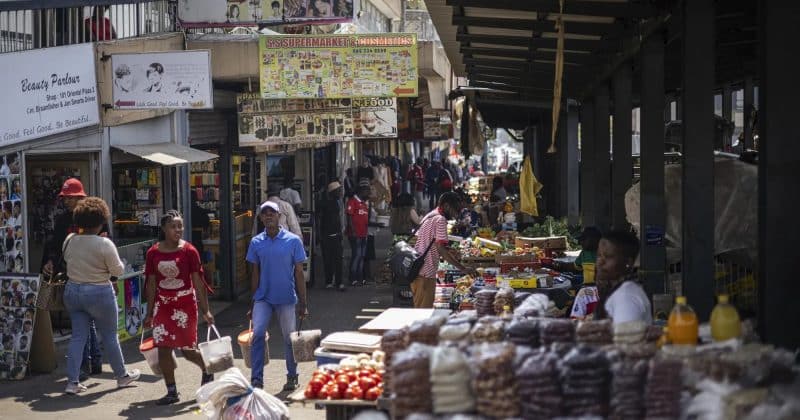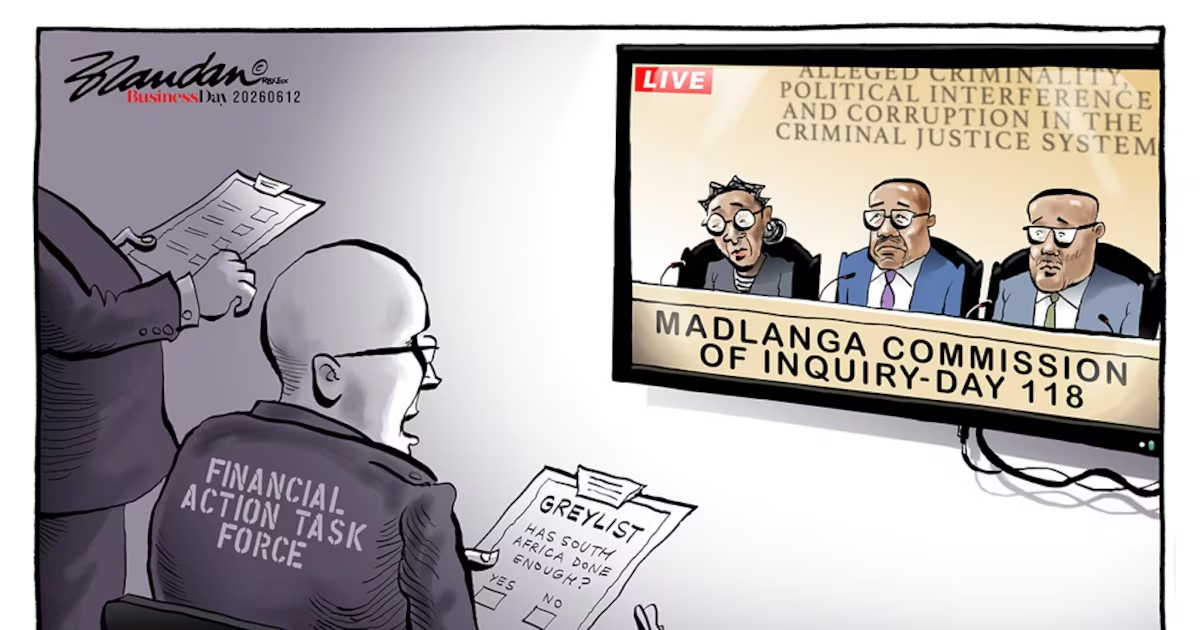
South Africa exited the Financial Action Task Force (FATF) greylist in October 2025. The event was celebrated as a hard-won vindication after 32 months of intensive cross-departmental reform, new legislation, rebuilt institutional capacity and a demonstration that the country could clean up its act on money-laundering and terrorist financing.The exit coincided with ratings agency upgrades and contributed to a broader sense of positive momentum. But now the Madlanga commission is raising an uncomfortable question: did we deserve to pass? The revelations emerging from the commission paint a picture of organised crime so deeply entangled with the police services that the situation is difficult to reconcile with the clean bill of health the FATF issued.Former National Treasury director-general Ismail Momoniat, the same official who led the remarkable interdepartmental effort that got South Africa off the list, appeared before parliament earlier this month to warn that greylisting could be back.“The area of law enforcement is one of our biggest challenges, particularly as it relates to financial crimes,” he said. The FATF is already conducting a new mutual evaluation. Negative findings could return South Africa to the list next year. That means at the time the country passed its FATF evaluation the rot was rife and is only now being exposed. Ignorance, it turns out, was a kind of bliss for our assessors. We now know the criminal justice system was worse than the FATF knew when it removed us from the greylist.Proper test That matters because it reframes what the coming evaluation should actually test. FATF evaluations tend to measure institutional capacity at a point in time: whether the laws exist, whether prosecutions are happening and whether agencies are co-operating. But a more meaningful test for a country such as South Africa, with a criminal justice system still in recovery from the systematic hollowing-out of the Zuma years, is not whether the system is clean at the moment of inspection. It is whether, when serious failures are discovered, the government acts decisively to address them. Responsiveness, not a snapshot, should be the metric. That is actually the more demanding test, and the Madlanga commission provides the material to apply it. If the government receives robust recommendations and moves swiftly to implement them — restructuring financial crime investigation, insulating it from political interference and rebuilding prosecution capacity — that is precisely the institutional behaviour the FATF should reward. If the recommendations are shelved or diluted, the case for greylisting will be strong. There are consequences that should drive action. Being greylisted increases transaction costs for every cross-border payment because counterparts are required to undertake additional due diligence on the source of funds. For some international institutions, greylisted countries are simply redlined. The costs are difficult to isolate. South Africa’s time on the list coincided with ratings downgrades and wider economic difficulty, which entangled the impact, but the directional effect is not in doubt. The ratings upgrades that followed its exit were in part an FATF dividend. Losing that would be costly. What the FATF has proven, whatever its limitations, is that it works as a forcing mechanism. When South Africa faced greylisting in 2023, a task force under Momoniat assembled a cross-departmental coalition including police, the National Prosecuting Authority, intelligence agencies, the Financial Intelligence Centre and the Reserve Bank, which had never adequately co-ordinated before. Private sector institutions were brought into compliance. Laws were written. The threat of the FATF created the political economy of urgency that normal reform processes cannot generate. That dynamic is now available again, and the government would be irrational not to use it.Double standard The FATF is not a perfect institution. It struggles to balance financial inclusion imperatives against the know-your-client obligations it in effect mandates globally, a tension that falls hardest on developing countries. And it is not immune to the weight of its most powerful members. The Trump administration’s decision to pause all investigations and prosecutions under the Foreign Corrupt Practices Act for 180 days last year represents precisely the kind of institutional backsliding the FATF exists to prevent. The Zumafication of the American criminal justice system is happening in real time, and it is strongly reminiscent of how South Africa earned its greylisting in the first place. The difference is that US hegemony means the equivalent accountability will not follow. That double standard is worth naming. But it does not diminish the value of FATF pressure on countries that do not enjoy the same immunity. For South Africa the question is not whether the system is fair — it isn’t, entirely — but whether the incentive to act is real. It is. The Madlanga commission has exposed the problem. The evaluation is under way. The test now is whether we respond in a way that makes the case for ourselves. • Dr Theobald is founder and chair of research-led consultancy Krutham.
STUART THEOBALD | Did South Africa pass a crime test it didn’t deserve to?
Madlanga commission’s revelations were missed by global watchdogs such as the FATF
806 words~4 min read